Placement Begins with Receiving the Thangka
A common way of receiving a thangka places the beginning of worship at the moment the owner first handles the work. After it arrives, the owner opens it personally; the person who receives a thangka as a gift also opens it personally. With clean hands, in a quiet, orderly place away from cooking smoke, the owner opens the package, holds the thangka in the palms, crosses the fingers, raises the hands to the forehead, silently makes a personal wish, and returns the work to its box for twenty-four hours. The gesture joins contact, intention, and placement in one beginning.
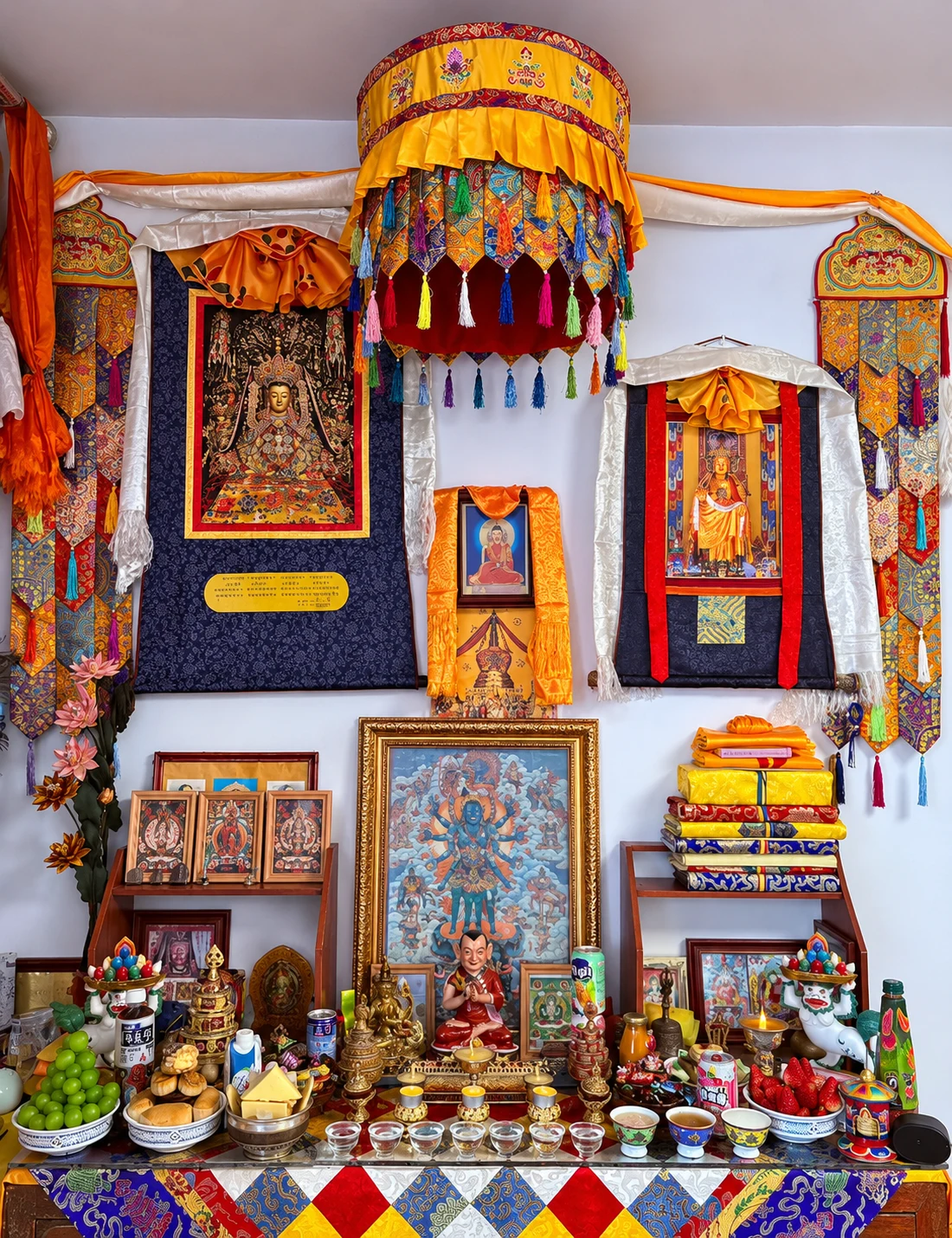
A thangka for daily display belongs in a clean, orderly, relatively high position. When it is not being displayed, it can return to its box. Moisture, sweat, and direct sunlight affect pigments and canvas. During bathing, sleep, cooking, or time in a bathroom, the thangka should be put away or protected; everyday storage should also avoid dampness and strong light. Stable placement protects the image and gives worship a dedicated space.
Offerings Can Begin with Water
Daily offerings can begin with clean water. When time allows, fruit can be added; on festivals or special days, some people offer alcohol according to their own tradition. Lamps, incense, and water are also clear, practical forms of worship. Everyday practice may remain simple, while fruit, lamps, incense, and festival offerings create a fuller arrangement for special occasions.
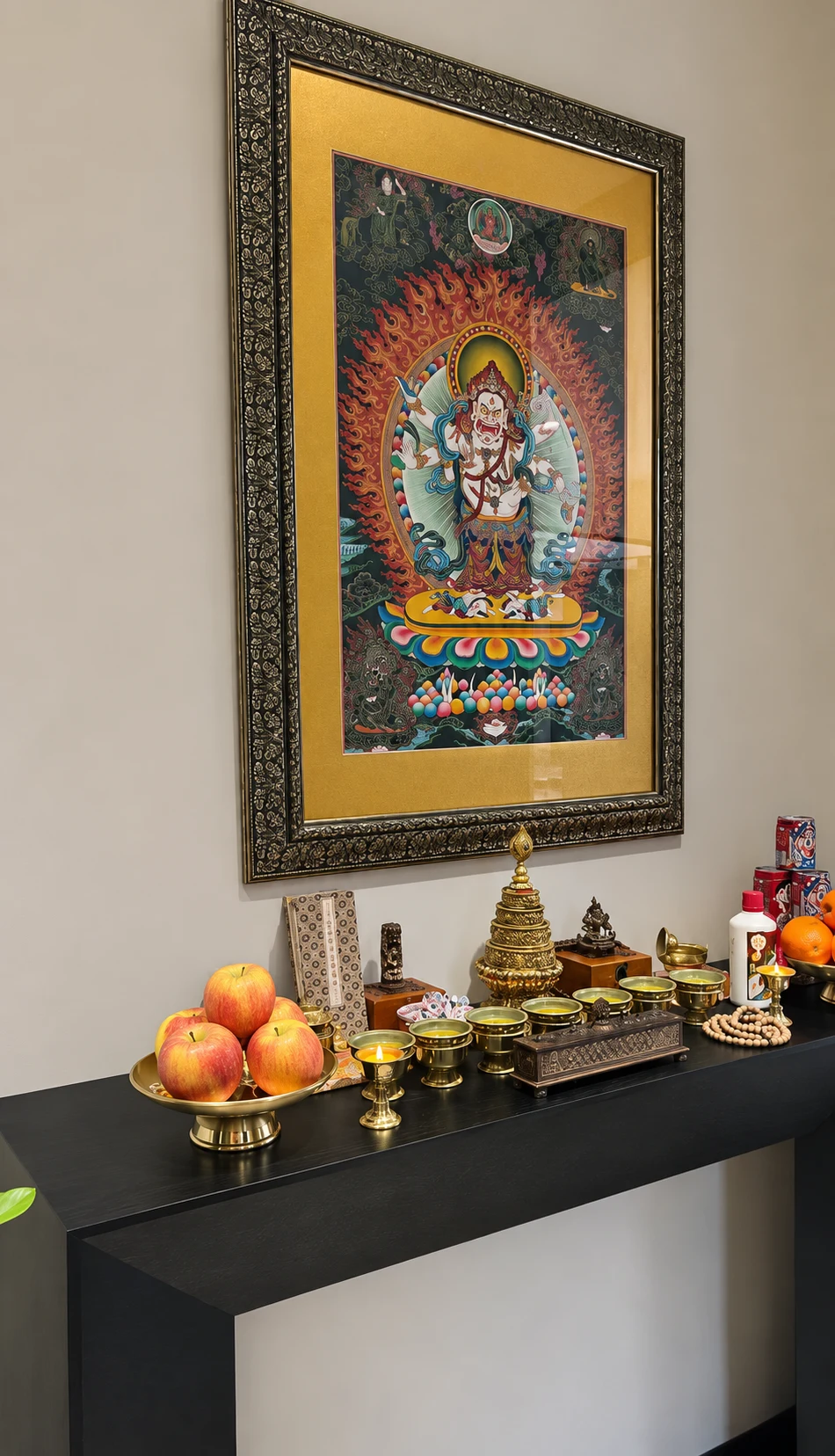
Offerings also express respect for the sacred figure, wholesome intention, recitation, and praise. Expensive objects are optional. A simple arrangement that can be maintained over time is more suitable for daily practice. The offering gives a concrete form to reverence, while the continuity of the intention and the action carries the practice forward.
Visualization, Prostration, and Prayer
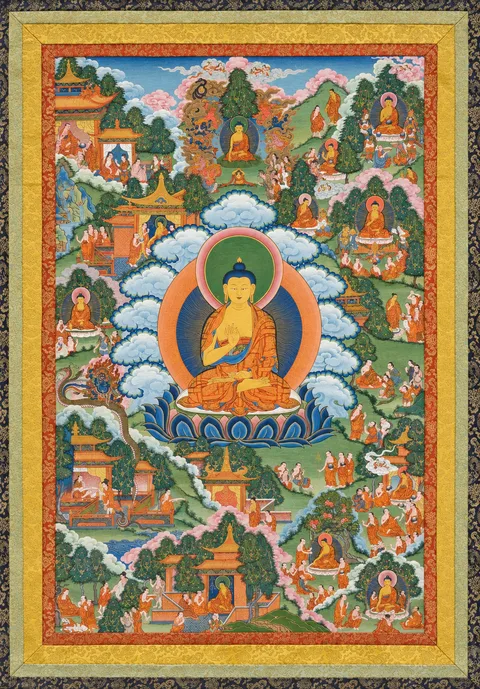
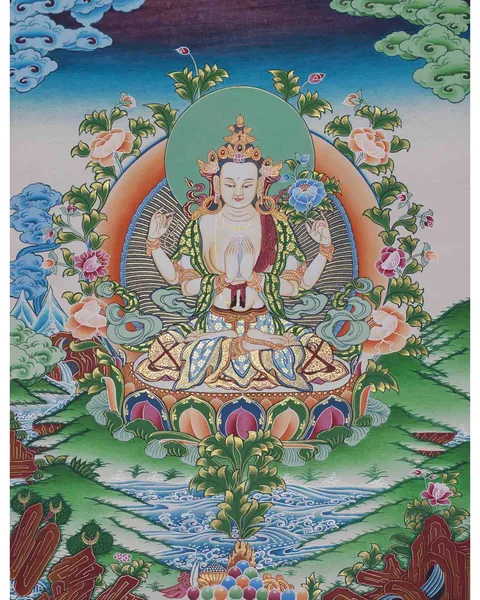
The religious use of a thangka is closely connected with visualization. A stable image of the sacred figure keeps the object of practice before the viewer and supports repeated viewing, silent recitation, and prayer. The figure, hand gestures, ritual objects, and colors give visualization specific content; looking at the image connects with intention, prayer, and action.
Daily worship may include a silent wish, a mantra or praise, a bow or full prostration, lighting a lamp, burning incense, and offering water. The thangka turns an abstract practice into an image that can be seen, remembered, and revisited. The physical gesture of worship brings a personal wish into a steady daily practice.
In some initiation or meditation settings, several small cards are shown in sequence. The images may show a deity, a mandala, or a seed syllable, and the viewing sequence connects each visual object with its corresponding meditation. The order varies with the lineage and practice.
Portable Thangkas and Offerings in a Gau Box
For people who cannot enter a temple every day, a small thangka can bring a personal deity, teacher, ritual object, or protective image into a portable form. In this practice, the small thangka is placed inside a gau box and carried with the person; it can be taken out for offerings and worship when needed. The gau box provides the structure for protection and carrying, while the thangka remains the image that is viewed and worshipped.
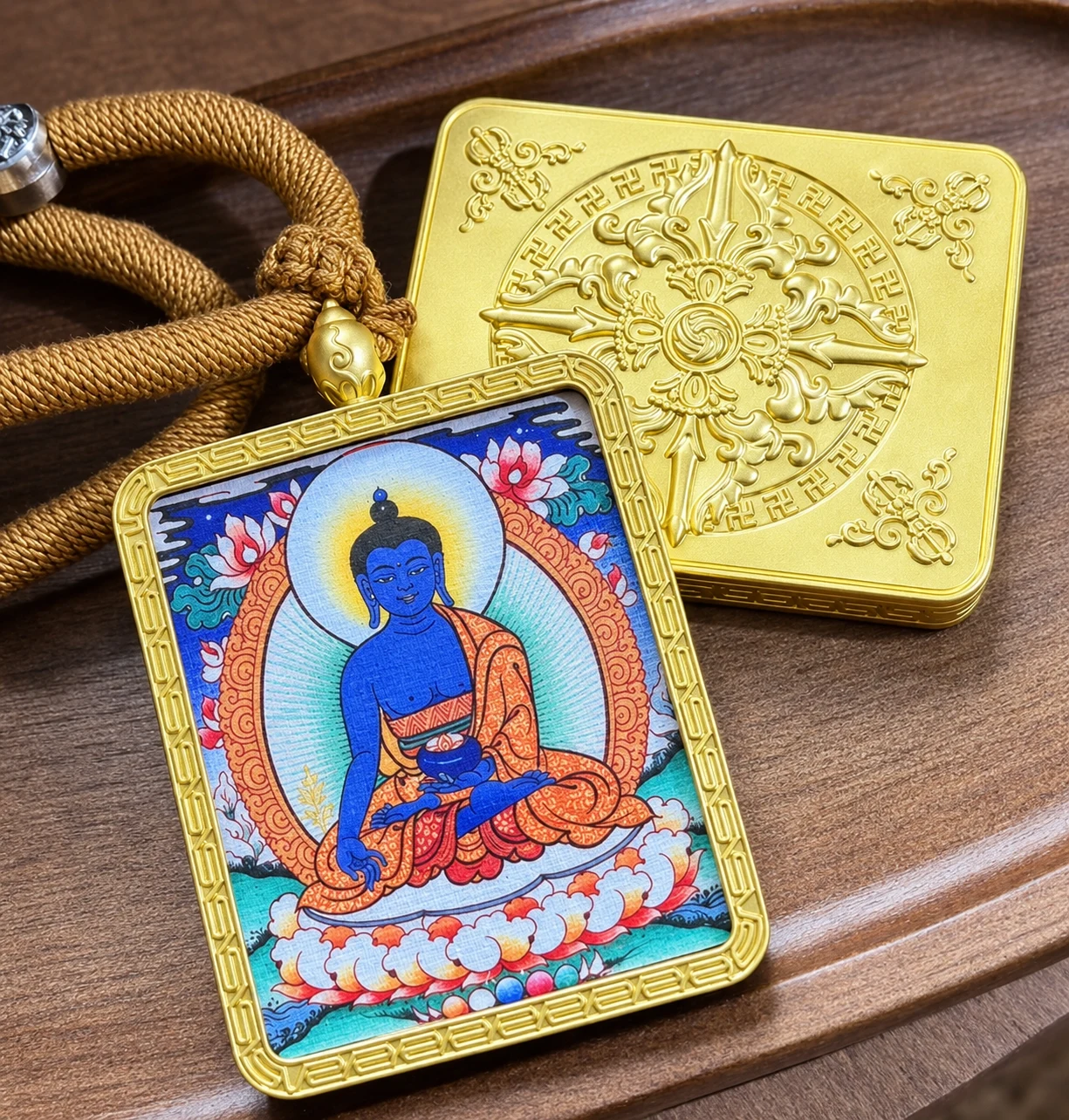
The portable format changes the way the image is stored, while the central elements of worship remain the sacred figure, the personal wish, and sustained reverence. A small thangka can be kept at home or carried inside a gau box when moving between places. Taking it out, viewing it, and offering respect extends worship beyond the temple into daily life.
Ritual Boundaries Follow the Sacred Figure
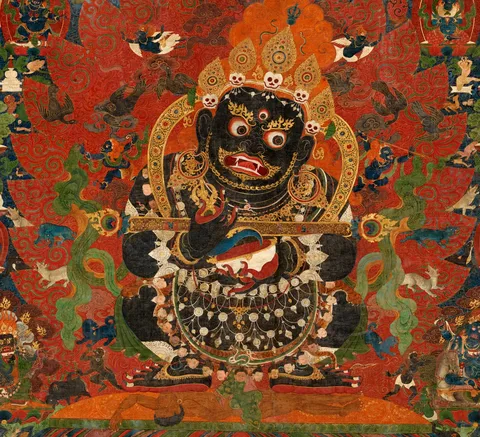
Worship arrangements vary with the sacred figure and its tradition. Some mountain deities, local deities, and protector systems include continuing offerings. Buddhist figures can be placed in a clean space, with daily worship and prostration maintained as part of personal practice. The tradition and practice background associated with each figure determine the form of the ritual.
A figure connected with a specific tantric practice requires an understanding of that practice before deciding how it should be worn or displayed. Historical figures also require the corresponding context. When the subject, sacred figure, offerings, and actions remain connected, worship has a clear object and a clear boundary.
When a thangka enters worship and ritual, the essential elements are a quiet receiving, clean placement, water and simple offerings, visualization and prostration, a form of use suited to the sacred figure, and continued care. The image, the ritual actions, and the personal prayer then maintain a clear relationship.