In this article
Its central use: supporting meditation and devotion
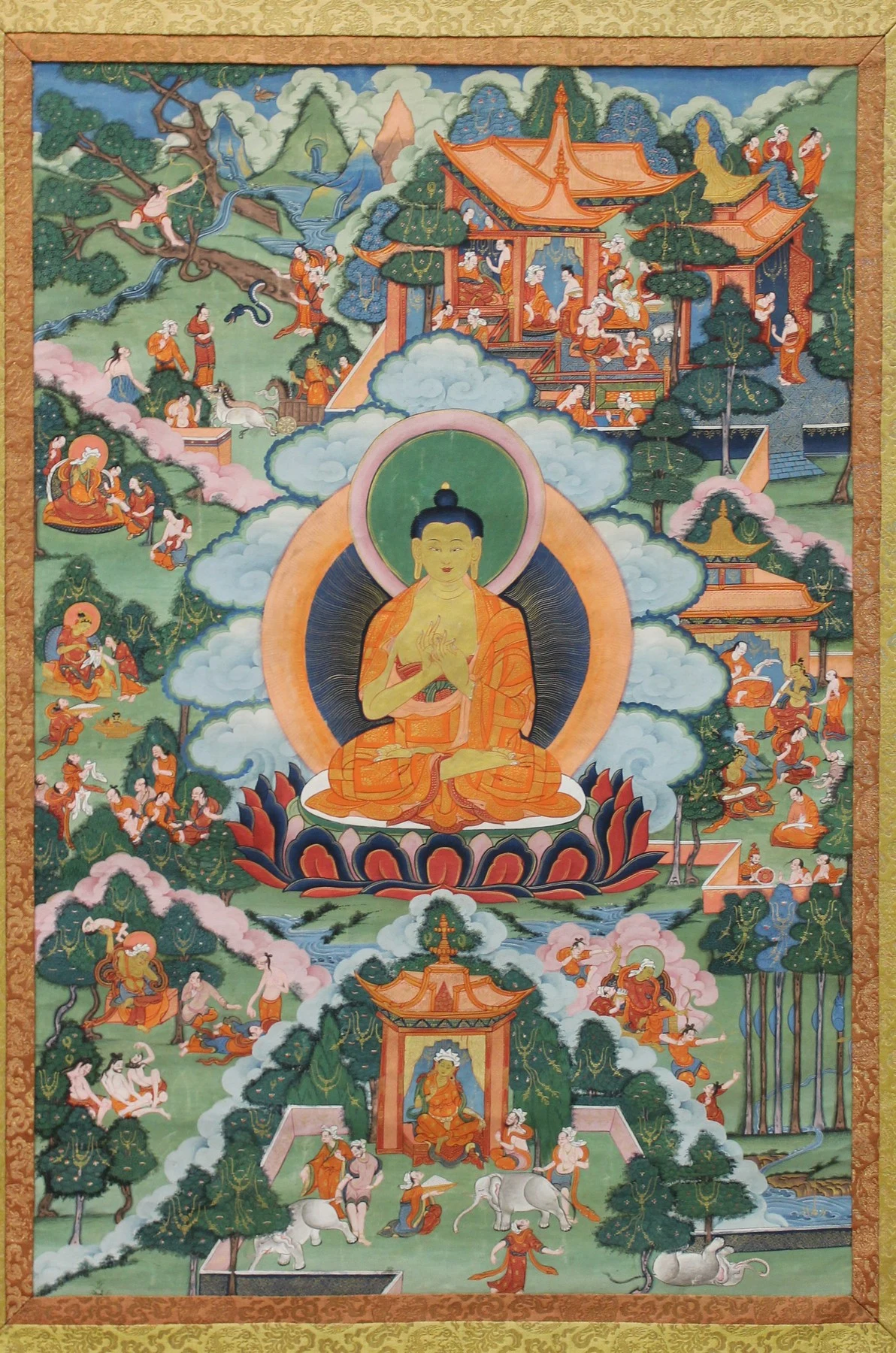
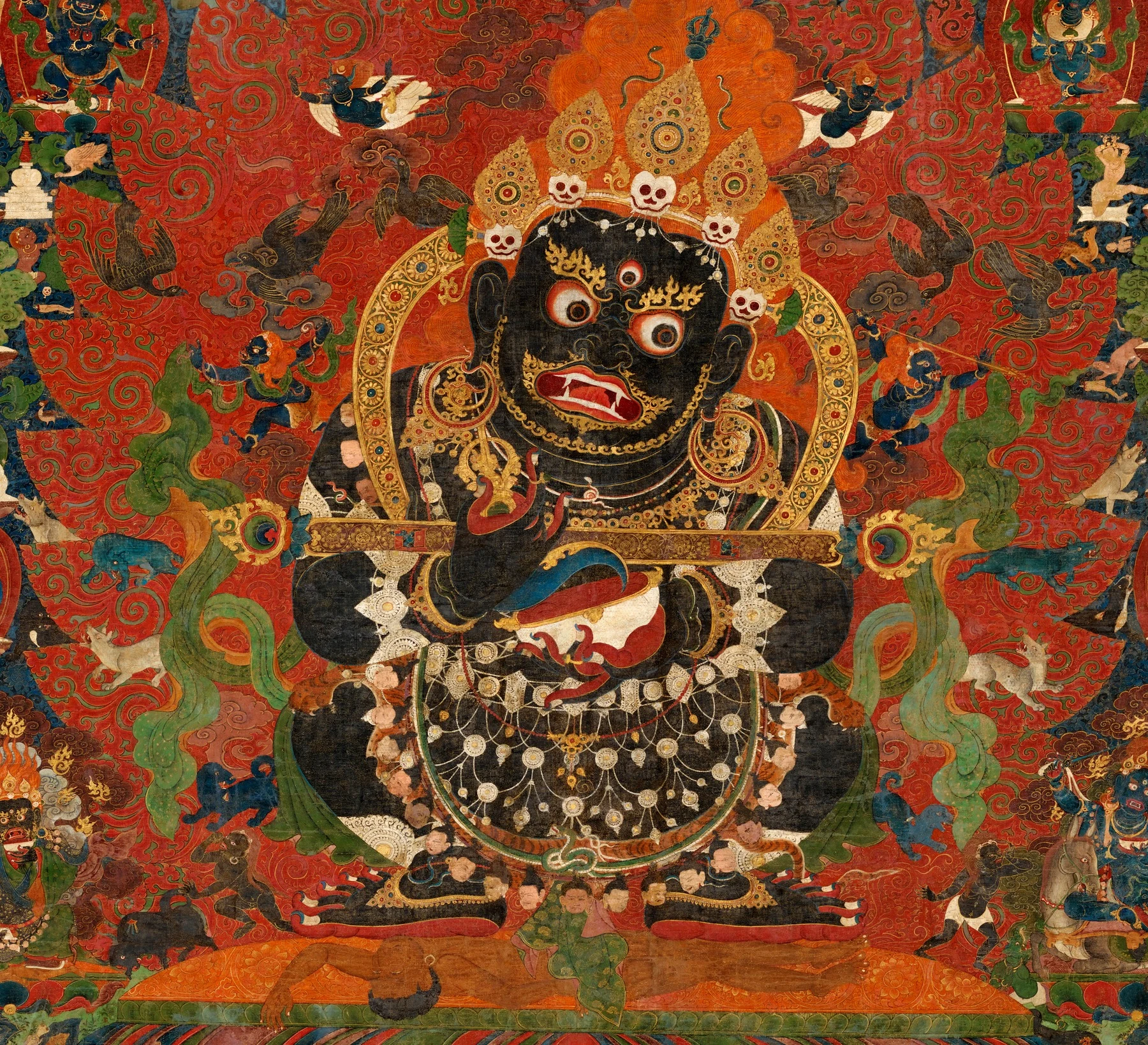
Many thangkas depict a Buddha, bodhisattva, teacher, protector, or mandala. Posture, hand gestures, attributes, colours, and attendant figures give the viewer a precise visual reference. In meditation, a thangka is not merely background decoration. It helps the practitioner focus, remember the details of a sacred form, and return to a stable object of attention. A viewer may begin with the central figure and then notice its posture, mudra, attributes, and relationship to the surrounding images.
This is one of the clearest differences between a thangka and an ordinary decorative painting. The image is connected to inherited iconographic rules, stories, and practices. Painters follow proportional systems and established visual conventions so that the image can carry this contemplative function. For a devotee, the thangka is an object of respect and a reminder of how to practise. For a newcomer, it offers a way to approach Tibetan Buddhist imagery and ideas through a visible form.
How thangkas are used in shrines, offerings, and ritual
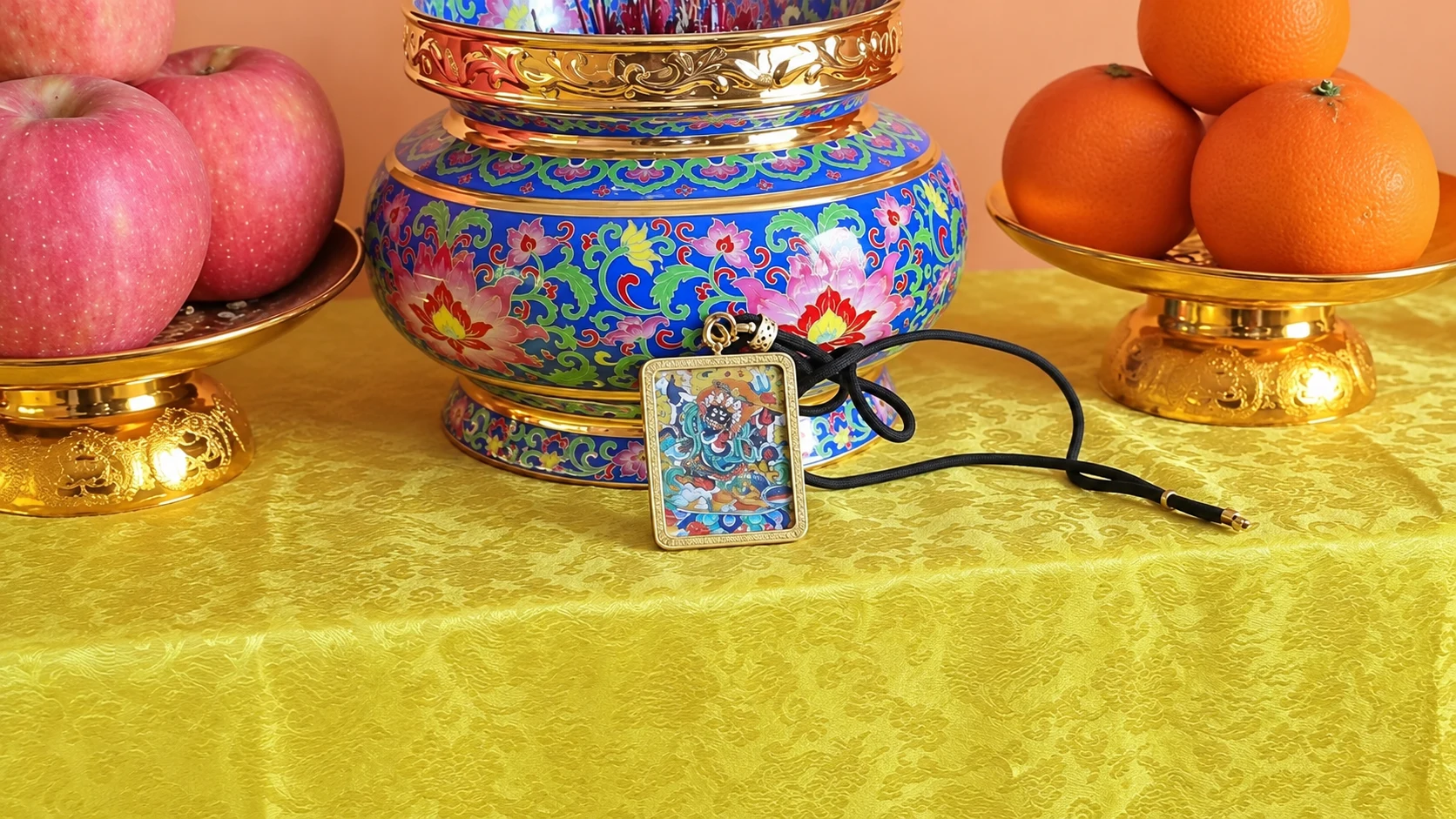
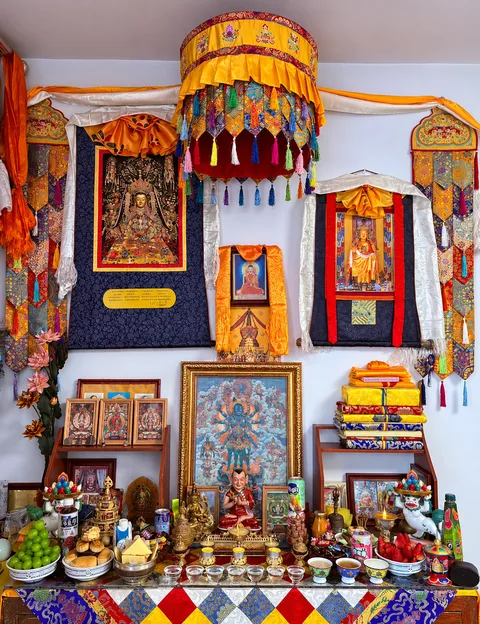
Thangkas are displayed in monasteries, shrine rooms, homes, and other quiet settings for devotion, offerings, and prayer. Displaying one is not simply a matter of hanging a picture on a wall. It places the image within an organised religious life: a person may bow, sit quietly, recite prayers, or make offerings before it, allowing ordinary actions to gather around a stable spiritual focus.
Within Tibetan Buddhist contexts, people may commission or use thangkas in connection with wishes for long life, recovery, protection, the accumulation of merit, or remembrance of the dead. Different subjects carry different devotional associations. Bringing a thangka home places protection, blessing, and support close to everyday life, giving those wishes a visible form. It can accompany people through difficulty, help them steady the mind before important choices, and restore courage when persistence is needed. For many people, this is the most immediate strength of a thangka: it keeps a blessing near and turns faith into a daily presence.
A teaching tool, story carrier, and cultural record
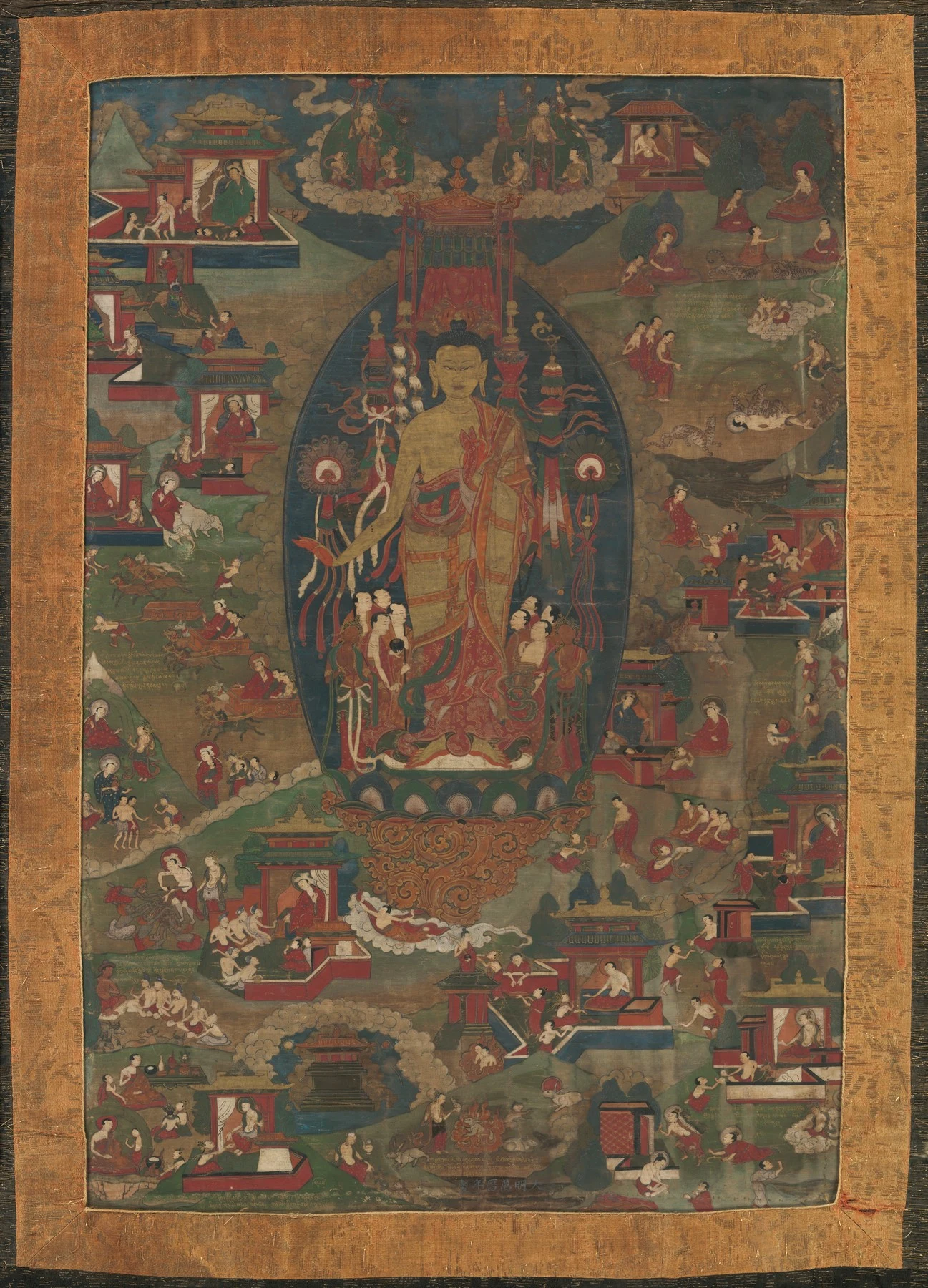
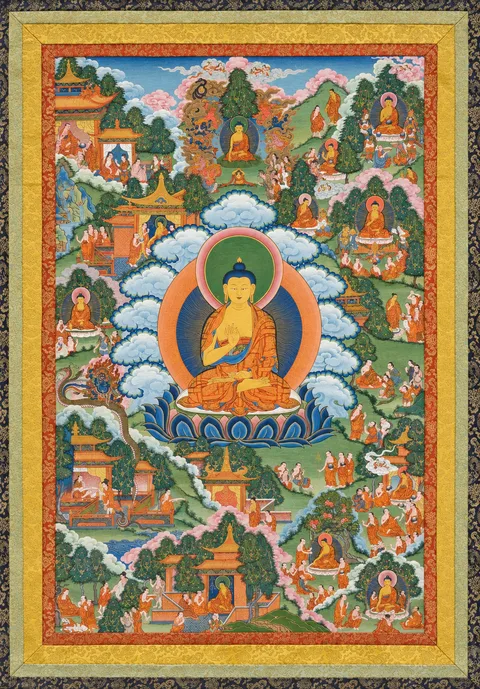
A thangka can also work like a visual lesson. Teachers and monasteries use images to explain the Buddha’s life, lineage, stories, and complex relationships among figures. Several scenes may be arranged within one composition, allowing viewers to follow a narrative through people, buildings, landscapes, and events. A mandala organises a sacred space through a visible centre, boundary, and sequence of forms.
The subject matter can reach beyond a single religious scene. Historical figures, important events, astronomy, medicine, and local knowledge have all appeared in thangka and related painting traditions. In that sense, a thangka is also a visual knowledge carrier. For someone unfamiliar with Himalayan cultures, it can answer more than “who is pictured here?” It can show how a community preserved stories, transmitted knowledge, and mapped its understanding of the world.
Why people also appreciate and collect thangkas as art
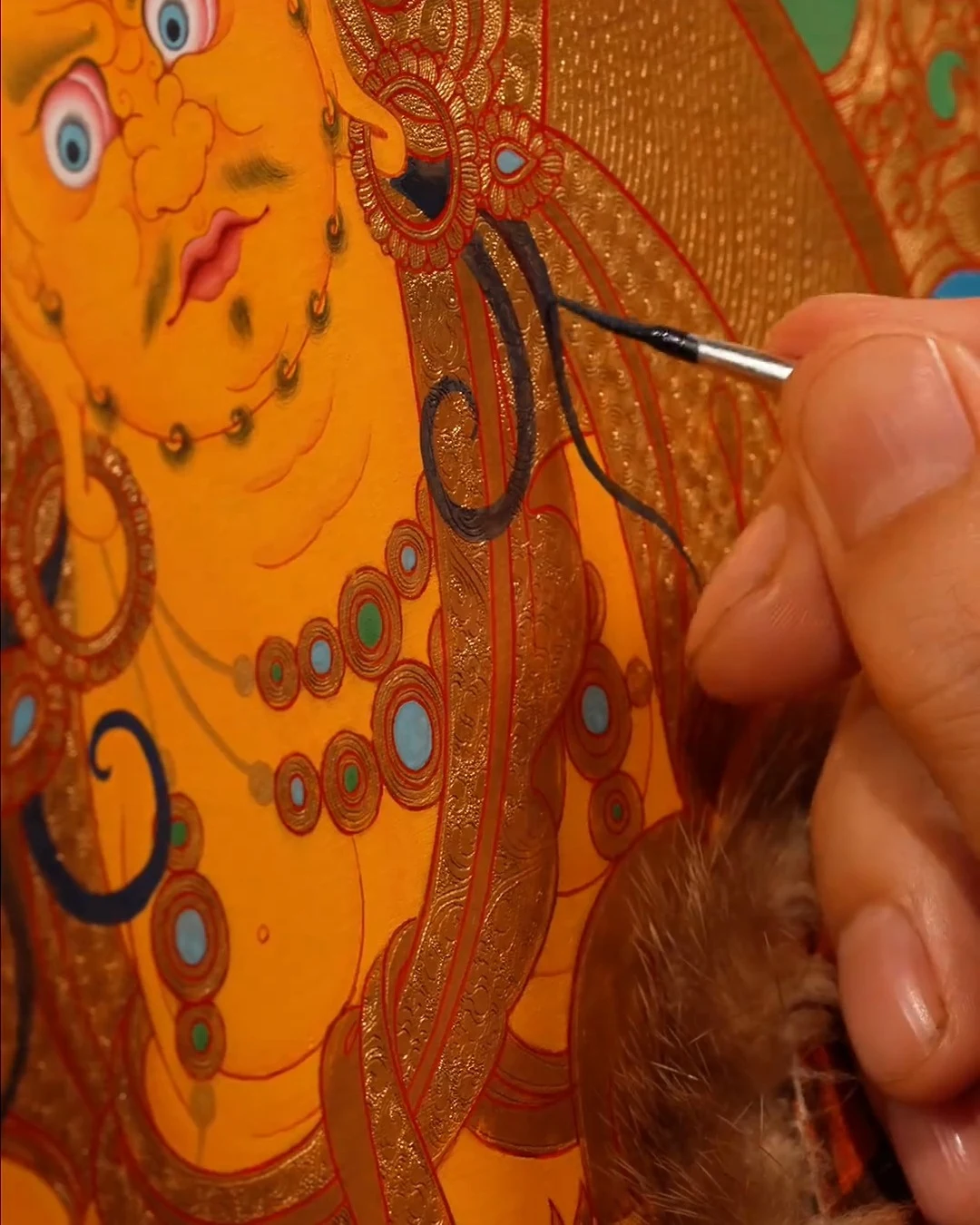
Even outside a ritual setting, people are drawn to thangkas for their colour, line, detail, and disciplined craft. Mineral pigments, gold, fine outlines, and carefully measured figures reward sustained looking. A hand-painted work begins with the preparation of the cloth and composition, followed by drawing, colour application, shading, outlining, and the completion of small details. Its artistic value lies both in what can be seen and in the visual tradition that the work carries.
A thangka can also become a form of daily companionship. Some people are not seeking an immediate result; they keep it as a reason to pause and look carefully in a busy life. Its colours and structure give attention a quiet place to rest. One person may experience this as emotional support, another as a long-term relationship with beauty and cultural memory. It can be art, craft, and cultural record at once.
How small and large thangkas serve different settings
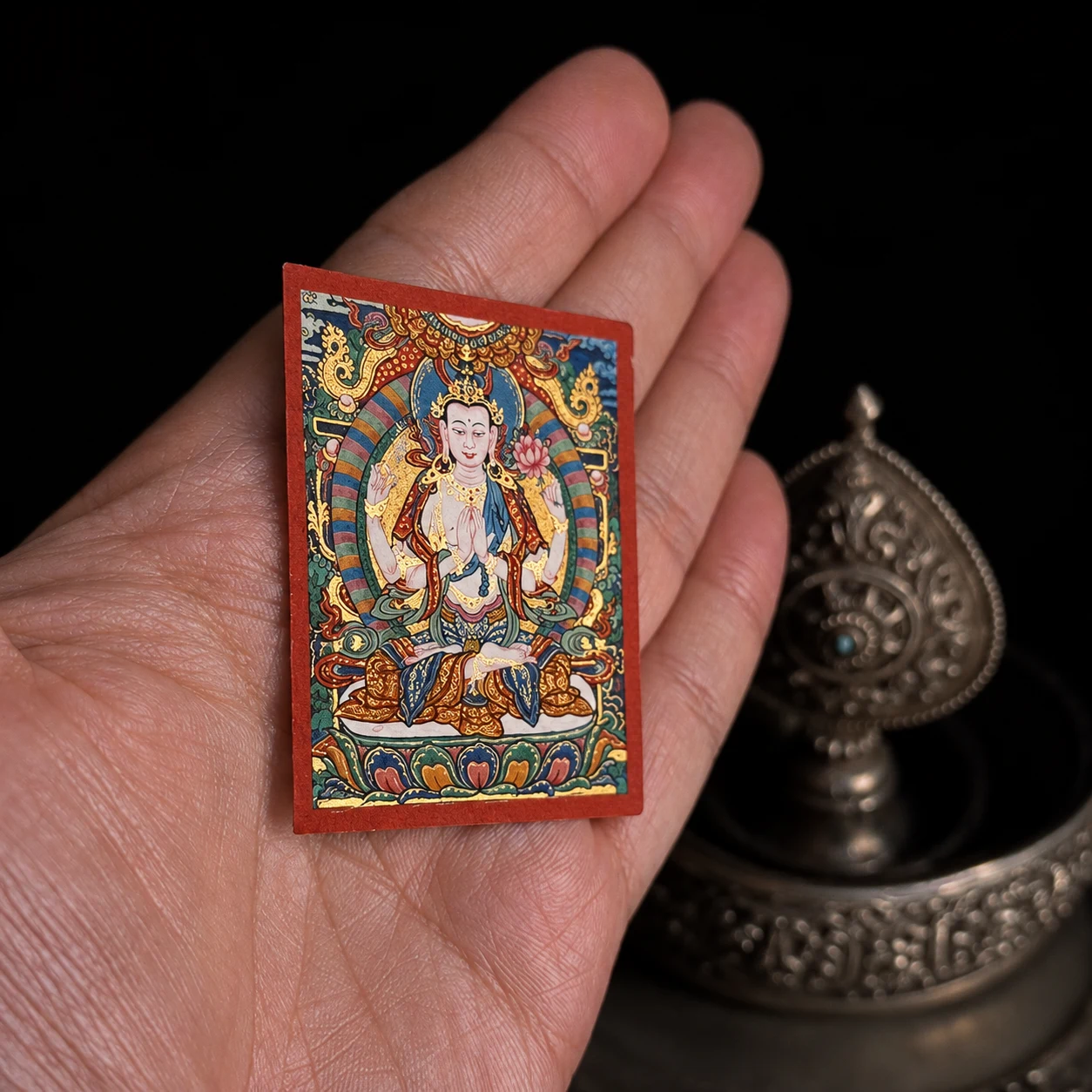
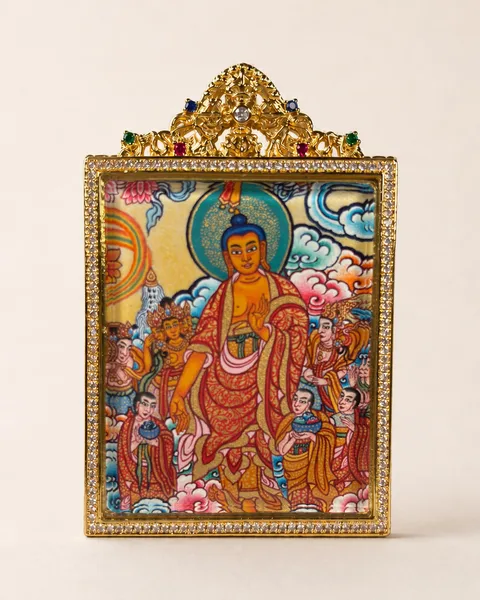
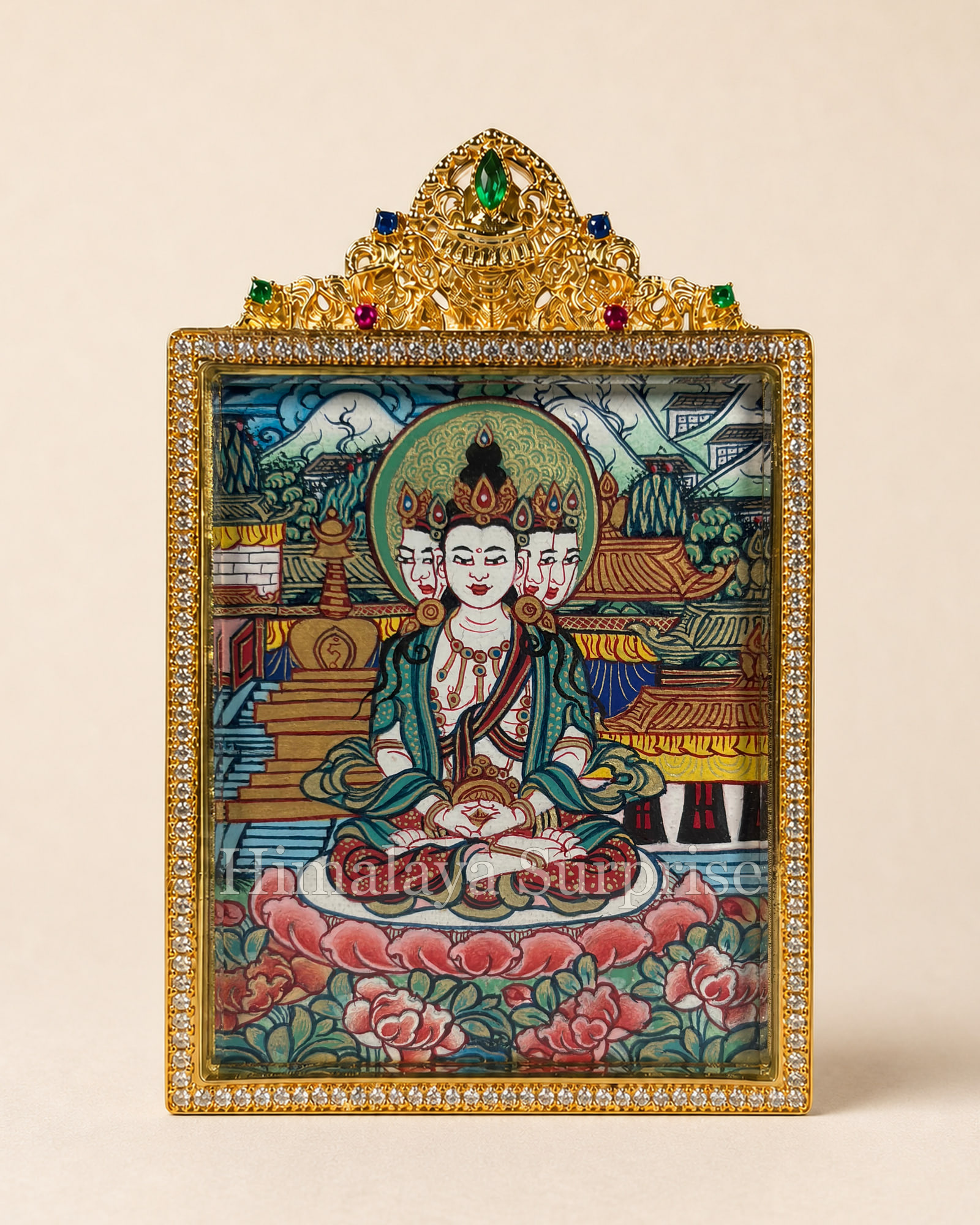
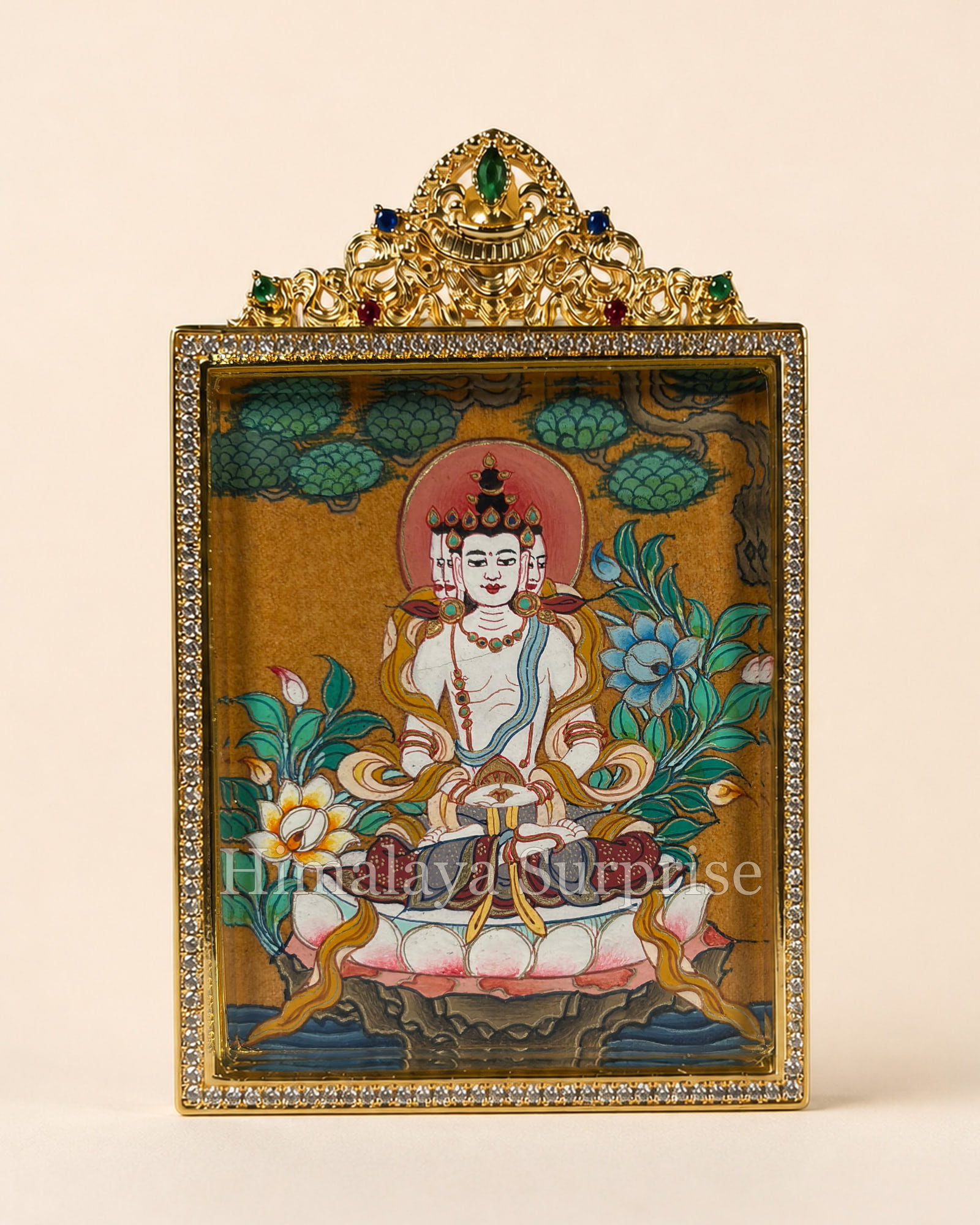
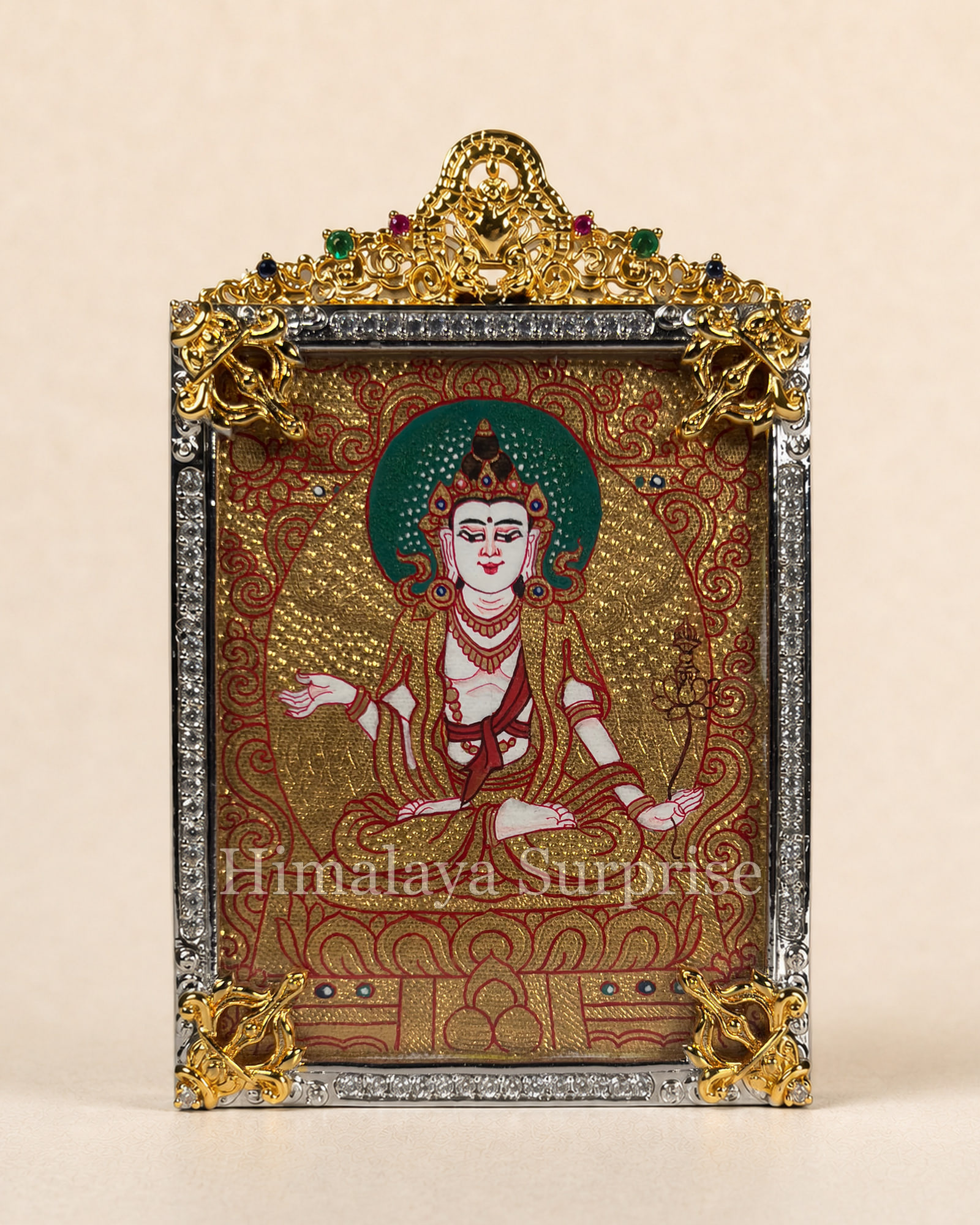
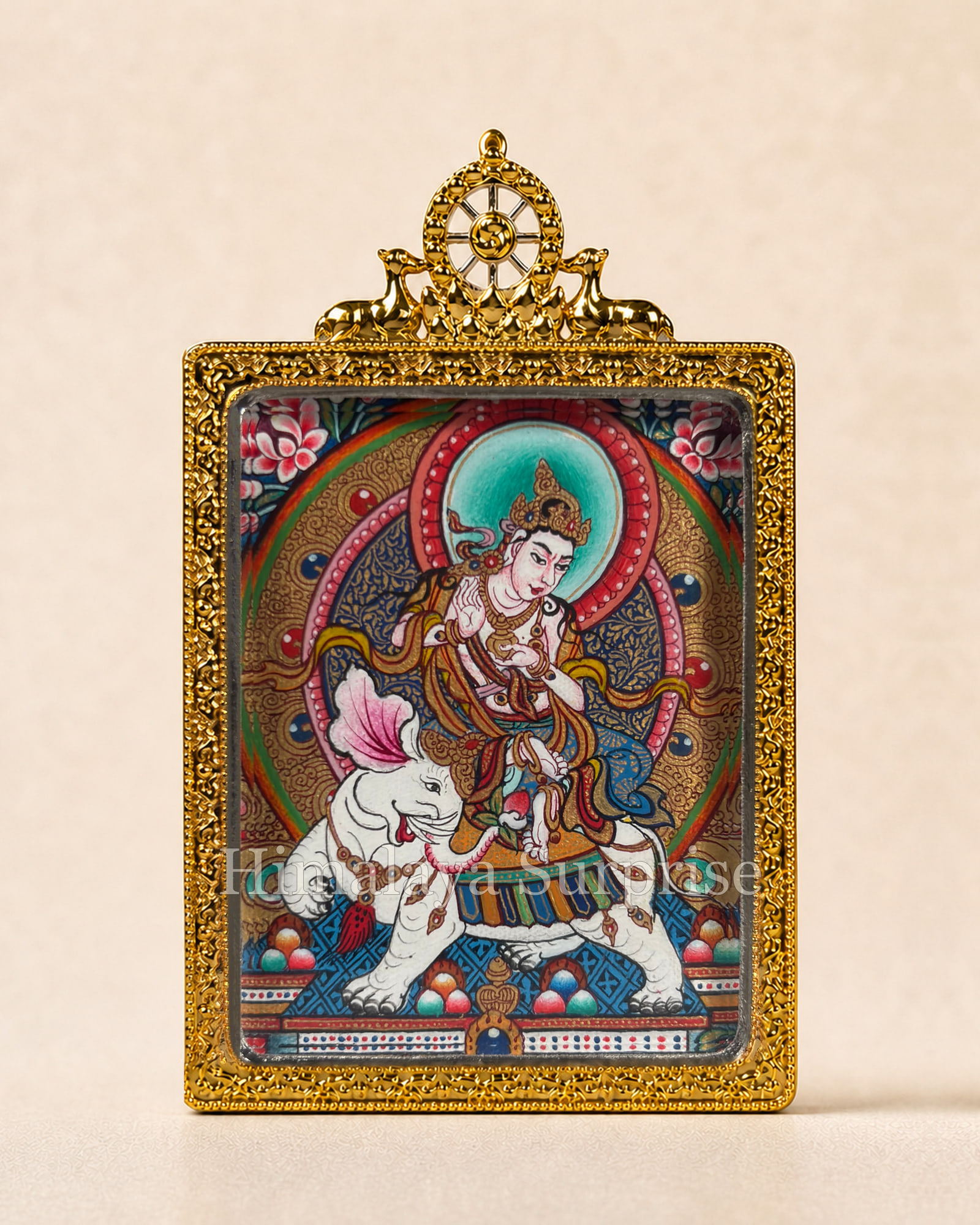
Size changes the setting in which a thangka is used, but it does not decide its value. A miniature thangka preserves a central figure, gestures, attributes, colour, and composition within a limited painted field, allowing a complete image world to stay close to daily life. It can rest in a personal box, sit near a desk or in a study, or accompany you through work, travel, and daily routines. When you need to pause, the image gives your attention a stable visual centre. This portable form keeps protection, blessing, and support close: it steadies the mind in a busy moment, recalls courage during difficulty, and gives faith a visible place when persistence is needed.
In our works, the small thangka is presented in a portable form with a painted field of approximately 4 × 5 cm, set inside a gau-style case with a hanging cord. It is made for close viewing and can be carried or suspended as a daily visual companion. Even at this scale, the figure, gestures, attributes, colours, and composition remain legible; the subject, ground, line, case, and recorded details vary from work to work, so its meaning and use should be understood through the individual piece.
A large thangka is more suited to a shrine room, living space, studio, or public display, where its composition can be seen from farther away. Embroidered, woven, and appliqué forms can also serve display, devotional, and cultural purposes even though their surfaces are made differently from a painted work.
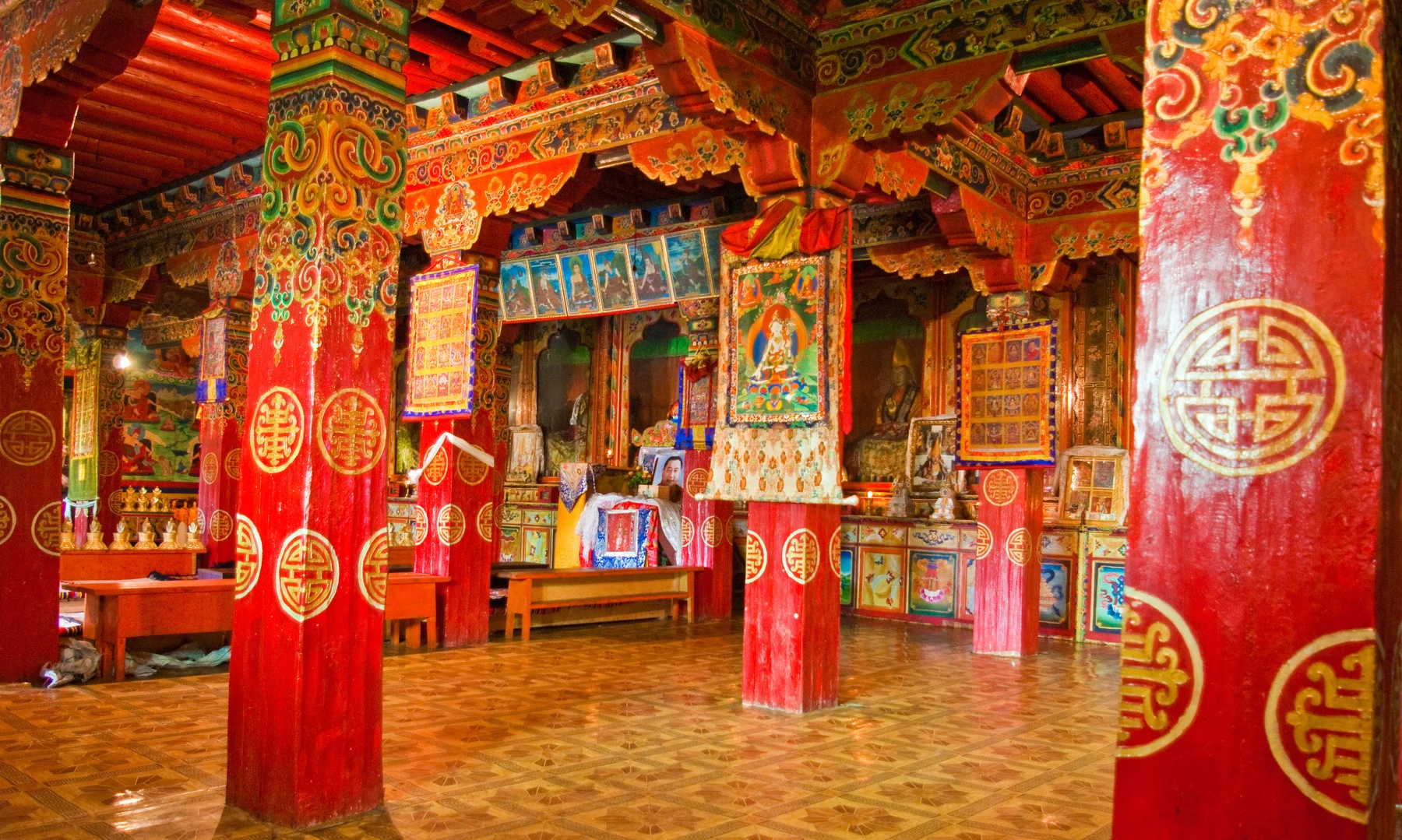
The right format depends on the subject, space, and way of viewing. A small thangka suits close, portable use; a large one suits fixed display or a public setting. They serve different purposes rather than ranking one above the other.
What “useful” means in the case of a thangka
The role of a thangka is to make faith, prayer, learning, aesthetic attention, and self-remembrance visible and continuous. It can stand as a protective presence in daily life, carry wishes for peace, good fortune, long life, prosperity, and courage, and remind a person to steady the mind, keep a compassionate intention, and continue forward. A person can meditate before it, honour it, learn a story through it, or simply spend time looking at the work of a painter.
So, what is a thangka used for? It can belong in a monastery, a home, a study, or a personal space: someone may use it for meditation, devotion, and prayer; someone else may study its images and stories; another person may simply keep it close and spend a quiet moment looking. Its role is easier to understand in the way it is actually viewed, lived with, and used each day.