Objects as Identity Clues
Manjushri's image often establishes identity through a scripture and a sword. The scripture is associated with wisdom and teaching, while the blade gives visible form to the cutting of delusion. When these two objects appear with Manjushri's body, crown, and posture, the figure has a clear set of visual clues. The object therefore explains both who the figure is and what kind of activity or aspiration the figure embodies.
An attribute also works with the headdress, body color, clothing, seated posture, and architectural setting. A vajra and ritual staff in an image of Padmasambhava, or a scripture and sword in an image of Manjushri, become stable identity markers within the larger figure. An inscription can confirm the person directly; without one, the object and the other visible features complete the recognition.
Common Objects and Their Meanings
The dharma wheel appears between the hands of Vairocana and represents the continuing movement of the Buddhist teaching and its guidance toward liberation. Prayer beads in the hands of a red Mahakala are associated with the movement of the teachings; a curved knife gives visible form to the breaking of confusion and difficulty. A skull bowl carries the meaning of wisdom, a trident expresses the removal of obstacles, and a rope is connected with subduing and gathering.
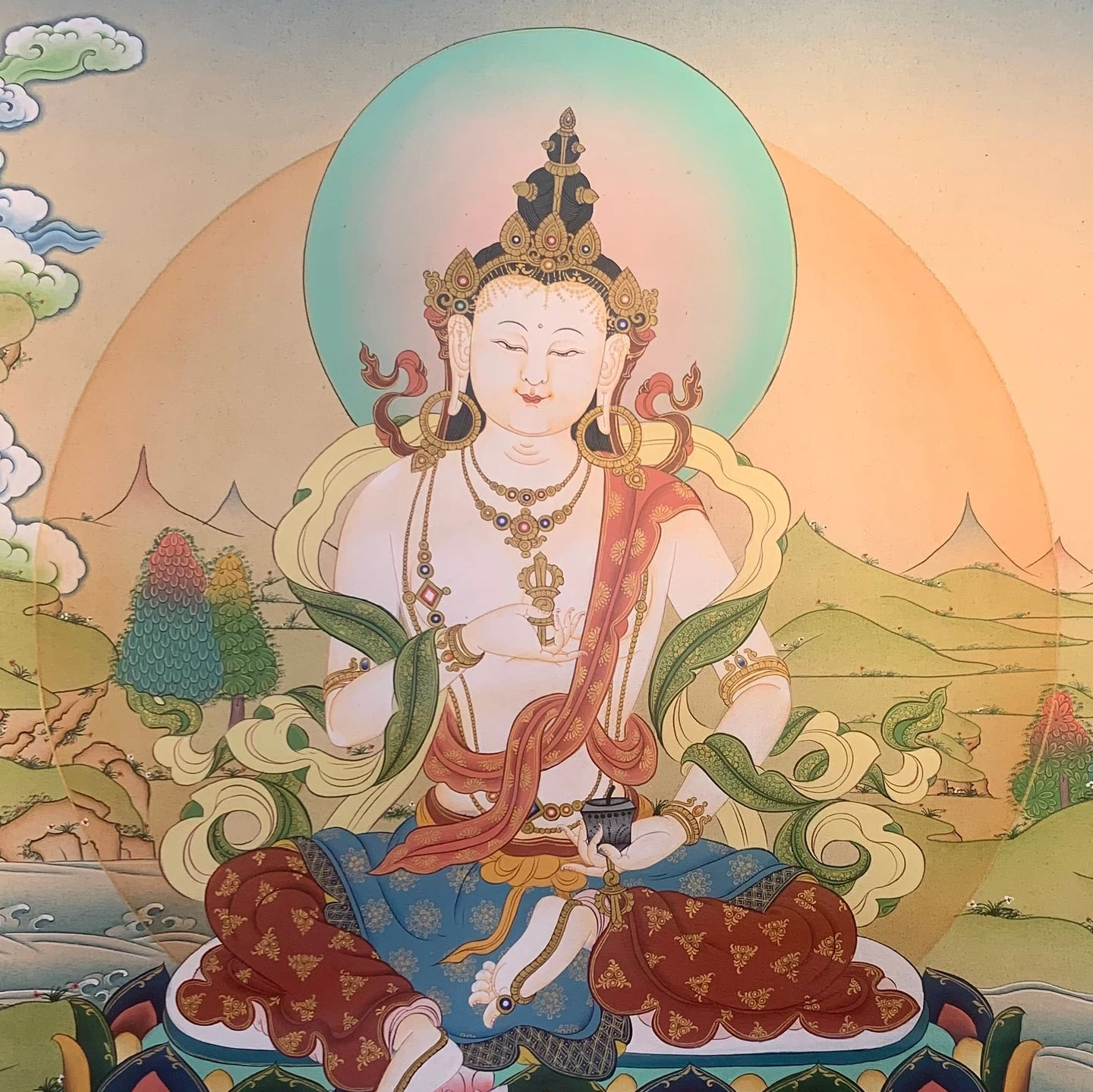
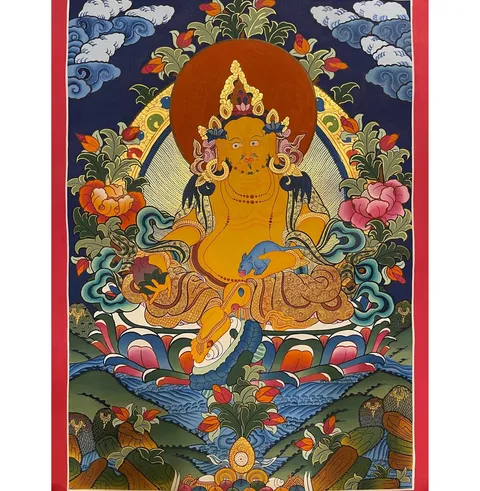
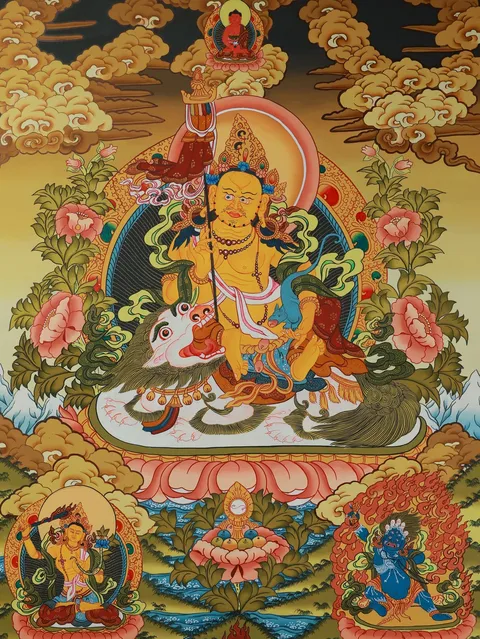
The jewel standard in the right hand of Vaishravana is connected with authority, dignity, and protection. The mongoose in his left hand carries the image of continuing wealth, while a wheel added below links protection with the path of practice and work. A lotus, vase, and wheel perform different tasks in the hands of different deities. The name of an object should therefore be confirmed together with the figure, hand gesture, and position in the composition.
Hand Position Changes the Reading
The same object creates a different action when it is held at the chest, raised above the shoulder, extended outward, or kept close to the body. A wheel at the chest places visual emphasis on the continuing movement of teaching; a sword extended outward creates a directional line of cutting and removing obstacles; a skull bowl held near the body shifts the visual weight toward wisdom and nectar. The right or left hand, the height of the arm, the mudra made by the fingers, and the direction of the attribute establish its action within the image.
Attributes in Multi-Armed Figures
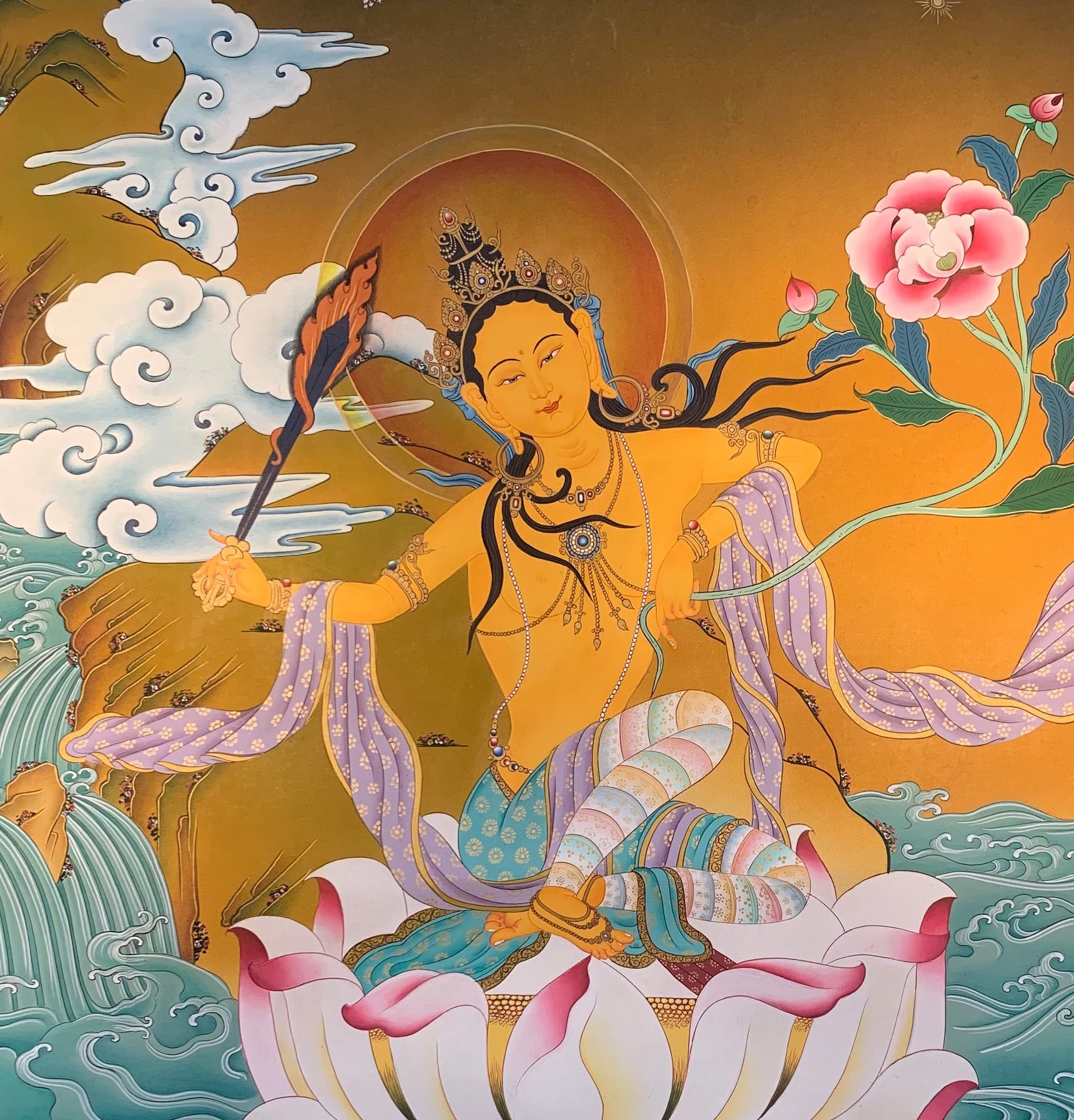
A multi-armed figure is identified through the object, mudra, and direction of each hand. Every attribute places a distinct action or aspiration around the body; the height, spread, and distance of the arms create readable layers of movement. In an image of Thousand-Armed Avalokiteshvara, the many attributes turn countless methods of compassionate assistance into visible hands and objects. In wrathful figures, multiple heads, arms, and legs place the capacity to address several afflictions and hold several fields of vision within one form.
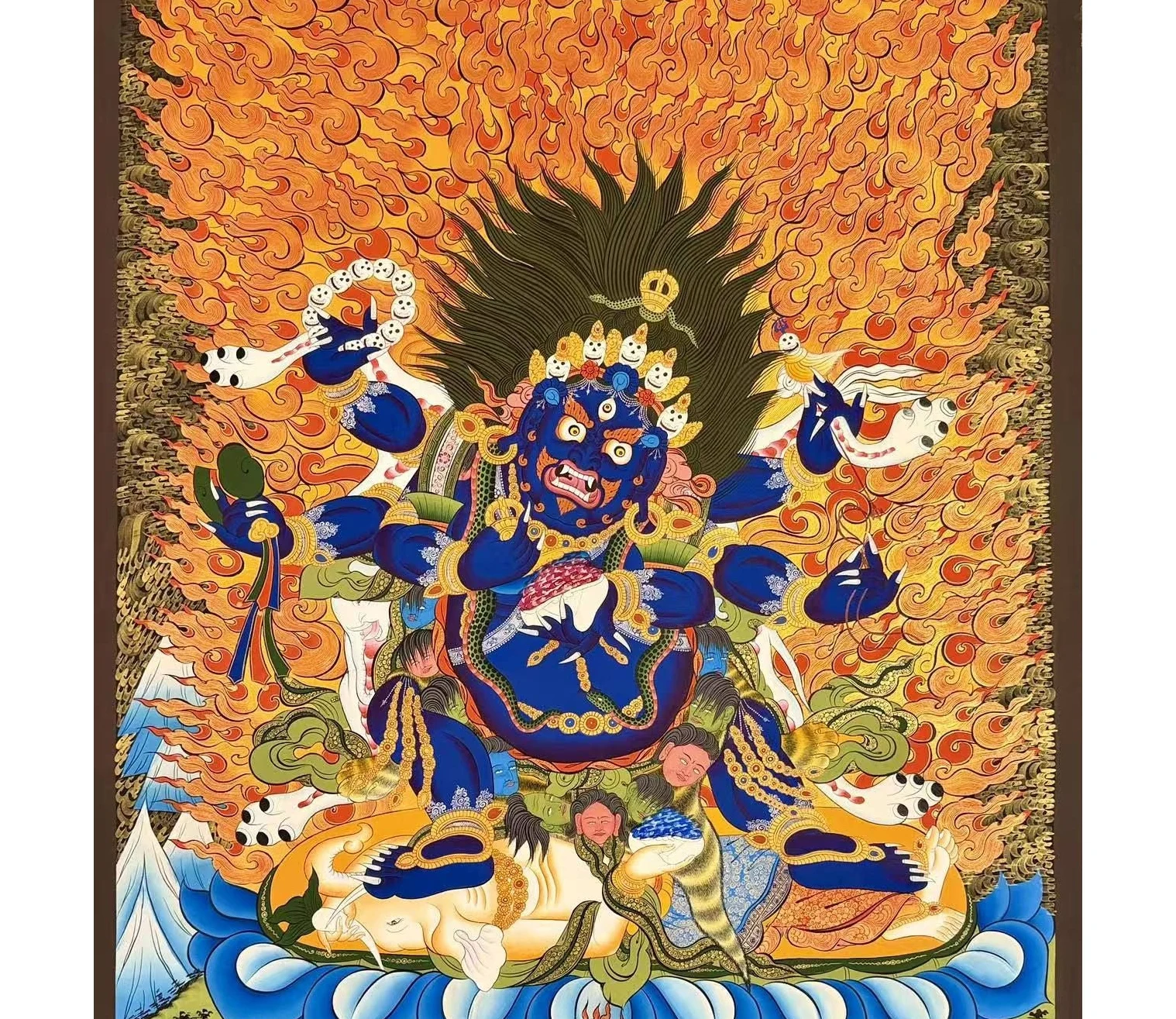
The meaning of a multi-armed figure rests in the relationships among its attributes. The objects, mudras, and directions of the faces show how the deity observes, teaches, protects, or removes obstacles. Each hand remains connected to the central body through the composition, so the details can be read as a coordinated system.
Reading the Whole Figure
An attribute provides a clear entry point. The crown, face, body color, clothing, posture, seat, and architectural background complete the identity. Manjushri's scripture and sword belong with the crown and posture; Padmasambhava's vajra and ritual staff belong with the headdress, layered robes, and palace setting; Vairocana's wheel belongs with the multiple faces, central position, and attendant figures below.
A useful reading chain is person, attribute, mudra, posture, and surrounding figure. The object presents the teaching, aspiration, or protective action of the deity; the mudra and posture show the direction of the action; the surrounding figures complete the lineage, retinue, and space. In this relationship, the ritual object becomes a visible part of identity, action, and meaning.