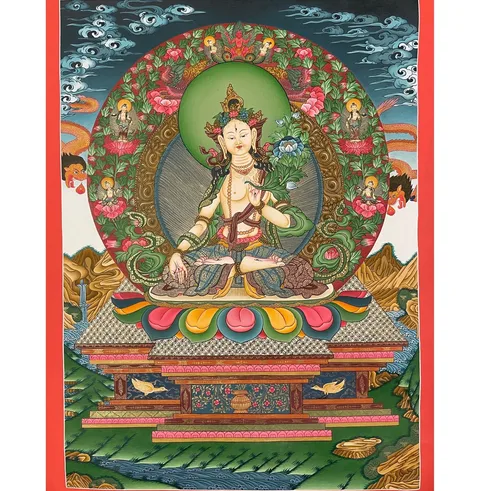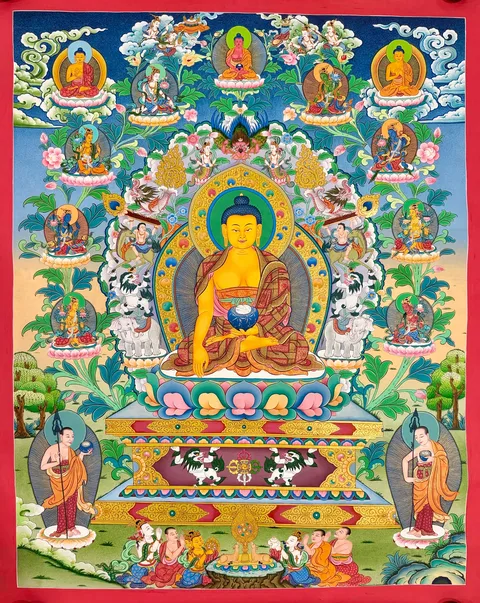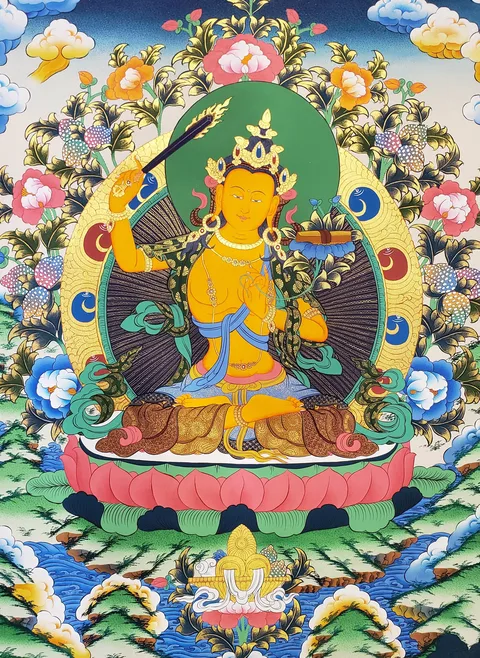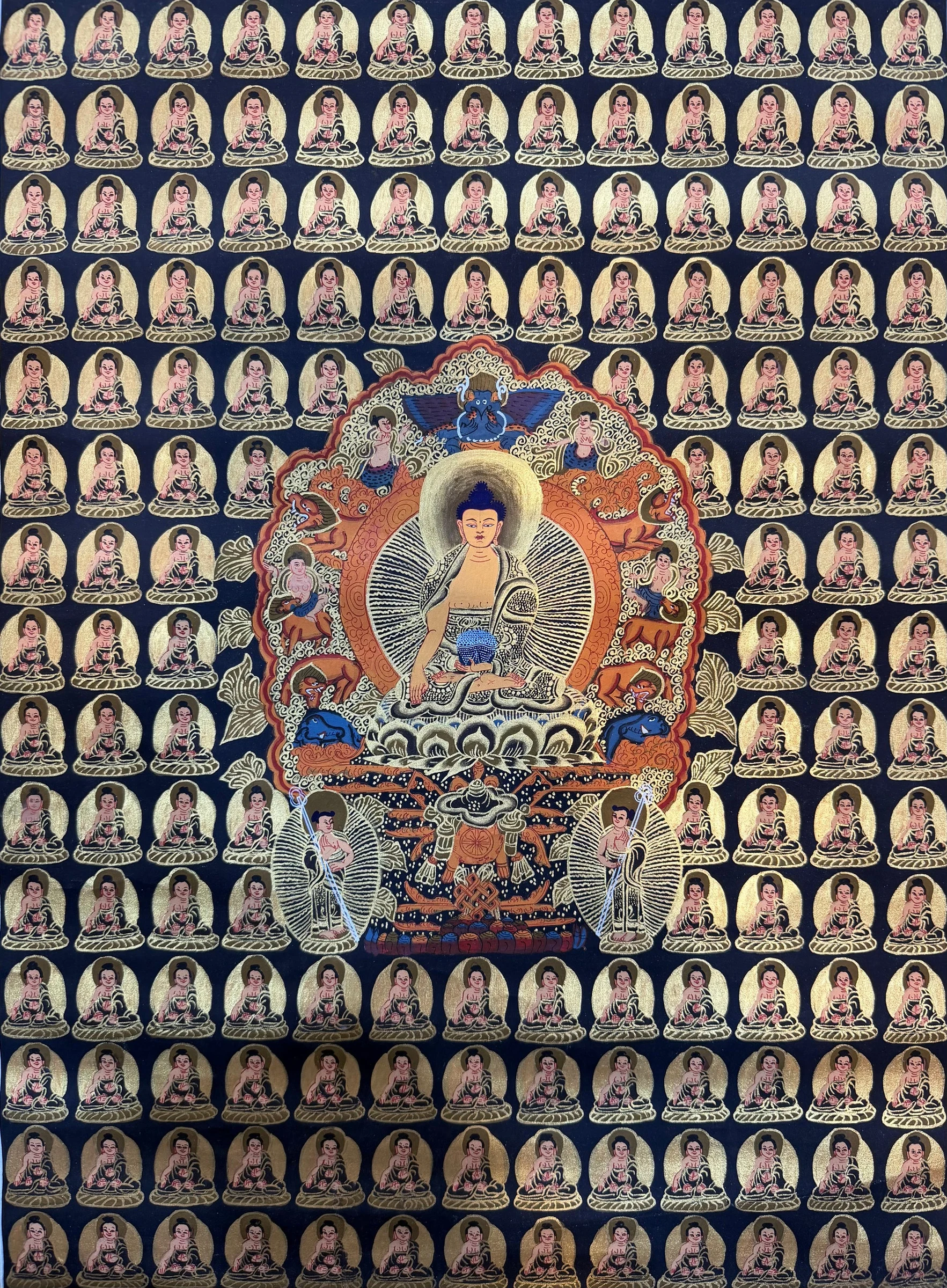
A Printed Work Preserves the Image Presentation
Printing transfers an existing image onto a canvas or other surface. The printed canvas may show regular mesh lines, a visible fabric texture, and little pigment build-up. Under strong light, the surface may also transmit more light. A printed work can present the composition, deity, colors, and visual relationships of a thangka, allowing the viewer to study the image as a reproduced surface.
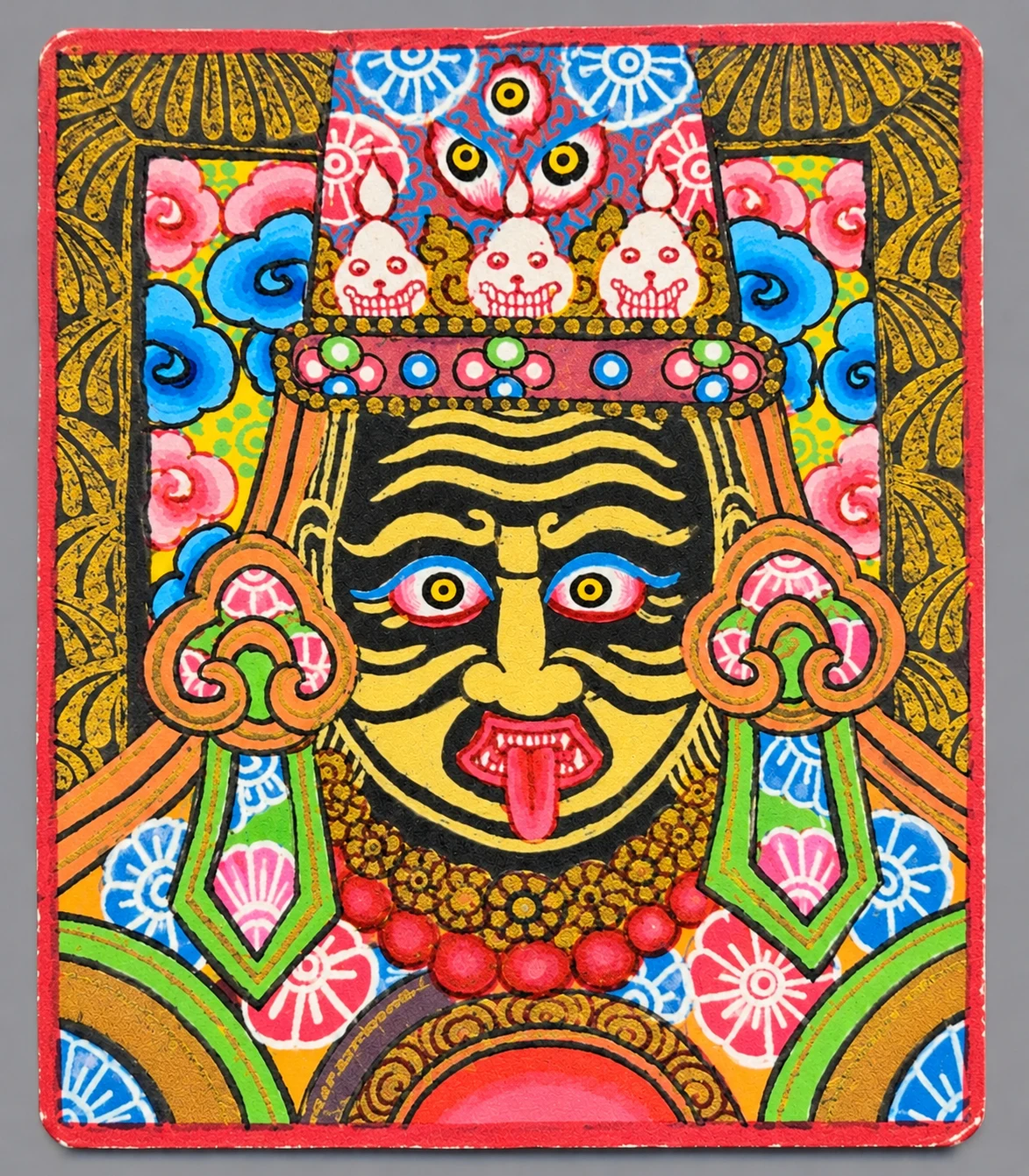
The key is to describe it as a printed surface. Look at whether the mesh is visible, whether most color remains on one plane, and whether the lines carry the softness or edge instability created by printing. Its surface structure differs from that of hand-painted work and should be evaluated on that basis.
A Hand-Painted Work Keeps the Layered Process in the Image
Before painting, the canvas of a hand-painted thangka is carefully prepared and polished so that the surface becomes denser. Mineral pigments are mixed and applied in layers, leaving visible changes in color depth, small relief, and brush-drawn lines. When enlarged, line width, pigment build-up, and canvas density appear together.
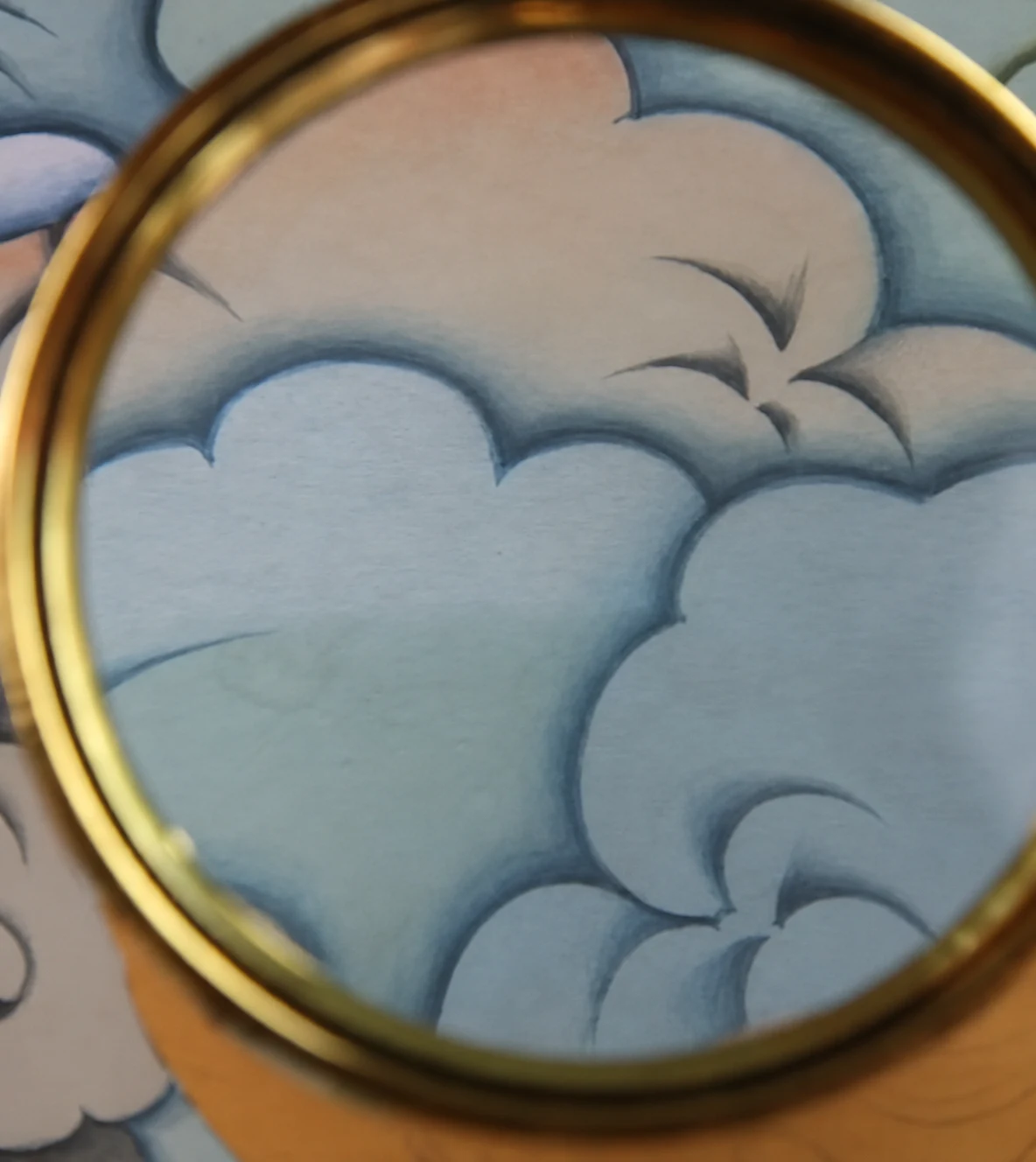
The value of hand painting lies in the process becoming visible in the finished image. Canvas preparation, pigment mixing, coloring, and outlining each leave a surface result. For a viewer who values the artist's labor, handmade layers, and the way a work is made, a fully hand-painted form better matches that focus.
Mixed-Process Works Need Their Own Description
Some works begin with a printed image and then receive local color, gold, or hand-applied lines. A close-up may show handmade marks even though the underlying image remains printed. The surface therefore contains both a printed layer and a local hand-applied layer, and it should be described as a mixed process.
When looking at a mixed-process work, compare the whole image with the line work, gold areas, and skin-tone areas. Pigment build-up proves that a specific area received hand treatment. It does not prove that the entire image was painted from an empty canvas. The complete description must account for the base image and the other regions together.
Choose According to What You Value
If the main purpose is to display an image or study a composition, a printed form can provide that flat visual presentation. If you value canvas preparation, layered mineral pigment, brush texture, and the artist's work of completing each layer, a fully hand-painted form is the better match. The first difference lies in how the work was made and how that process remains visible on the surface.
Before ordering or collecting, ask for close-up details and a making record tied to the exact work. A process video must correspond to that work itself. Only a continuous, close-range record connected to the current piece can link the making process to the image you are examining.