Mudras Are a Visual Language in Thangka Art
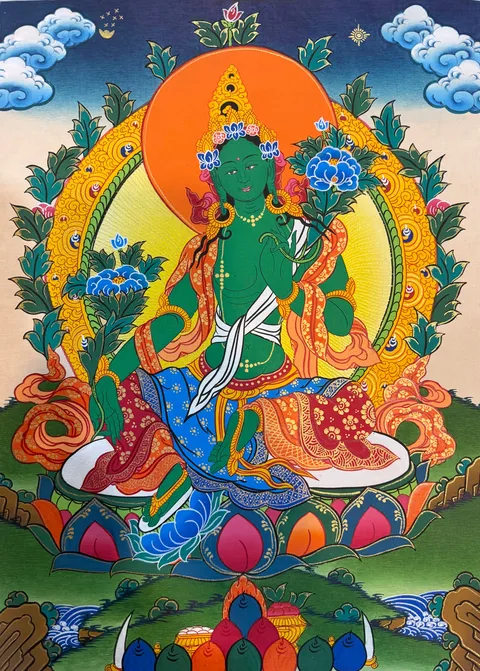
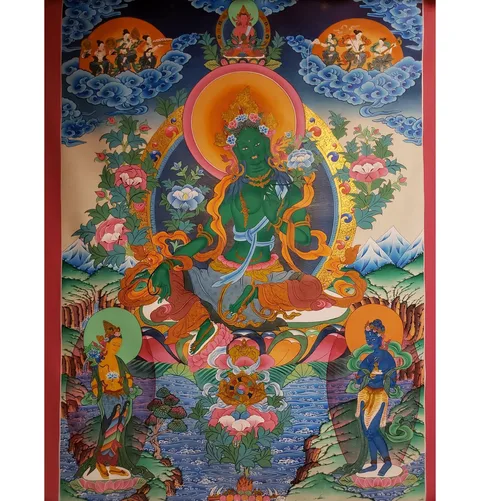
Buddhist images and thangkas use mudras as a visual language. A ring formed by the fingers, an open palm, downward-pointing fingertips, or hands placed together at the body’s center each carries different teaching content and aspiration. A mudra also appears with the seated, standing, or reclining posture, the crown, clothing, body color, and held objects, allowing the viewer to place the gesture within the complete sacred figure.
At an introductory level, the five most common forms are the five mudras associated with Shakyamuni: the gesture of fearlessness, the gesture of granting wishes, the teaching gesture, the earth-touching gesture, and the meditation gesture. Tantric traditions developed more complex systems with forms and explanations that vary by lineage and practice. The name, shape, and visual context of a mudra need to remain connected. A palm facing outward often directs the action toward the viewer, while a palm facing inward gathers the action toward the body; a raised, lowered, or chest-level arm changes the direction and visual weight of the figure.
The Gestures of Fearlessness and Granting Wishes
The gesture of fearlessness usually shows an arm raised to the chest, with the palm facing outward and the fingertips pointing upward. The open hand brings reassurance, courage, and protection into the image, like an extended hand telling beings to release fear. The gesture is therefore associated with safety, steadiness, and the strength to face difficulty.
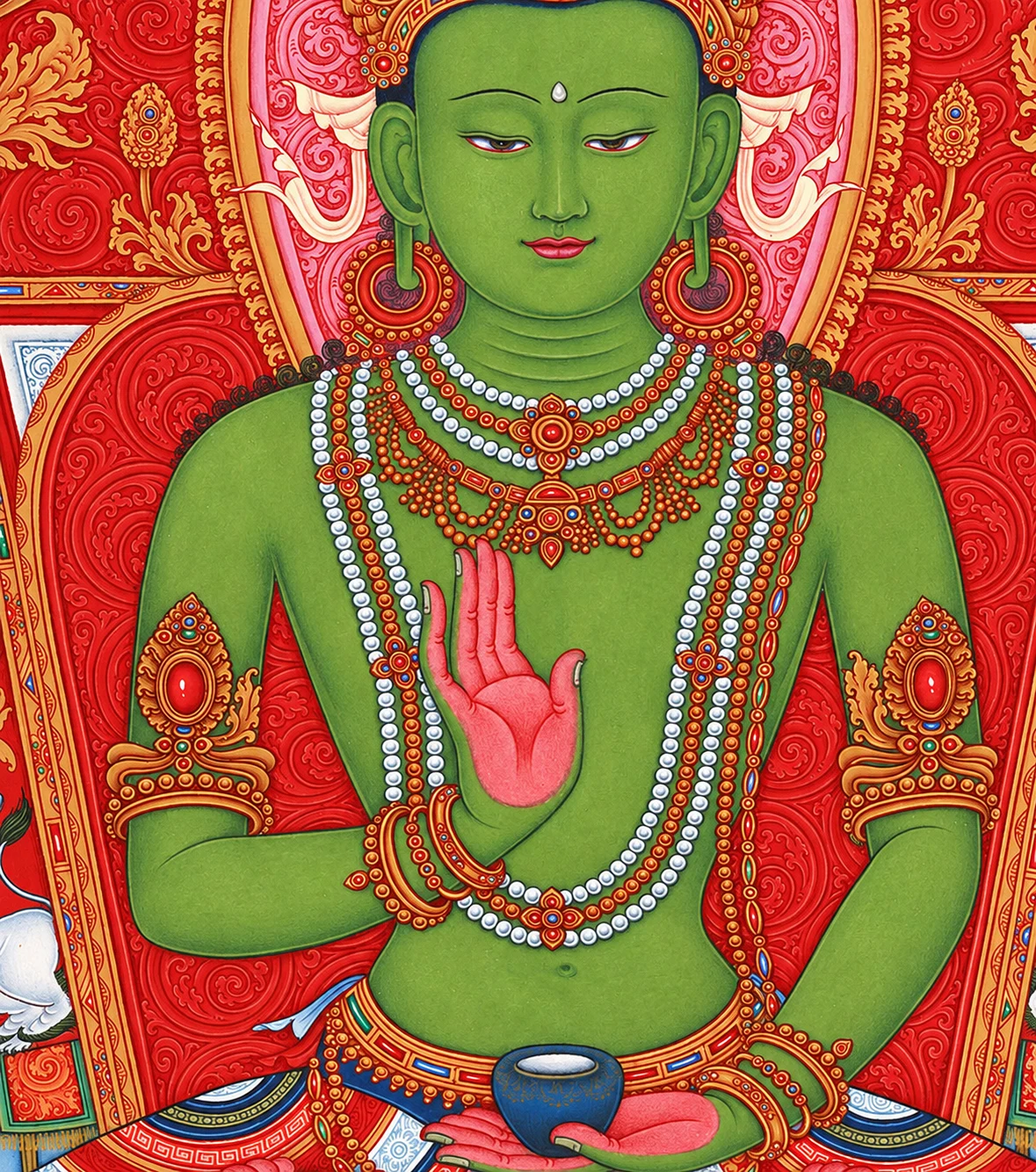
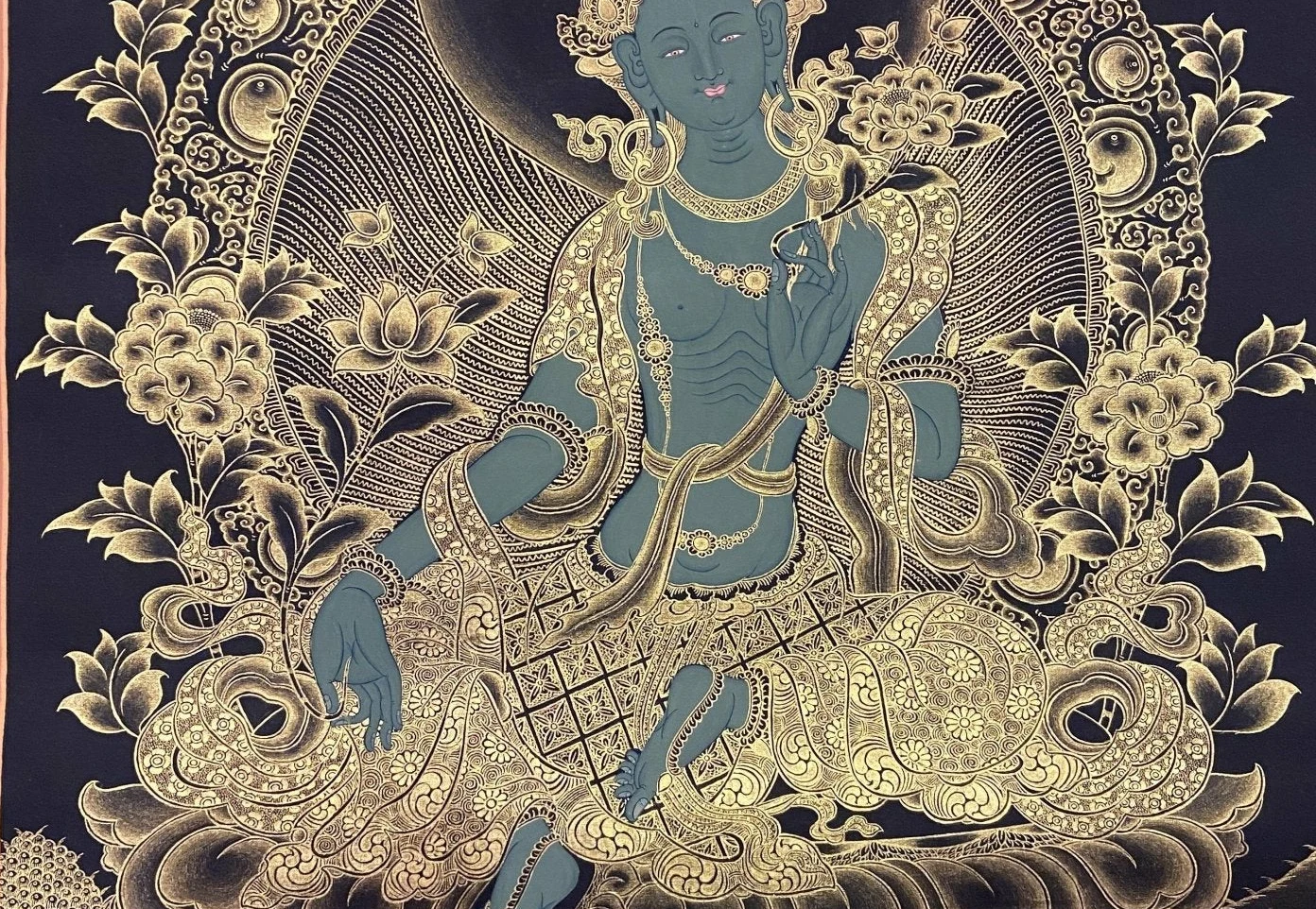
The gesture of granting wishes, also called the wish-granting gesture, shows the arm lowered naturally, with the palm facing outward and the fingertips pointing down. The lowered hand corresponds to receiving and fulfilling wishes, expressing compassion, blessing, and aspiration. The two gestures often appear together, one raised and one lowered: one hand reassures beings while the other responds to their wishes, creating a clear vertical relationship.
The Teaching and Meditation Gestures
In the teaching gesture, the thumb and index finger touch to form a ring while the middle, ring, and little fingers extend naturally. The ring concentrates the hand movement at the chest and presents the Buddha teaching the Dharma, transmitting wisdom, and opening the mind. Its circular form also gives the gesture a visual sense of completeness and a teaching that continues to unfold.
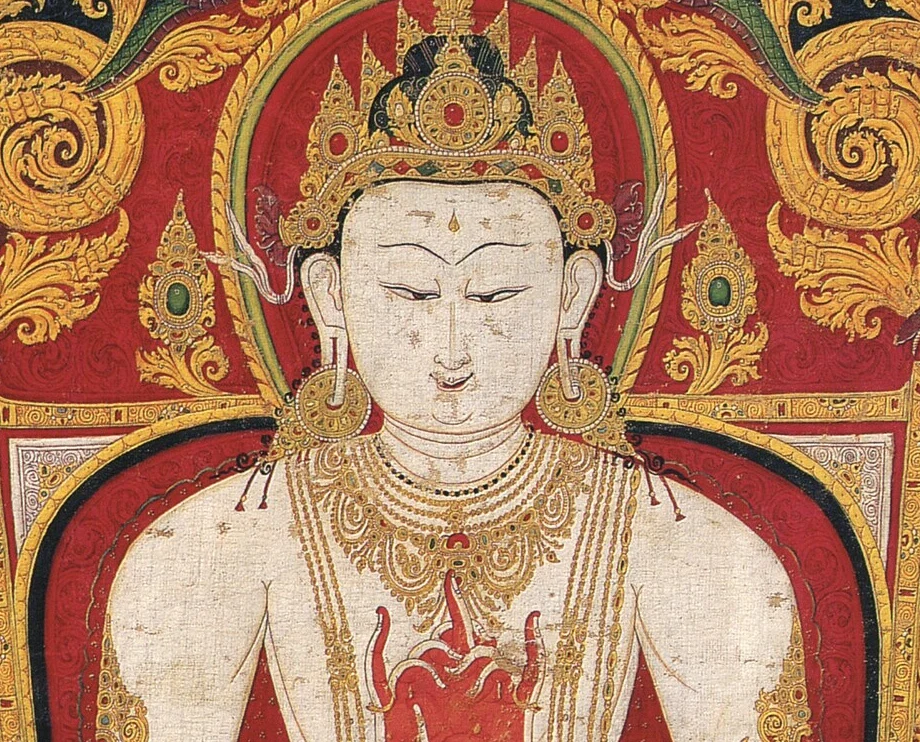
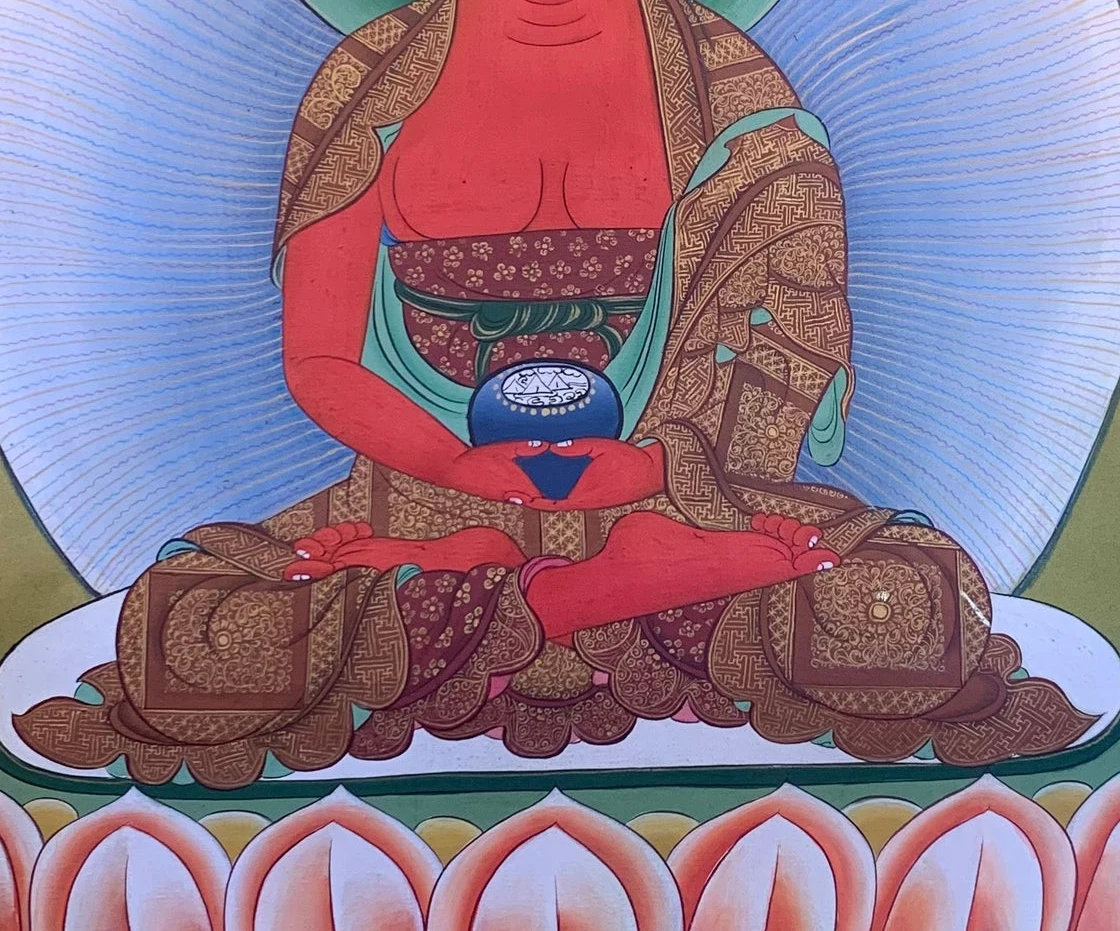
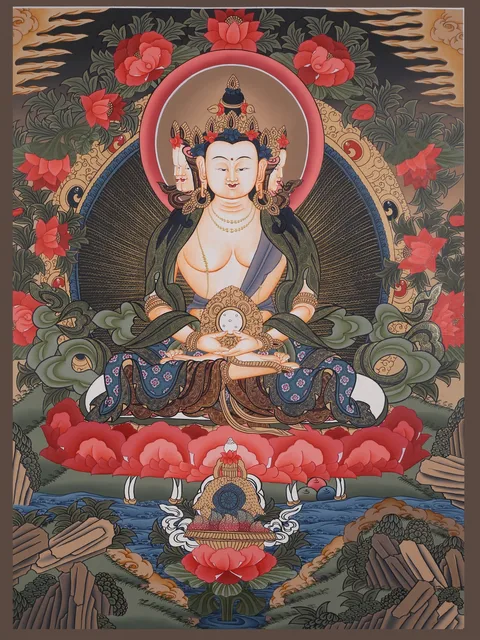
In the meditation gesture, both palms face upward at the lower abdomen, with the right hand resting over the left and the two thumbs touching. The pose brings the hands back toward the body's center and expresses meditation, inner stability, and a clear mind. In images of Shakyamuni practicing and awakening beneath the bodhi tree, the meditation gesture often appears with a cross-legged posture.
The Earth-Touching and Palms-Joined Gestures
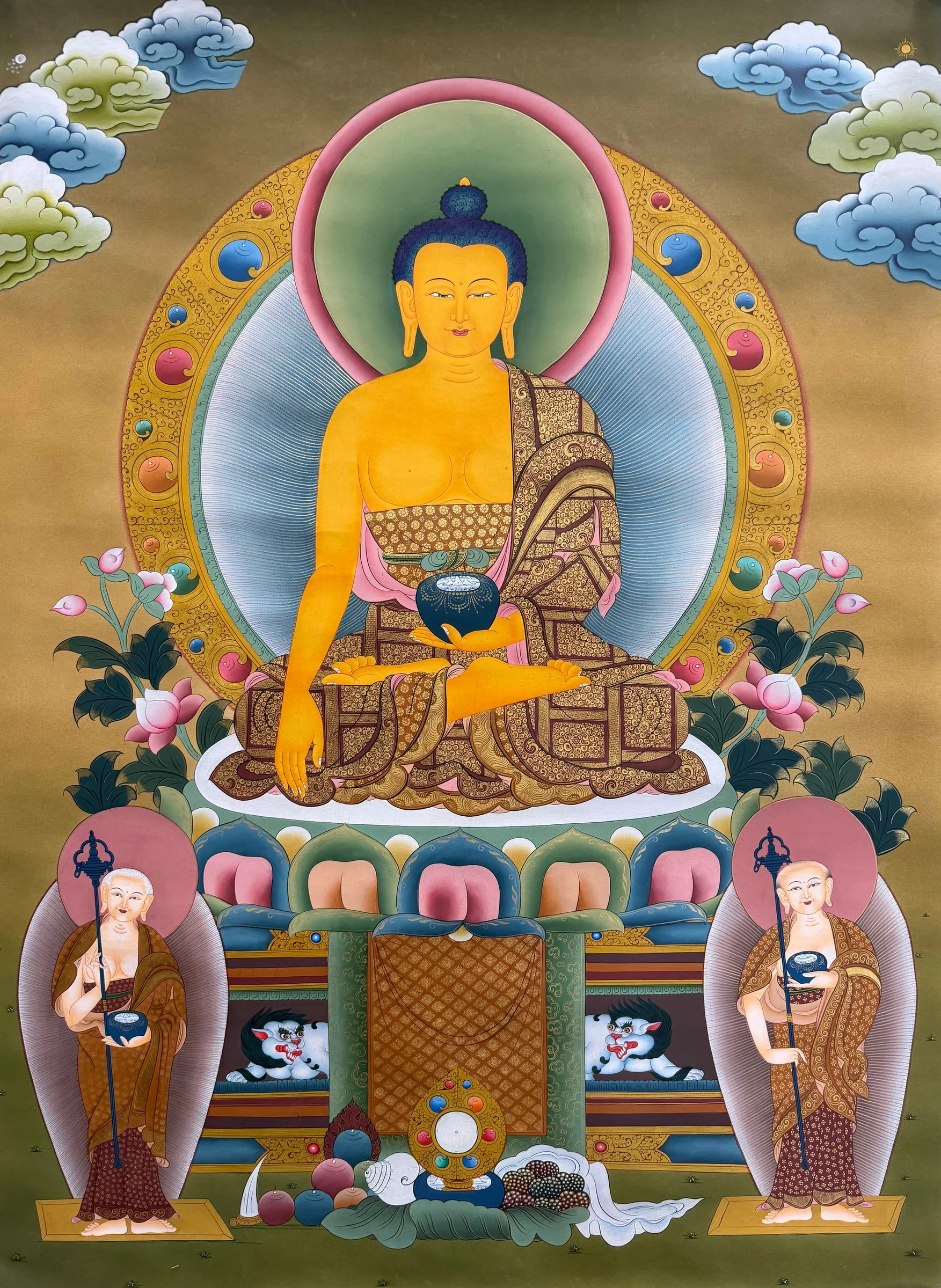
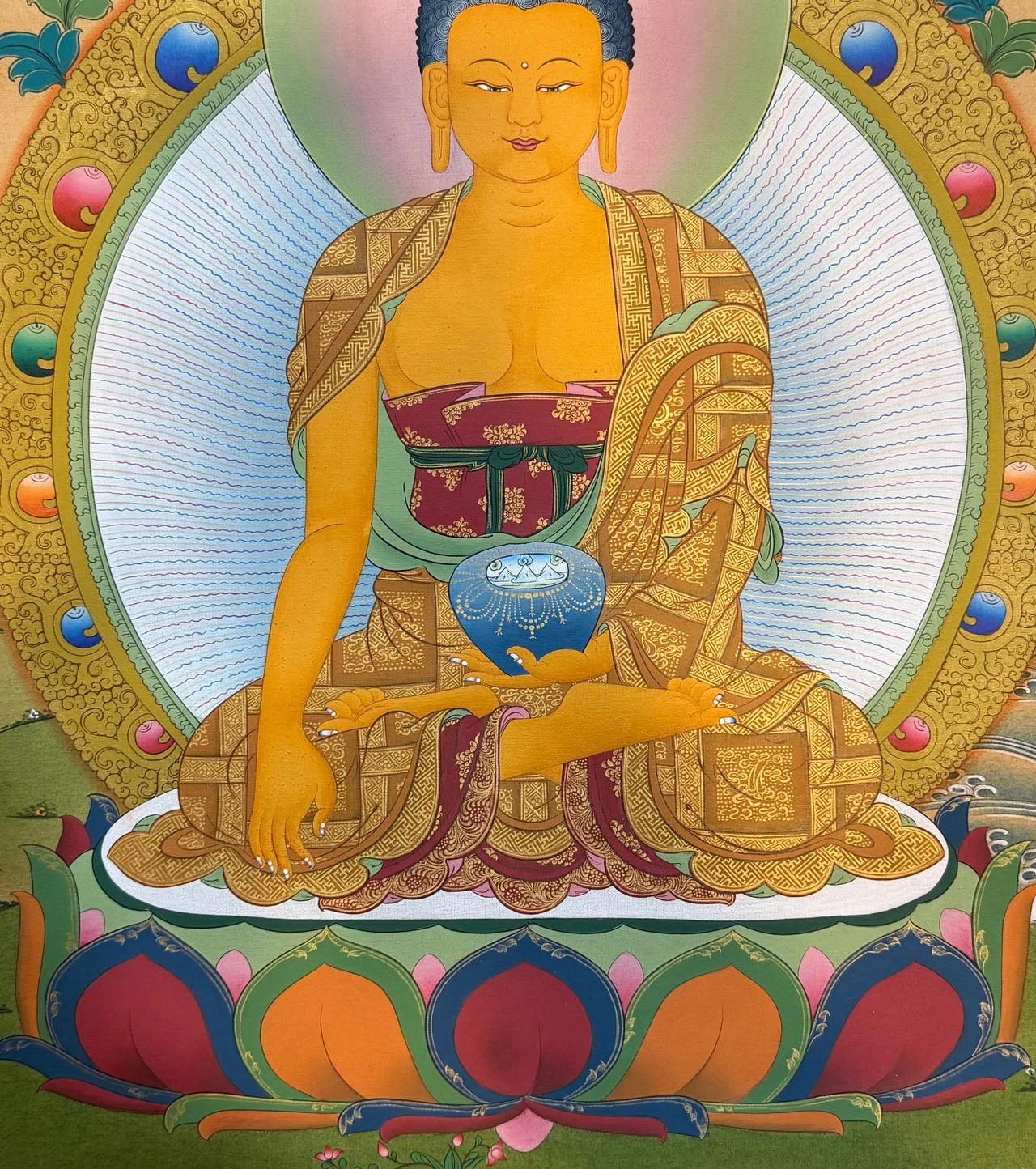
The earth-touching gesture, also called the gesture of subduing obstacles, extends the right hand downward until the fingertips touch the ground, with the palm turned toward the body. The movement connects with the story of Shakyamuni awakening beneath the bodhi tree: the earth becomes a witness, and the practitioner faces disturbance and obstacles with firm resolve. Contact between the fingertips and the ground gathers awakening, determination, and the overcoming of inner obstacles into one action.
The palms-joined gesture brings both hands together at the chest, with the palms facing each other and the fingers pointing upward. It expresses reverence, respect, and concentration, and it appears in acts of worship and greeting. The joined hands return the body to its central line; their symmetry places respect directly at the center of the composition.
Read the Mudra with the Full Figure
A mudra offers a strong clue. The complete reading also includes the sacred figure, posture, held objects, body color, clothing, attendants, and position in the composition. Shakyamuni is often shown with the right hand touching the ground to express awakening. Amitabha is often shown with both palms facing upward in the lap, or holding a lotus to express welcoming beings. Medicine Buddha often appears with a medicine bowl or a stupa; the mudra and the object together clarify the direction of his aspiration.
The same mudra can appear in images of different buddhas and bodhisattvas. A crown or cranial protuberance, clothing, ritual object, seated posture, and attendant figures provide further identity information. Complex tantric mudras require the background of their lineage, ritual, and meditation practice; the five common forms offer a practical starting point through shape, movement, and visual meaning. Chinese sources may use different names for the same form, such as the wish-granting gesture and the earth-touching or obstacle-subduing gesture. Palm direction, fingertip position, and the sacred figure help establish which form is being shown.
The core of reading a mudra is to keep the action and the aspiration within the same image: an outward-facing palm conveys reassurance or the granting of wishes, a ring of fingers connects with teaching and wisdom, joined hands at the abdomen express meditation, fingertips touching the ground point to awakening, and palms joined at the chest express reverence. A mudra is one of the most direct action languages in a thangka and an entry point into the identity and meaning of the sacred figure.