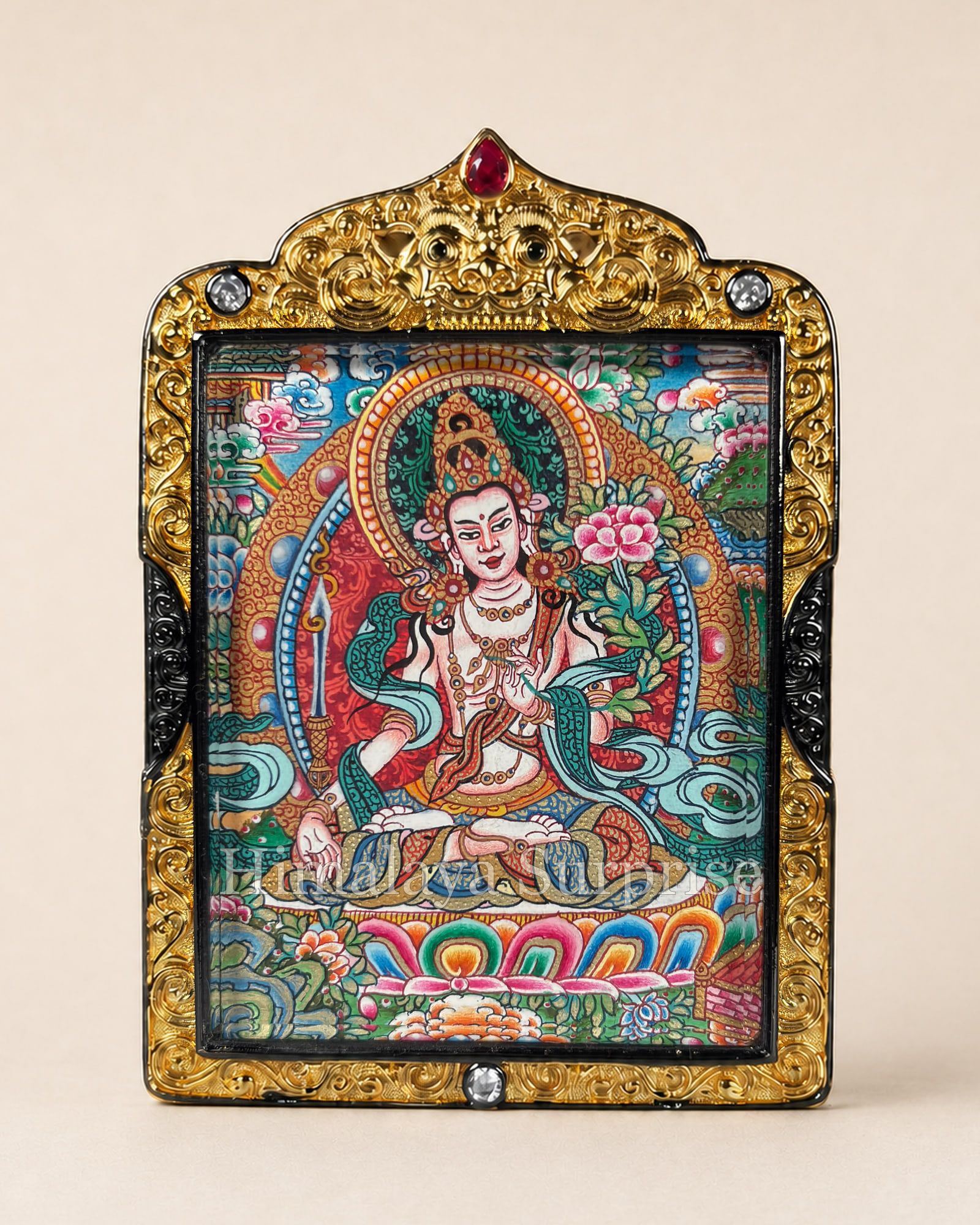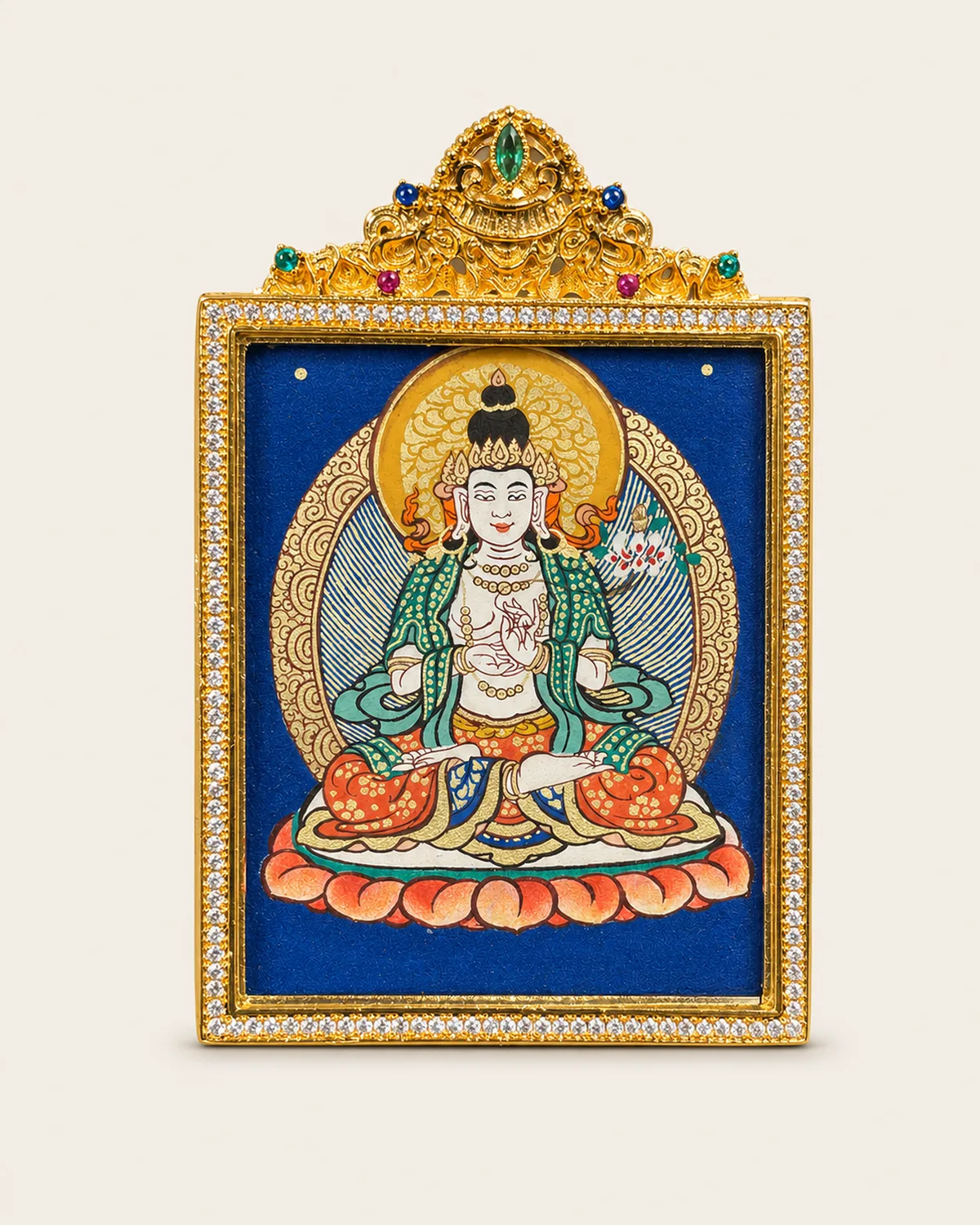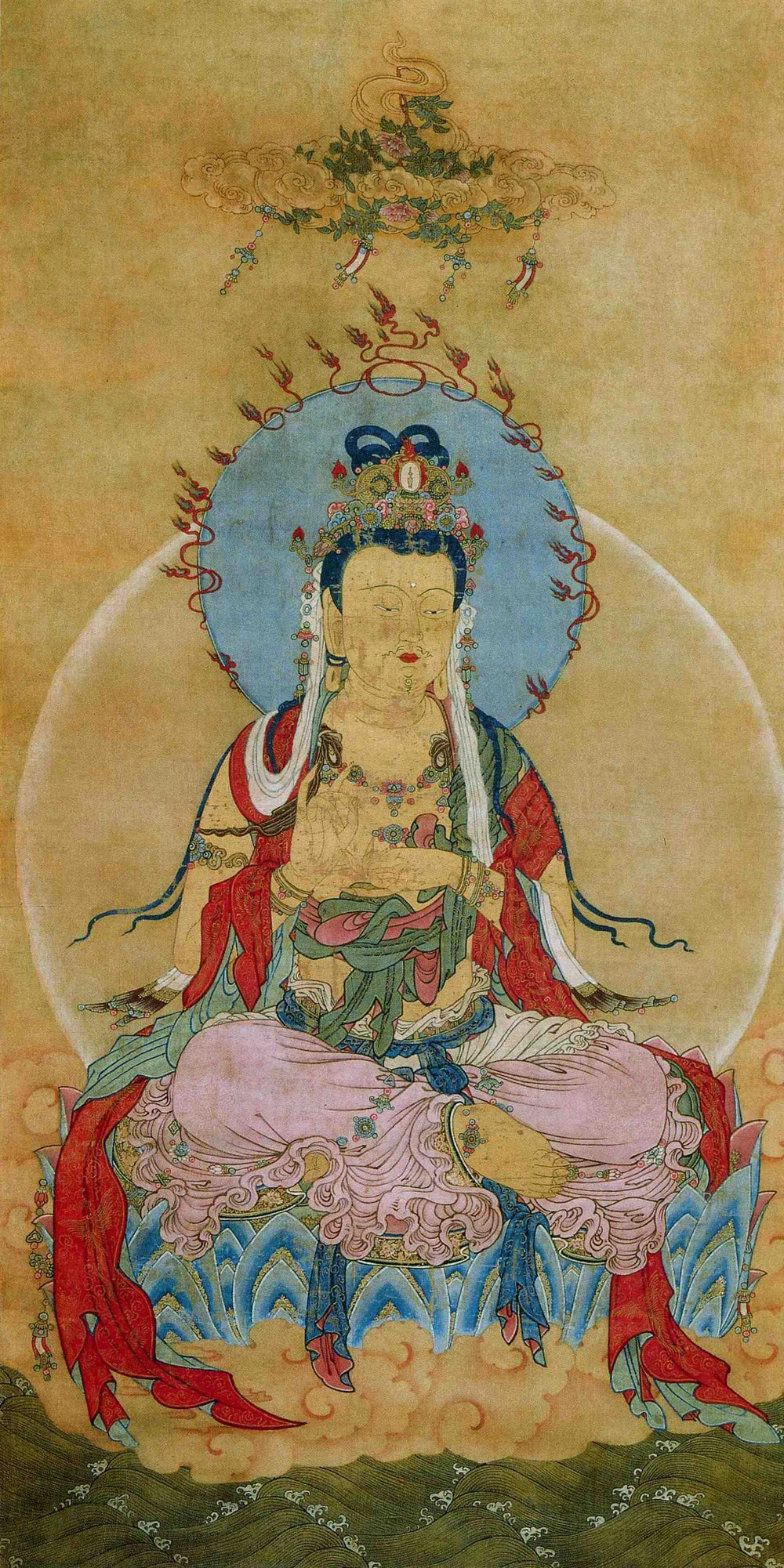
Mahasthamaprapta and the Light of Wisdom
Mahasthamaprapta is also known by names meaning “One Who Has Attained Great Power” and “Bodhisattva of Great Diligence.” These names express the immense power of wisdom to lead living beings toward liberation. The Contemplation Sutra explains the name Mahasthamaprapta through the light of wisdom that shines on all beings and helps them escape suffering.
The sutra also describes a purple-gold radiance shining from his whole body throughout the worlds in every direction. He is therefore also called the Bodhisattva of Boundless Light. This light expresses the wisdom that dispels ignorance, confusion, and mistaken views. Great diligence expresses the strength to continue practicing and sustain wholesome qualities, linking perseverance with the growth of wisdom.
Devotees pray to Mahasthamaprapta for courage and inner strength in difficult times, less confusion, and clarity of judgment. Their prayers also include protection and peace, success in work, deliverance from misfortune, and confidence and perseverance in Buddhist practice.
The Three Sages of the Western Pure Land
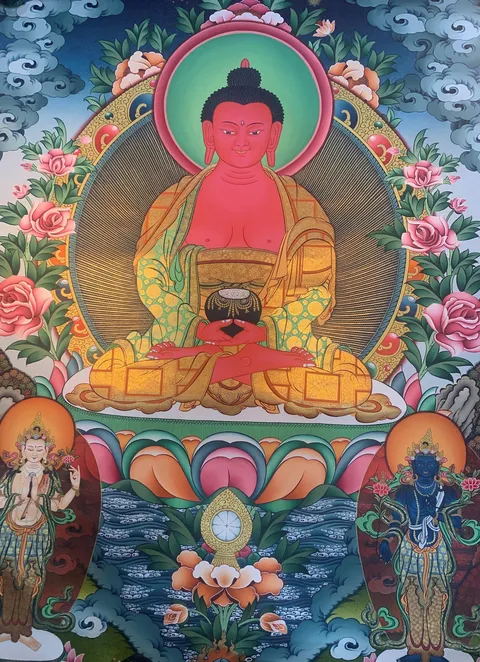
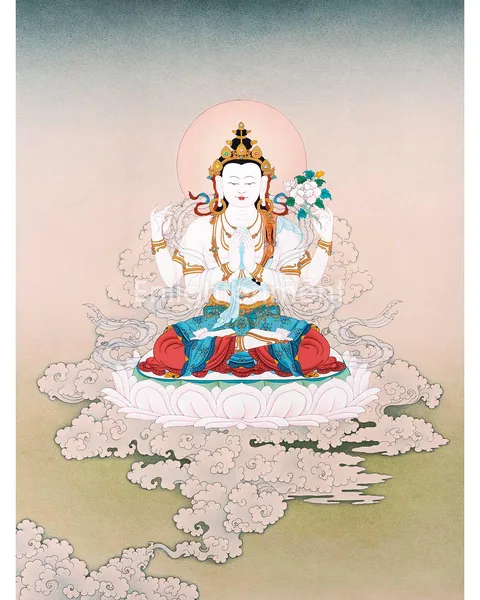
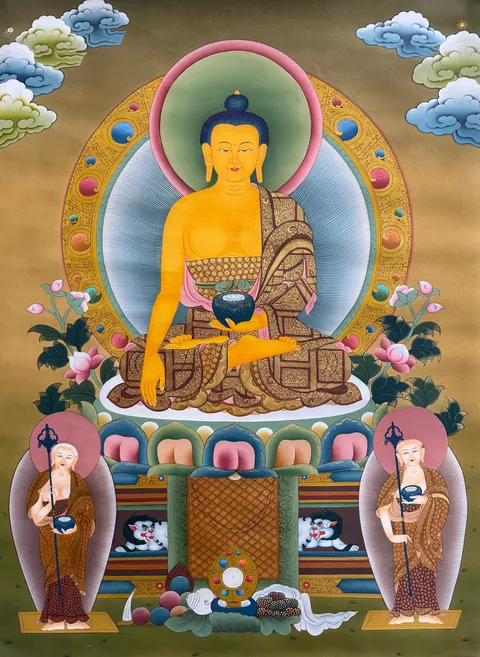
The Three Sages of the Western Pure Land place Amitabha as the principal Buddha, with Avalokiteshvara and Mahasthamaprapta as attendant bodhisattvas on either side. The grouping is also known as the Amitabha Triad. Attendant bodhisattvas assist a Buddha in teaching and leading living beings toward liberation. Within this triad, Amitabha is associated with infinite light and infinite life, Avalokiteshvara embodies compassion, and Mahasthamaprapta embodies wisdom.
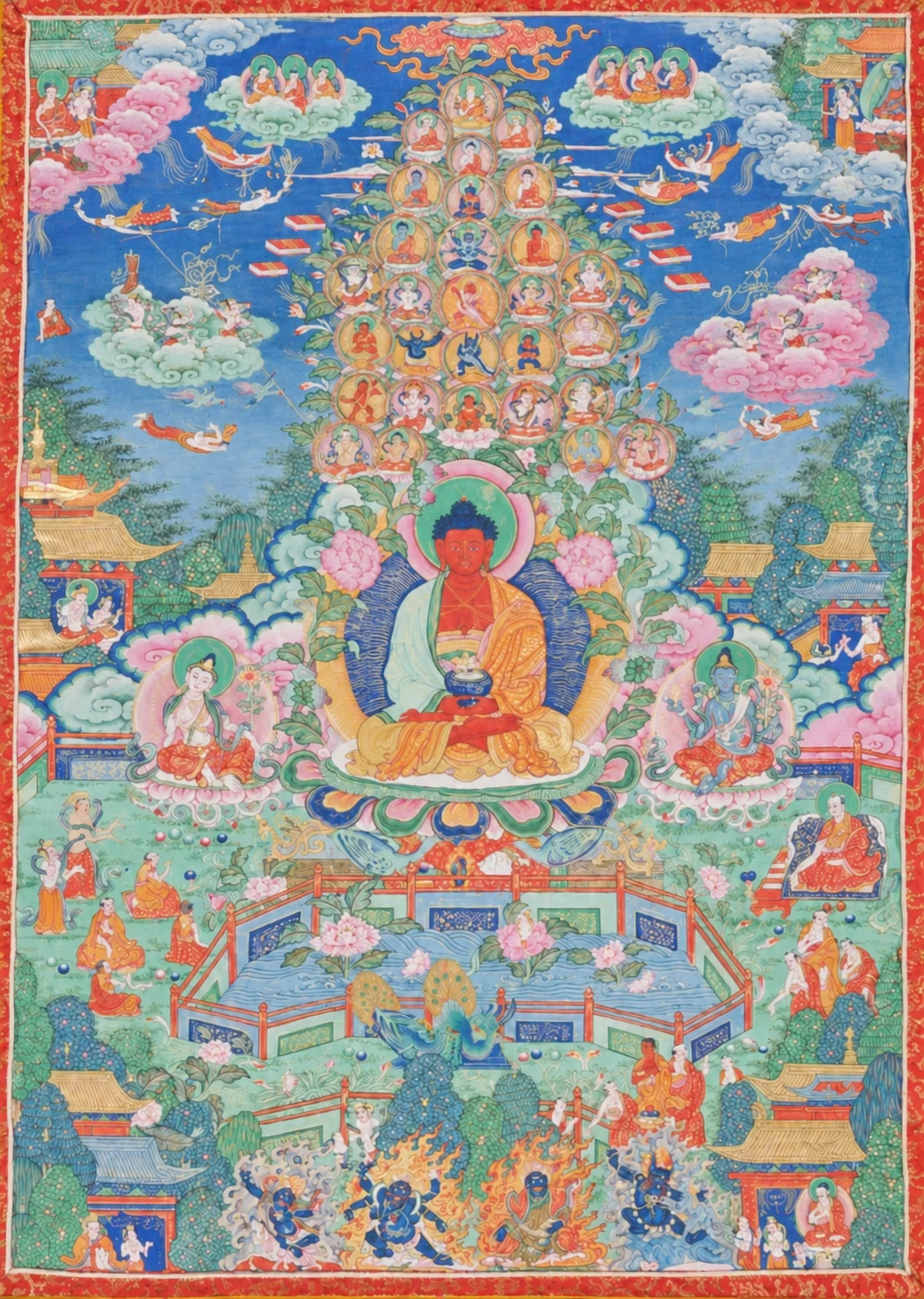
In Pure Land Buddhism, the Western Pure Land of Sukhavati is the Buddha realm established through Amitabha’s vows. Practitioners aspire to be reborn there, where they can continue practicing in peaceful surroundings and progress toward liberation. Avalokiteshvara and Mahasthamaprapta assist Amitabha in welcoming beings to the Pure Land. A composition showing the three together therefore also carries aspirations for freedom from suffering, rebirth in the Pure Land, and liberation.
The Crown Vase and Lotus
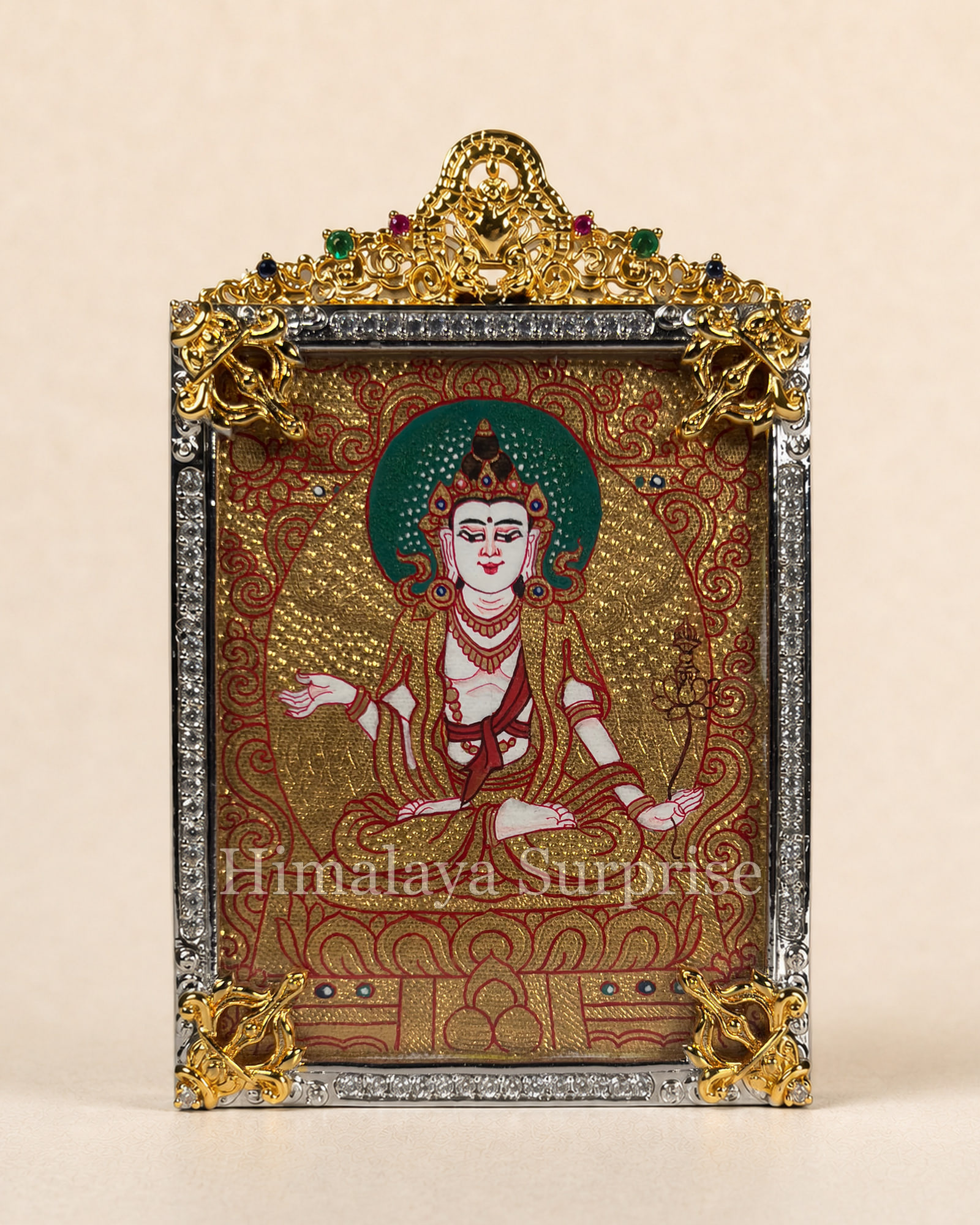
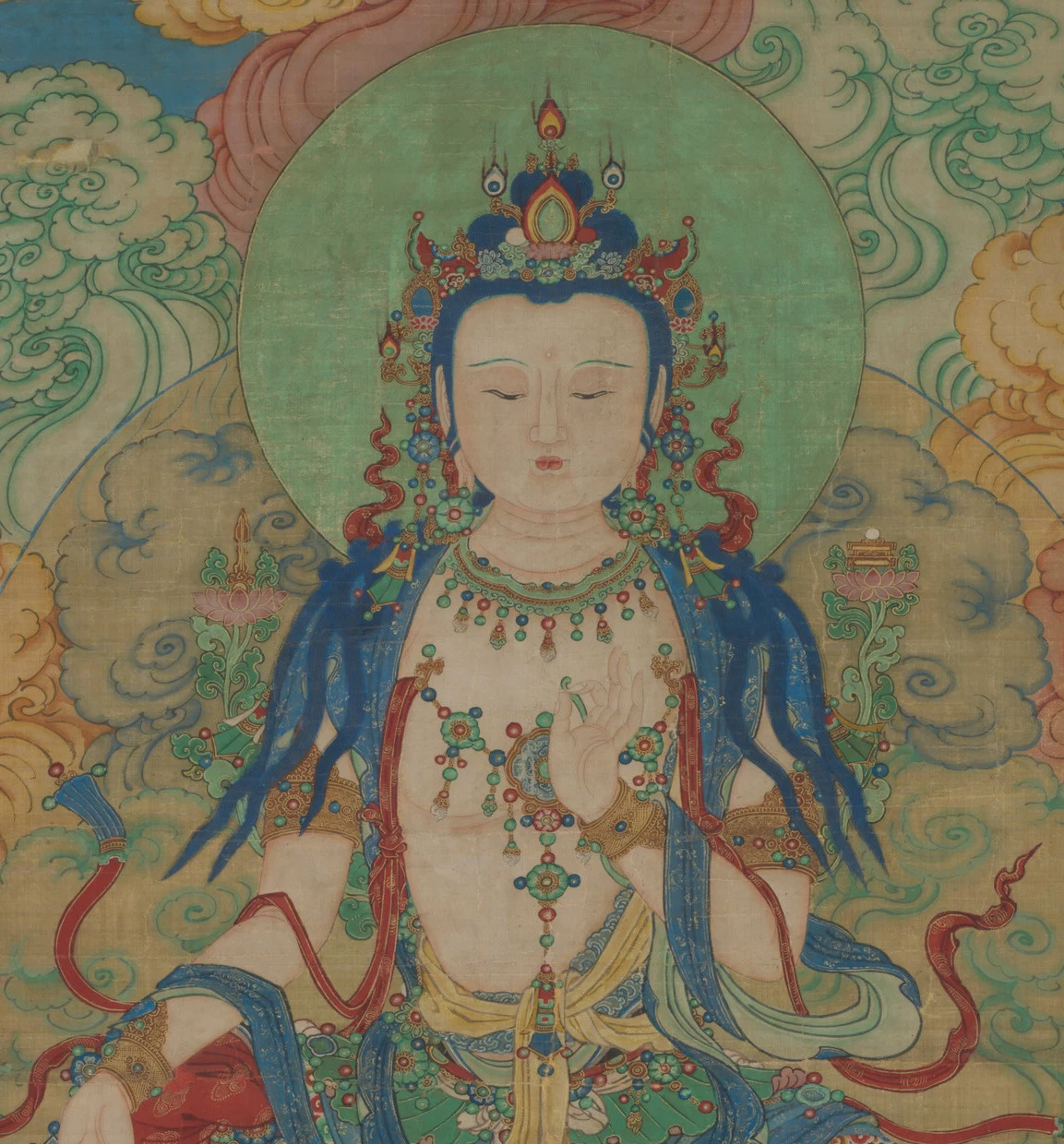
Mahasthamaprapta resembles Avalokiteshvara in appearance, wearing a jeweled crown and displaying a dignified bearing. A vase in the crown or topknot is an important identifying feature of Mahasthamaprapta. Avalokiteshvara’s crown, by comparison, can contain a small image of Amitabha. Mahasthamaprapta’s vase holds the light of wisdom, expressing the guidance of living beings toward liberation through that light.
A story about the vase concerns the dedication of merit to his parents. When Mahasthamaprapta began practicing, his parents had already died. He placed their remains in a vessel carried on his head and dedicated the merit of his practice to them. According to the story, when he attained spiritual accomplishment, the remains became light and the vessel became a sacred vase. The story gives the vase a further meaning: gratitude for one’s parents and the dedication of merit from wholesome actions to loved ones.
Mahasthamaprapta also appears holding a lotus or with his palms joined. The lotus expresses purity and wisdom.
Buddha-Recollection and Diligent Practice
Mahasthamaprapta is closely associated with the practice of recollecting and reciting the Buddha. The chapter on Mahasthamaprapta’s realization through Buddha-recollection in the Shurangama Sutra recounts his attainment through remembering and reciting the Buddha. This practice means continually bringing the Buddha to mind and keeping one’s attention focused on the Buddha. An important instruction is to gather in all six faculties and let pure mindfulness continue without interruption.
The six faculties are the eyes, ears, nose, tongue, body, and mind, encompassing sensory perception and awareness. Gathering them in means collecting a body and mind scattered among external distractions. Uninterrupted pure mindfulness means sustaining a clear, continuous recollection of the Buddha. Within this tradition, Mahasthamaprapta is also regarded as protecting those who practice Buddha-recollection and guiding them toward the Pure Land.
Focus and perseverance also appear in the prayers of devotees today: less distraction amid turmoil, and the determination to continue once a direction has been chosen.