Tibetan Avalokiteshvara and the Four-Armed Form
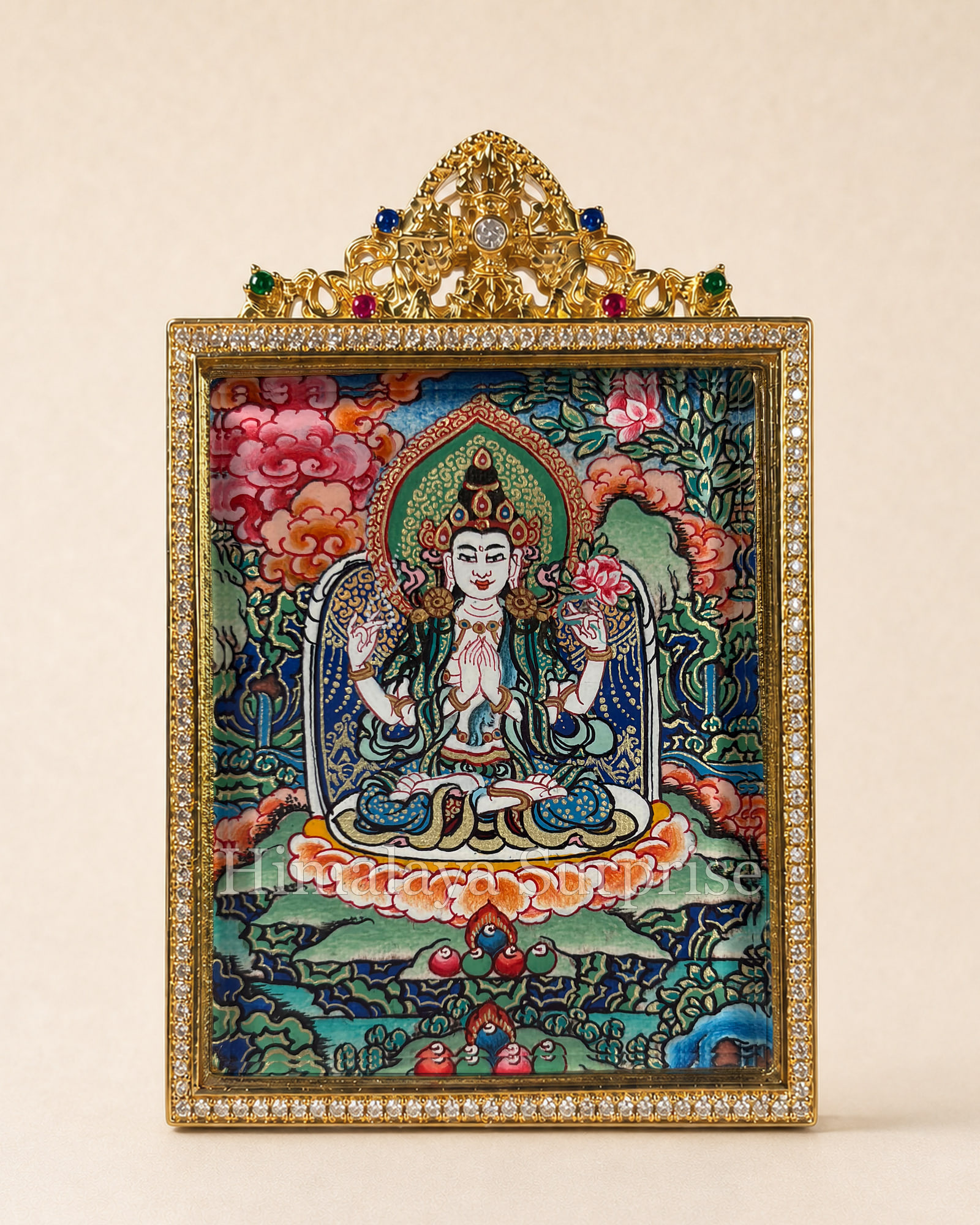
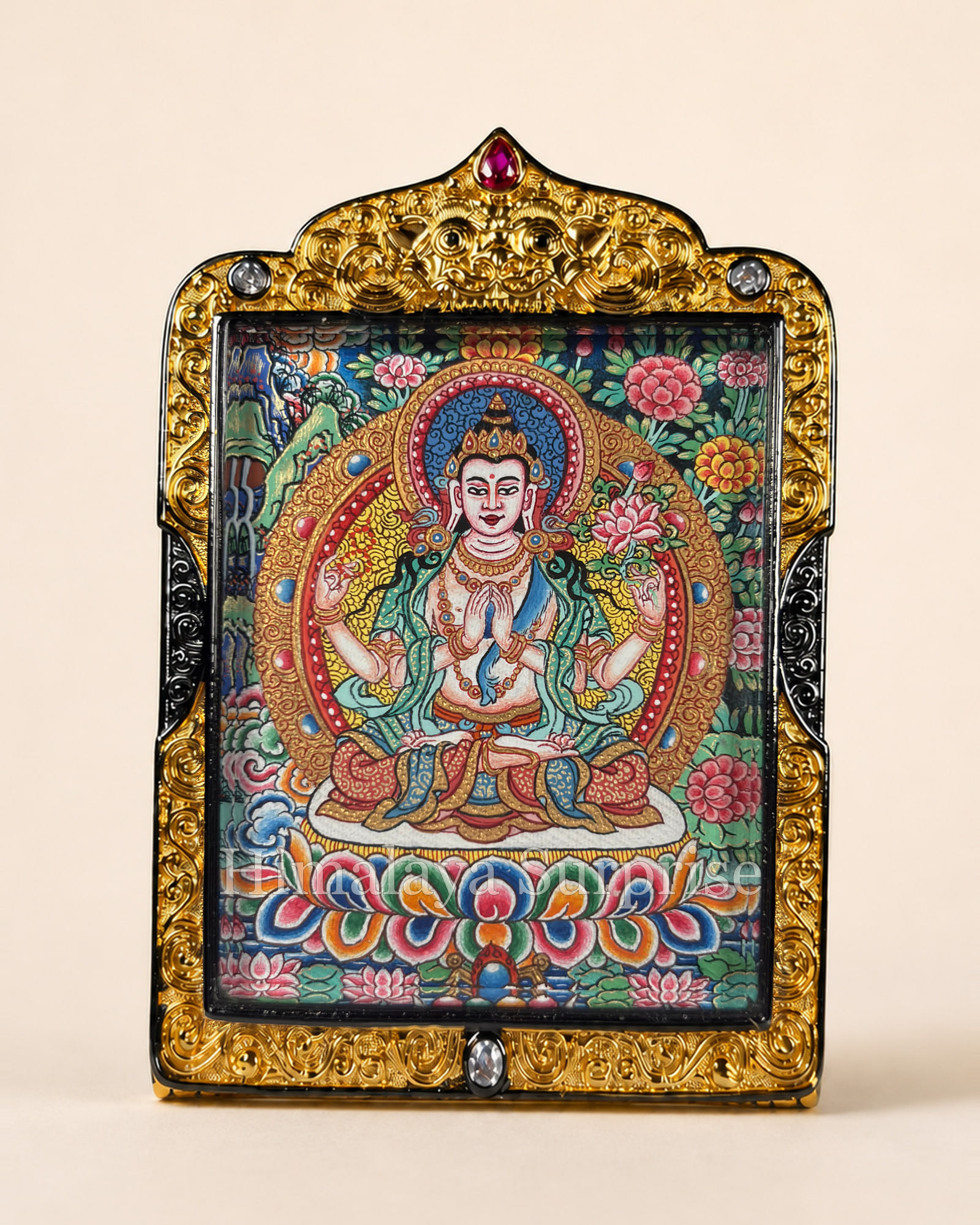
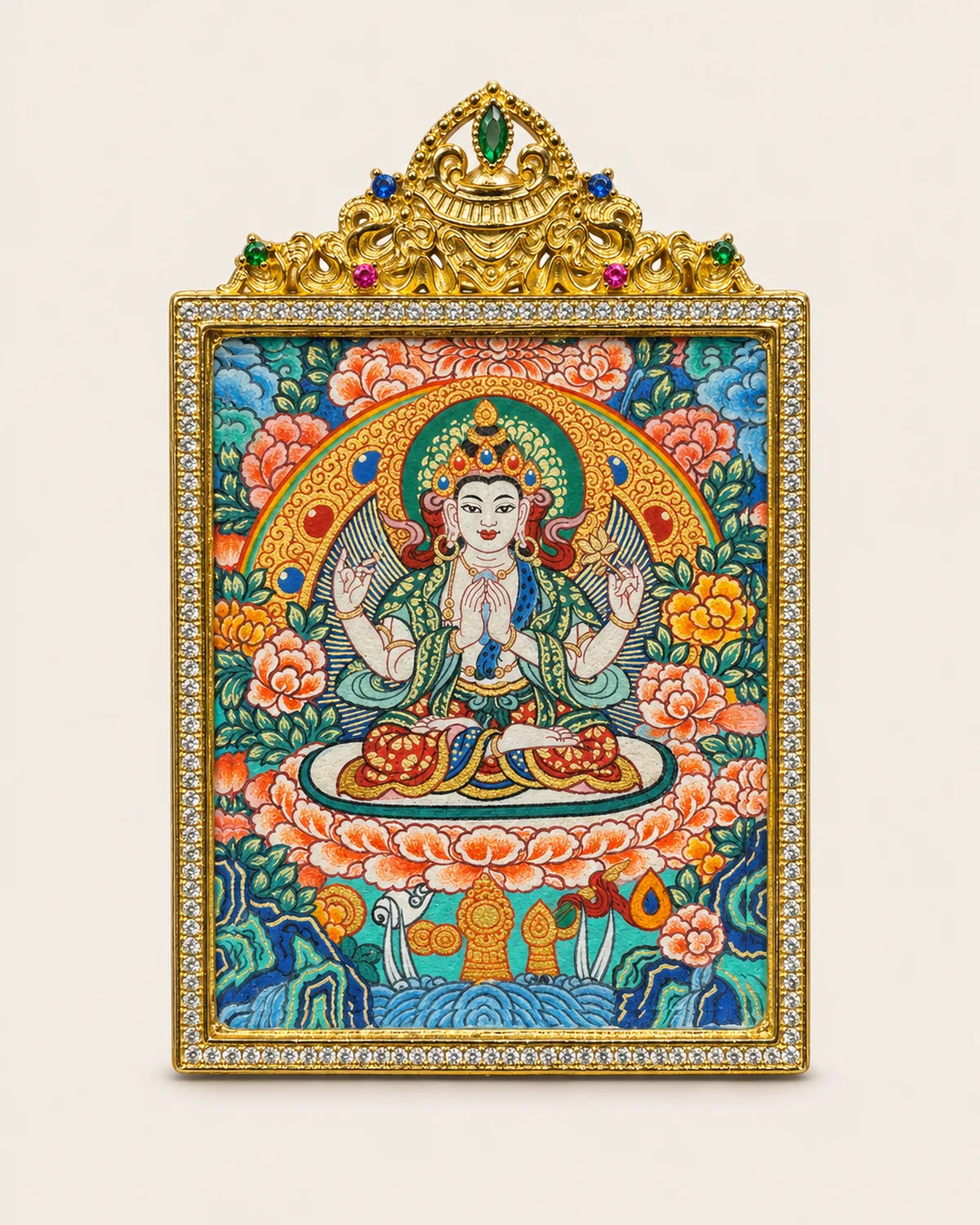
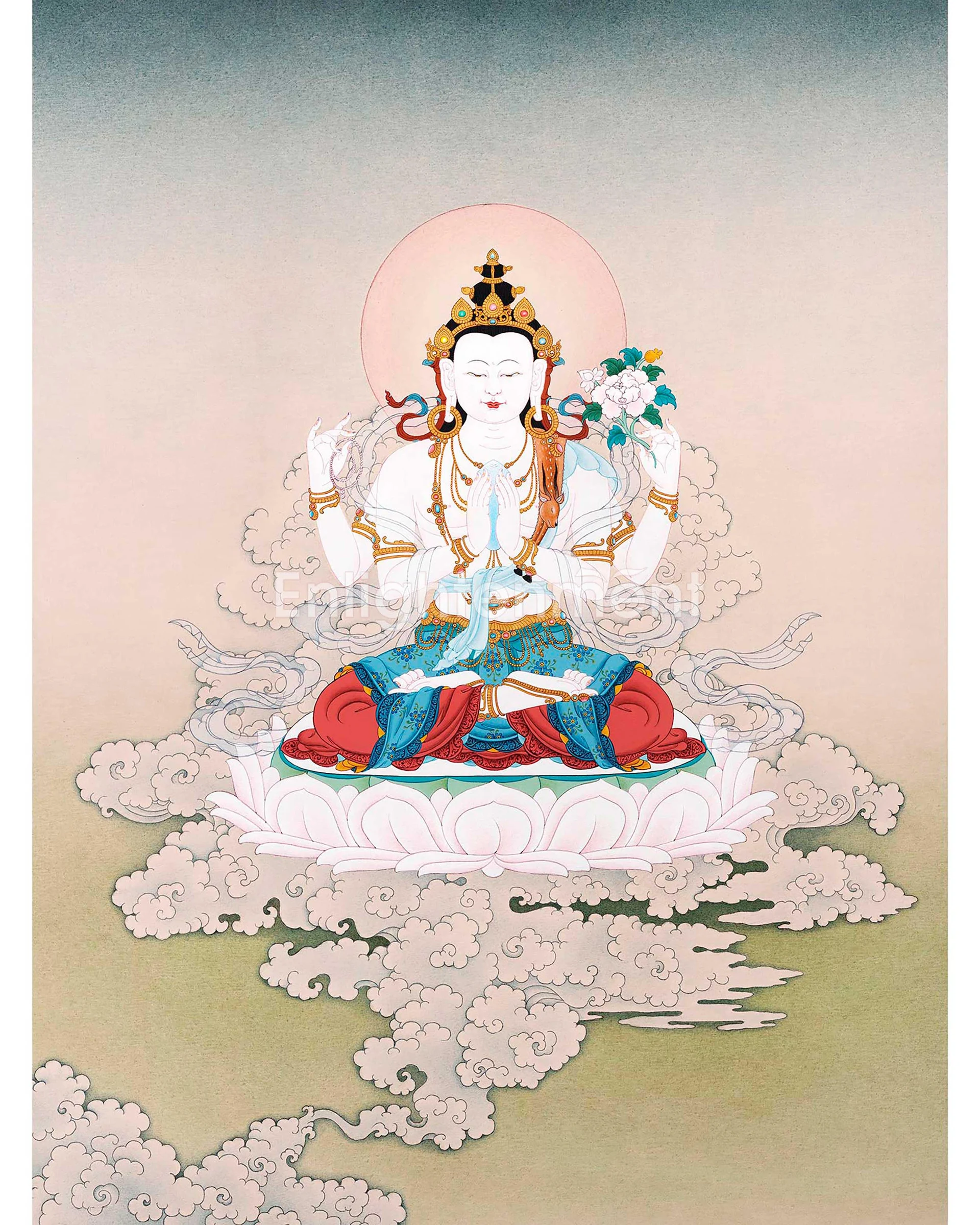
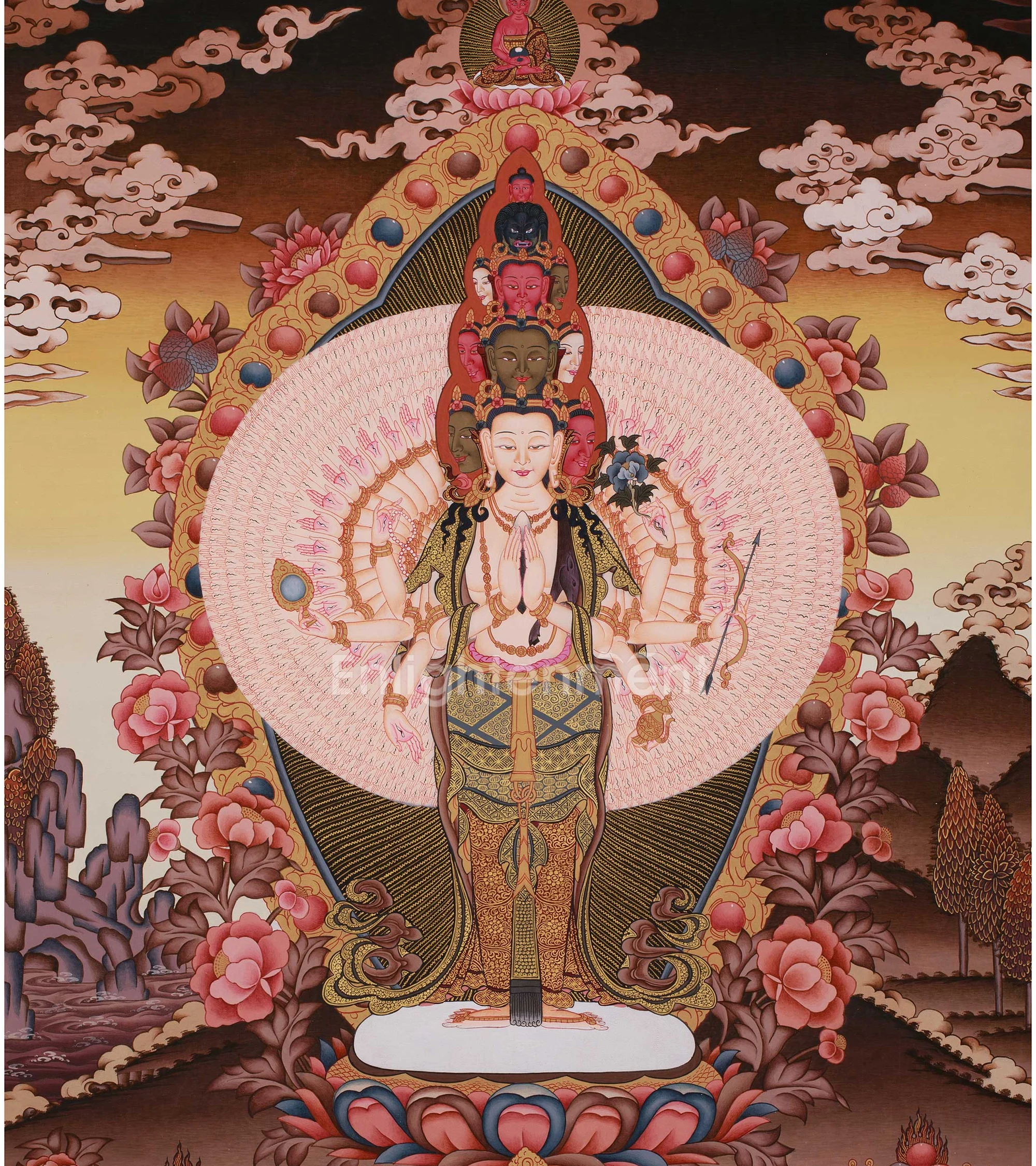
Four-Armed Avalokiteshvara is a major devotional form in Tibetan traditions and is closely associated with the six-syllable mantra. In Tibetan usage, this form is known as Chenrezig. Tibetan visual traditions do not reduce Avalokiteshvara to one fixed image. Four arms, eleven faces, and a thousand arms unfold compassion as different ways of seeing and responding to suffering, with the distinction carried by the visible form.
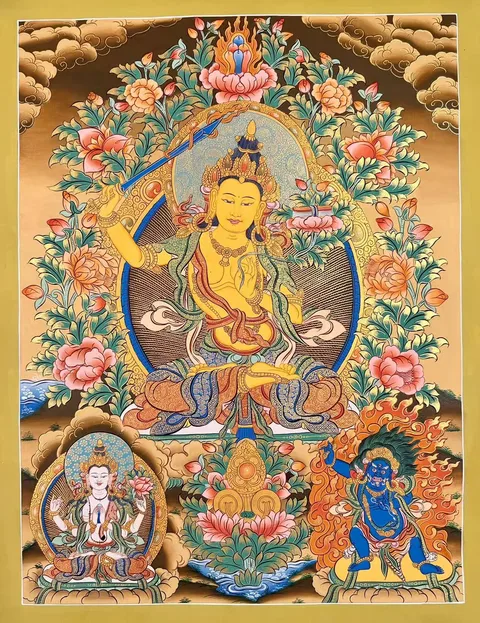
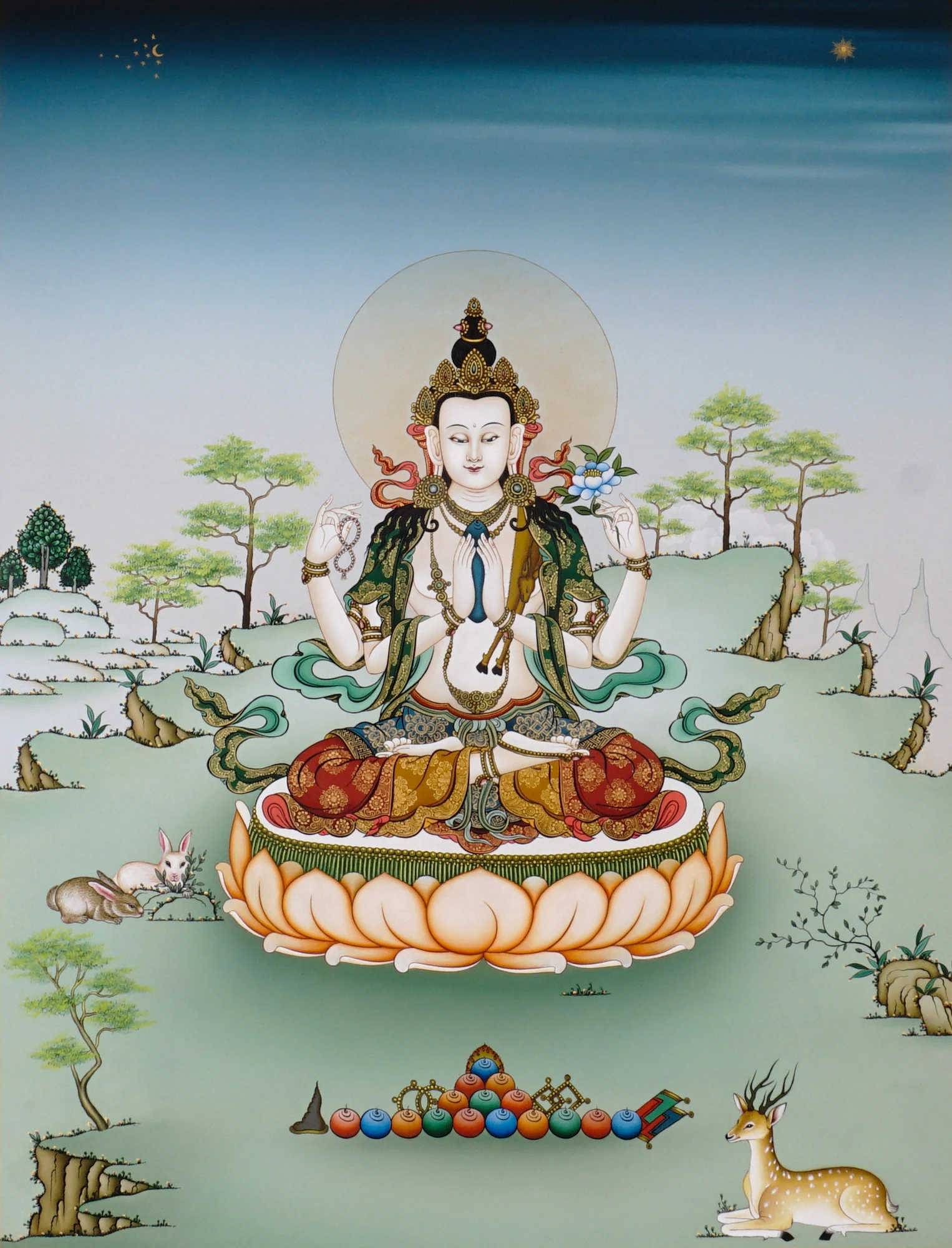
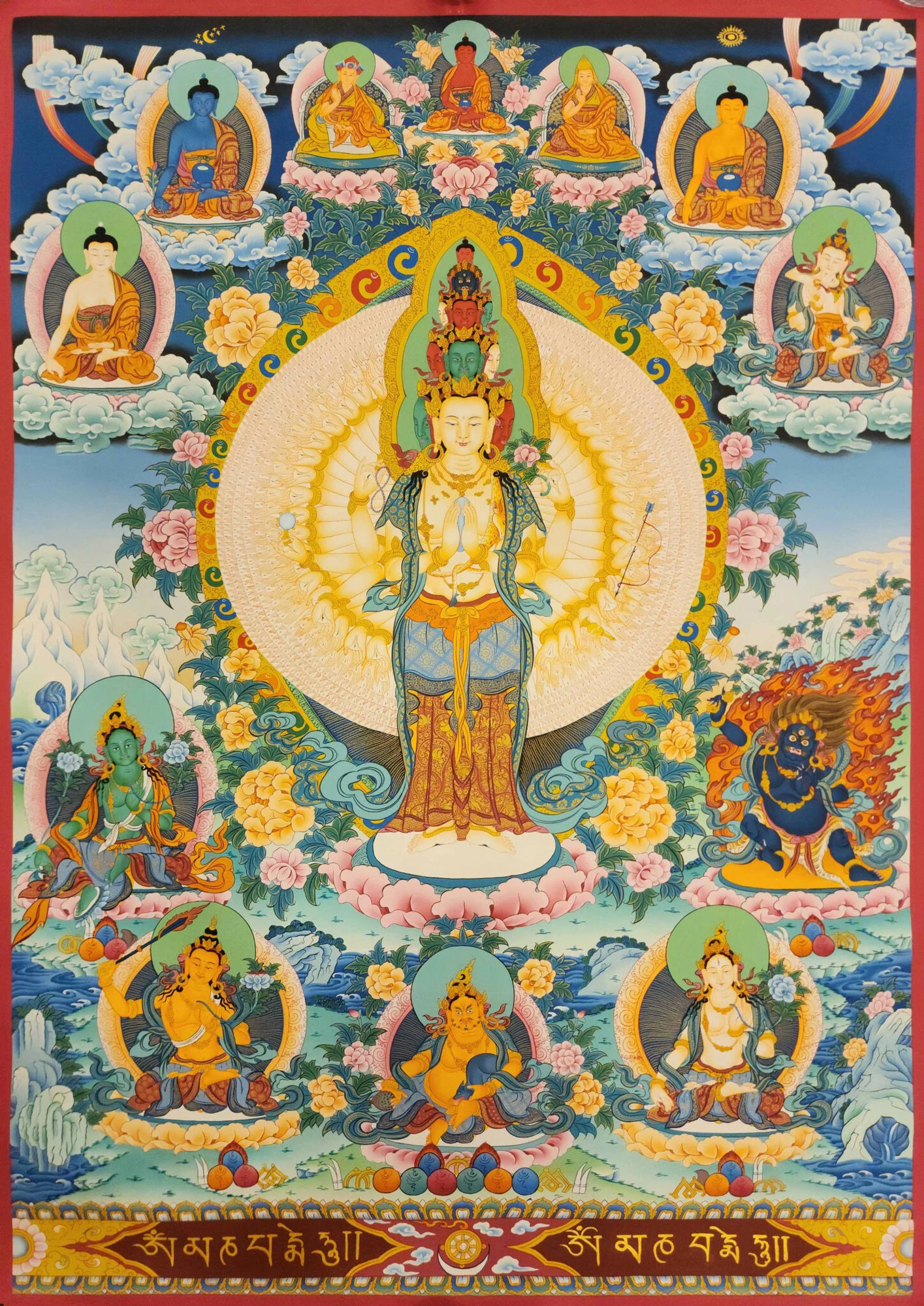
The four arms of Chenrezig are commonly explained through the Four Immeasurables. Loving-kindness wishes beings to find happiness; compassion wishes them to leave suffering; sympathetic joy rejoices in virtue; and equanimity meets beings with an impartial mind. In a multi-deity Four-Armed Avalokiteshvara thangka, Manjushri, Vajrapani, and Chenrezig appear together. Wisdom, power, and compassion are arranged as a mutually supporting spiritual structure, so the surrounding figures contribute to the meaning of the central image.
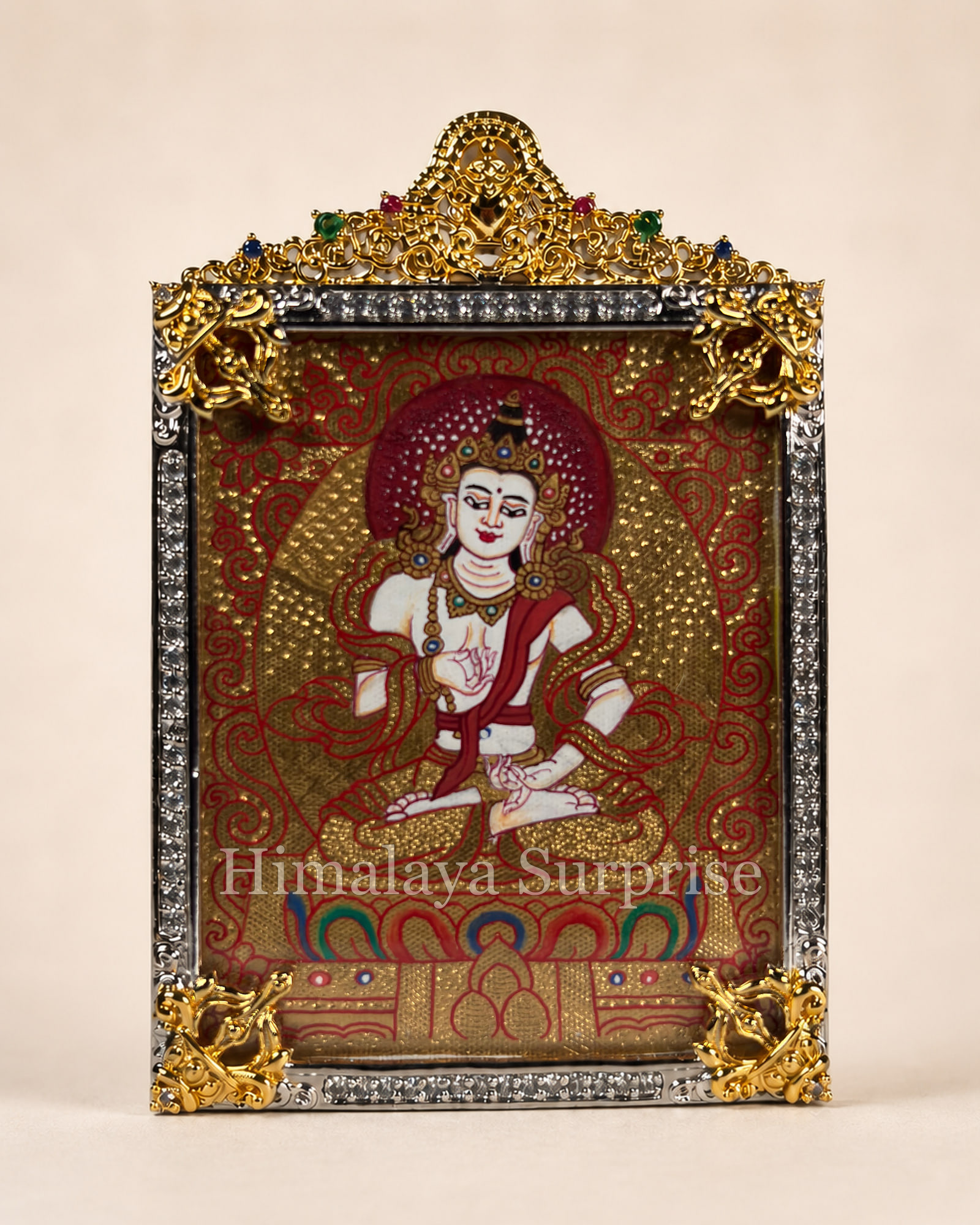
The Four-Armed form is commonly shown with a white body, a crown of the five Buddhas, Amitabha above the head, a wish-fulfilling jewel held at the heart, and a crystal mala and white lotus in the other hands. The calm face and lotus-moon seat complete a visual language of clarity, purity, and quiet compassion. The mala evokes continuous practice and compassionate activity. The white lotus describes purity within the world, while the joined hands and jewel place the compassionate aspiration at the heart. These attributes turn an abstract quality into details that can be read directly in the painting. The deer skin over the shoulder carries another layer of meaning: the deer's gentleness and harmlessness correspond to compassion, while the skin is also explained as a reminder of renunciation and distance from desire.
Thousand Arms, Thousand Eyes, and Eleven Faces
Thousand-Armed Avalokiteshvara expands compassion through countless eyes that see beings and countless hands that assist them. The form is also depicted with forty-two arms and distinct ritual attributes, shifting the image from individual objects toward universal care and response. The multiple faces of Eleven-Faced Avalokiteshvara extend that vision across directions and levels of practice. One interpretation links the ten faces to the ten stages and the uppermost face to Buddhahood. The faces therefore work as a vertical structure of practice as well as a recognisable feature of the composition. Four-Armed and Thousand-Armed Avalokiteshvara are distinct iconographic forms. Their differences can be read through the number of arms, the faces, and the attributes they hold, giving the viewer a clear way to distinguish the two forms.
Male, Female, and Changing Forms of Guanyin
Early Indian images and Tibetan traditions often present Avalokiteshvara in male or androgynous forms, while Chinese Guanyin gradually developed a softer feminine appearance from the late Northern and Southern Dynasties into the Tang period. The change belongs to the history of visual culture, where the same compassionate principle receives different bodies and gestures. This difference does not change the compassionate core of Avalokiteshvara. Male and female appearances can both be understood as skillful forms that respond to the needs of beings, so an unfamiliar gendered appearance is not by itself a reason to dismiss the image. A Tibetan thangka of Avalokiteshvara therefore does not need to follow the appearance of Chinese White-Robed Guanyin; the name should be read from the tradition, faces, and attributes shown in the image.
Guanyin Forms and Devotional Intentions
Willow-and-vase, water-sprinkling, and Water-Moon Guanyin are distinct developments of Guanyin imagery in Chinese culture. The willow, vase, and lotus express compassion through steadiness, purity, and consolation, while the water-sprinkling form gives that compassion an active, outward gesture. Water-Moon Guanyin presents a quieter aspect through water, moonlight, and contemplative stillness. The landscape and moon extend compassion toward introspection and inner calm, giving the image a slower rhythm than the multi-armed forms. Each form has its own name and visual structure. The richness of the Guanyin theme comes from the different ways traditions give compassion a concrete image, from an active gesture of blessing to a quiet scene beside water.
The joined hands, jewel, mala, and lotus of the Four-Armed form connect devotional intention with compassion, purity, continuous practice, and the fulfilment of wholesome wishes. The Thousand-Armed form extends that intention through countless eyes that see beings and countless hands that respond to them. Water-Moon Guanyin takes a quieter route: water, moonlight, and stillness turn compassion toward introspection, calm, and the daily reminder to slow down. Different forms can therefore give different devotional intentions a distinct visual language.
Guanyin thangkas are often associated with prayers for compassion, stability, calm, and protection. The white body, lotus, mala, and joined hands form a visual language for those aspirations, while the calm face makes the wish for inner steadiness visible. The prayer also enters daily conduct: remaining steady in difficulty, easing agitation, keeping compassion present, and bringing the wish to help others back into ordinary life. The image can therefore function as a recurring reminder for practice and conduct. When the form, attributes, and devotional intention of a painting correspond, a Guanyin thangka becomes more than a name. It becomes an image of compassion that can be seen, understood, and carried into daily awareness.