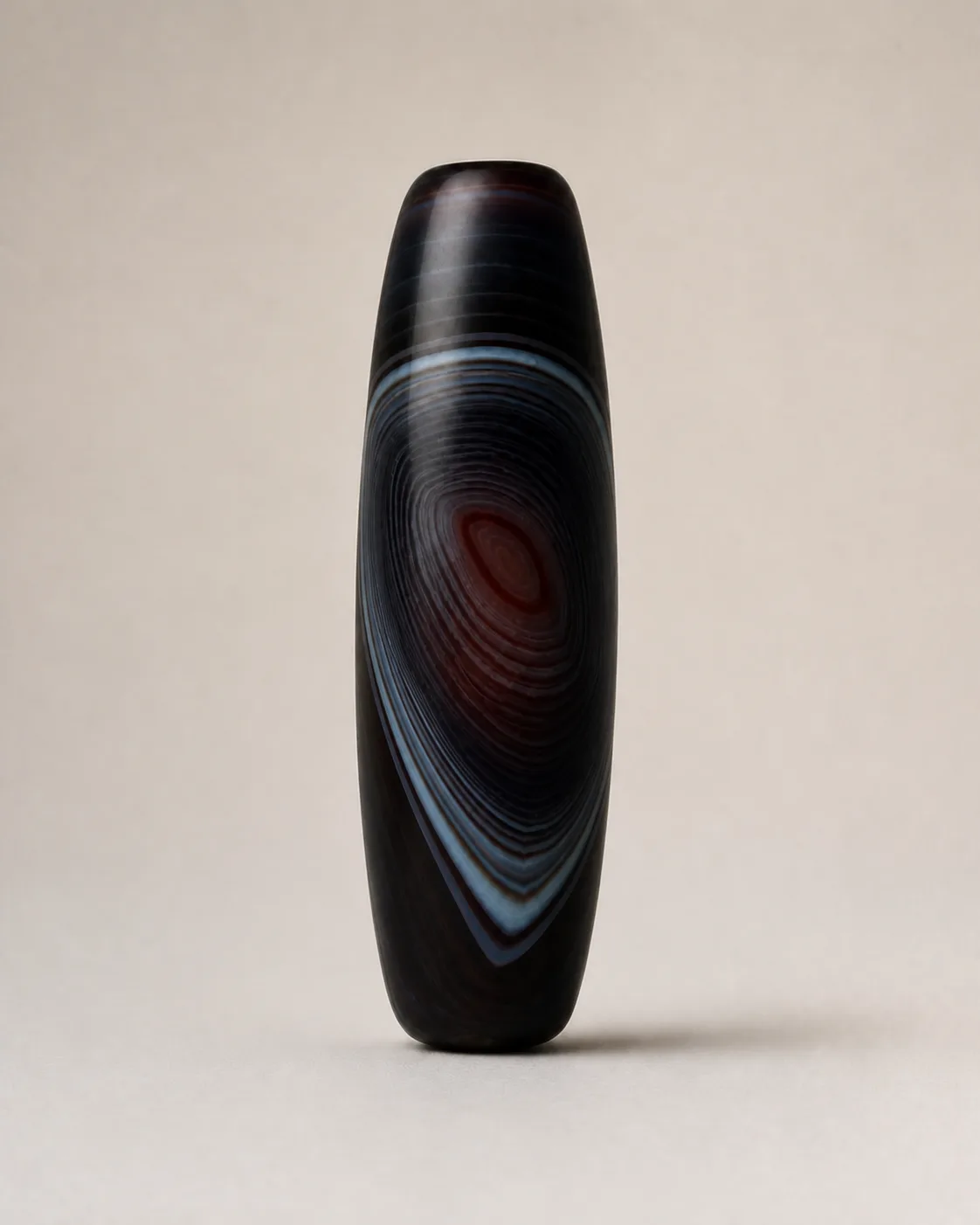
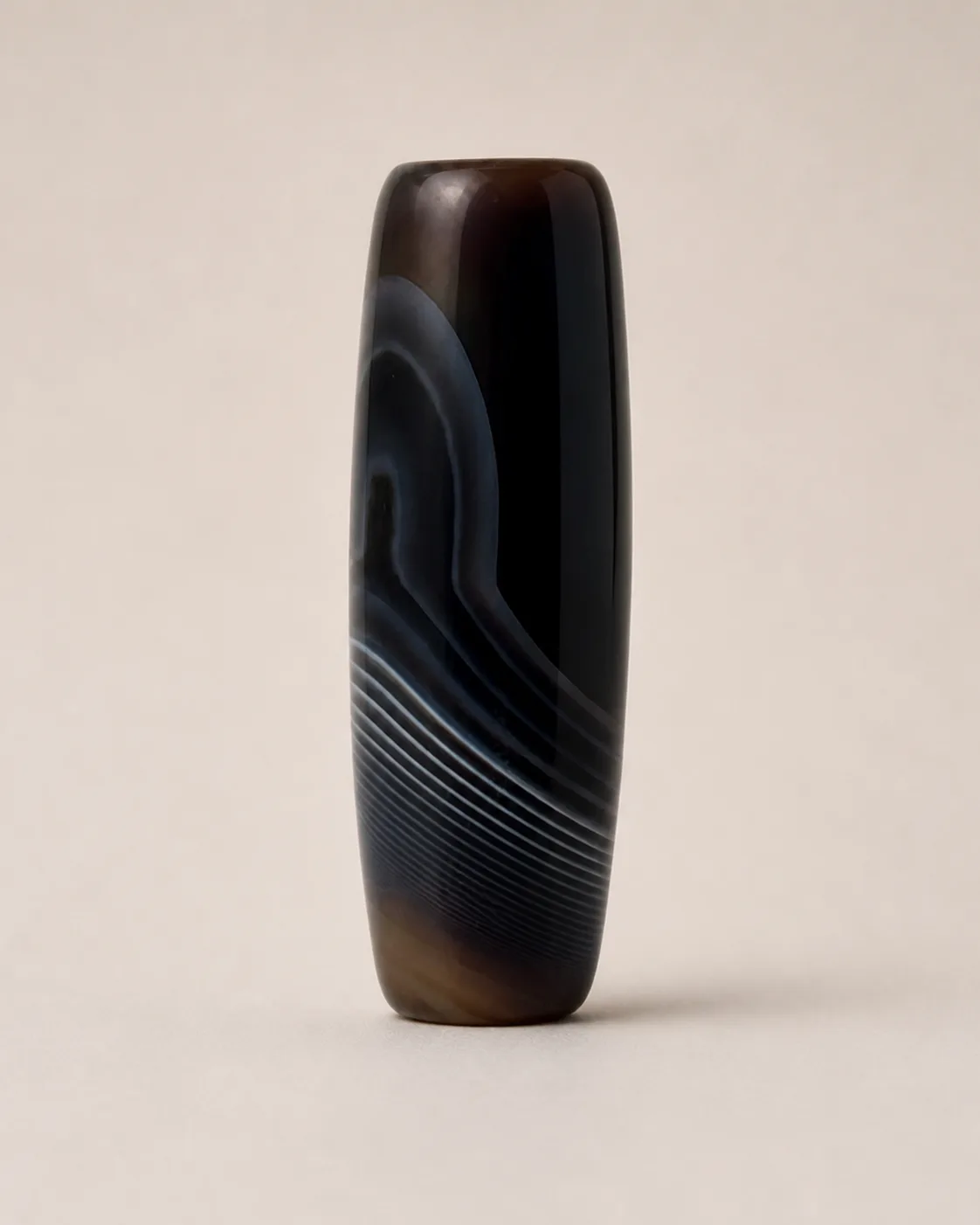
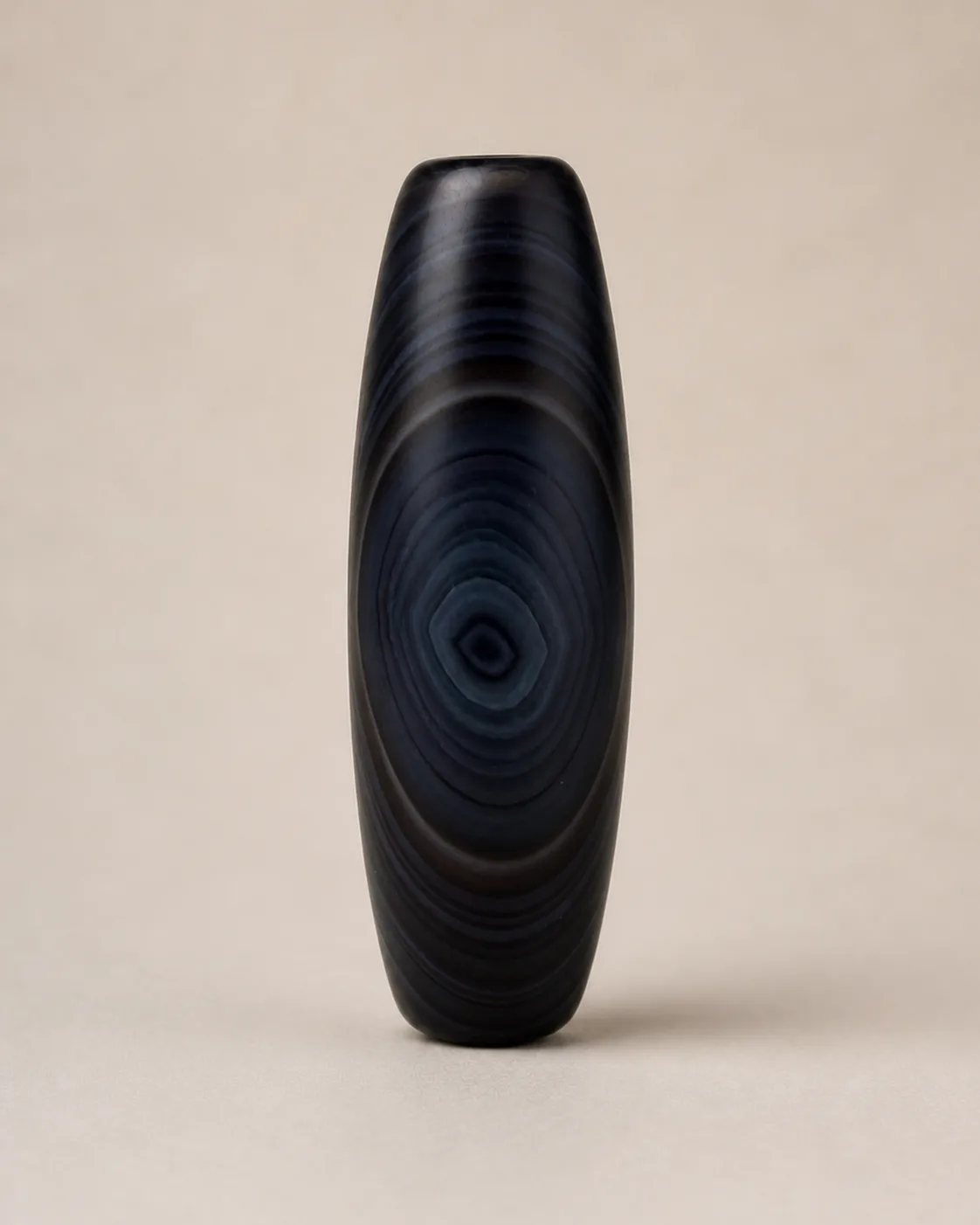
Individual work recordsEligible destinations: free delivery + duties

Complimentary tracked delivery to eligible destinations, with duties and import taxes included

Collector Guides

How to Choose a Dzi Bead: Material, Age Claims & Evidence

Choosing a Dzi bead starts with the individual object record. Confirm what the bead is made of, how it was made or treated, its dimensions and condition, and how much of its age or provenance story is documented before you read the motif's cultural associations. Appearance can raise questions, but it cannot by itself prove age or authenticity. Surface pits, wear, colour, translucency, drill-hole character and a seller's story are observations or claims—not a laboratory conclusion. An independent report may strengthen a claim, but its scope and limitations should be stated clearly.

View related available works
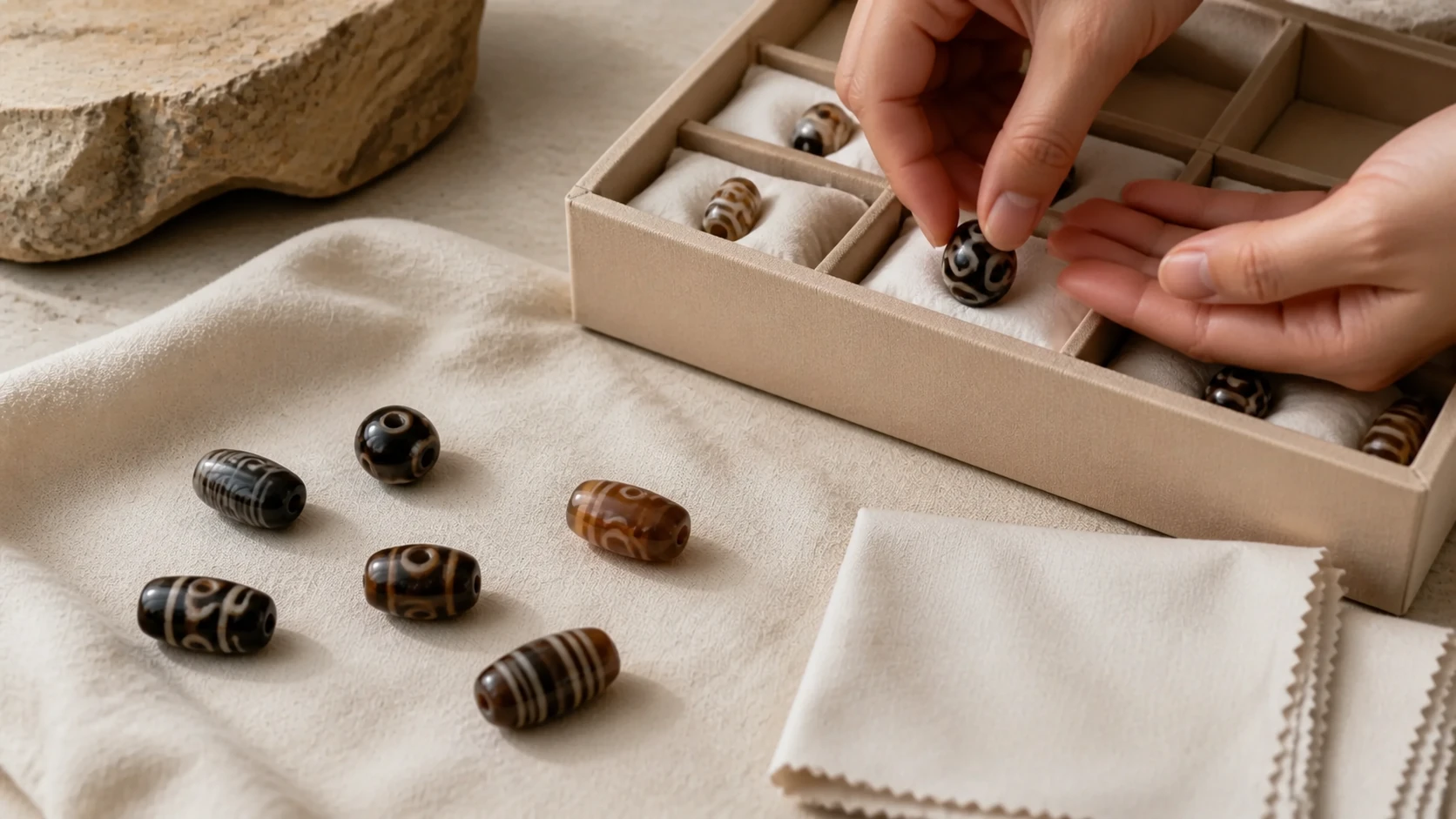
A patterned Dzi-style bead examined beside calipers and a scale bar
Material, dimensions, pattern and condition are observable facts; age, authenticity and provenance require separate evidence.

Quick answer

Three points to begin with.

  • Enjoy the clarity of a modern bead record or the depth of a documented age and provenance story; each kind of record gives the collector a distinct way to appreciate the object.
  • Record material, treatments, dimensions, weight, drill hole, surface, pattern, care history, stringing, and object-specific photographs.
  • Pattern associations are cultural interpretations that open conversations around protection, abundance, wellbeing and spiritual practice.

Reading path from this site

Choose a Dzi bead from visible pattern and record

This Dzi guide starts with what can be seen and keeps pattern language separate from unsupported provenance or outcome claims.

  • Describe the bead: Begin with shape, surface and visible pattern before using a name.
  • Check the pattern: Compare the eye or motif carefully and keep interpretation tied to the page's sources.
  • Inspect the individual bead: Follow the collection link for the bead's current images, condition and record. Then follow Explore Dzi beads to compare the current individual record.

How should you evaluate a Dzi bead's age and authenticity claim?

A modern Dzi-style bead can be a beautiful, wearable object when its contemporary making is described clearly. A bead with an ancient, antique, rare, excavated, inherited or regional story becomes especially compelling when that story is accompanied by a well-kept record.

Assess an age claim against the complete record: smoothness, pits, colour, drill-hole character, surface history and the accompanying story can all contribute questions for further study. Full photographs and supporting documents give the collector the richest view.

These observations can support further questions, but none of them proves age or authenticity on its own. Treat a seller's dating, origin or 'old bead' description as a claim until the supporting evidence and its limits are clear.

FAQ — Can one photograph or a home test prove a Dzi bead's age or authenticity? No. A single image or informal test can be a starting observation, but it cannot replace a complete record of material, treatment, dimensions, condition and provenance, or a qualified examination where one is needed.

What should a Dzi material record include?

A British Museum record describes a white and brown banded agate bead as probably an amulet allied in shape, form, and material to Tibetan Dzi beads. For a commercial bead, request the seller's material description and disclose whether dyeing, heating, etching, coating, or other treatment is known, suspected, or unknown.

Colour, translucency and banding can be documented photographically, while qualified gemological testing can add material identity and treatment detail. A clear seller record lets the viewer compare the visible appearance with any professional report.

Material identity and treatment should be recorded separately from age and authenticity. Dyeing, heating, etching, coating or other treatment may require appropriate gemological examination; a market name alone is not a material report.

Which Dzi bead measurements should you request?

Record length, maximum diameter, drill-hole diameter, weight, shape and orientation. Include a ruler image, a hand-held scale view, both ends and a rotating video. These details show the bead's scale and help assess whether its shape and hole suit the intended way of wearing.

For a finished necklace or pendant, list the metal, cord, adjacent beads, clasp, total length, and whether the Dzi bead can be removed without damage.

How should you read Dzi patterns and meaning?

Circles, bands, waves, lines, and eye-like motifs are frequently discussed through symbolic interpretations. Those interpretations can vary across sellers, families, regions, and modern popular culture. Identify what is visibly present before assigning a name or meaning.

A product page may describe a traditional association when a reliable source is named, introducing wishes connected with abundance, wellbeing and protection without presenting them as effects or guarantees.

How should condition, evidence and the product record be documented?

Document cracks, chips, pits, scratches, restored areas, coatings, residue, worn edges, and drill-hole damage. Use neutral light, macro views, and a full rotation. State whether each mark affects wearability.

Wear may be part of a bead's visible history, but it does not establish age. Describe the marks themselves before interpreting how they affect the bead's condition or character.

For a clearly described modern bead, material disclosure, dimensions, condition, photographs and return terms create a generous foundation. A high-priced bead with an age, origin, rarity or untreated-material story becomes especially engaging when independent analysis and provenance accompany it.

GIA's coloured-stone services show the rich information a qualified report may provide: material identity, natural-material status where applicable, treatments, measurements, colour and a photograph. The submitted object's report scope can be discussed with the laboratory in advance.

The final product record should connect one SKU to one physical bead: all measurements, material disclosure, treatment status, pattern description, condition, photographs, video, jewellery components, any laboratory report, and the seller's return terms.

When age, origin or treatment awaits further documentation, keep that field open for a future update. A modern bead with complete documentation offers a clear, beautiful way to begin collecting.

  • Match one SKU to one physical bead and keep the photographs, measurements and record together.
  • Separate observed pattern and material facts from age, origin and symbolic interpretation.
  • Confirm condition, treatment status, wearability, delivery and return terms before purchase.

Sources

Further reading and verification

  1. British MuseumBanded Agate Bead Related to Tibetan Dzi Beads
  2. DePauw UniversityThe Bruce Walker Collection of Tibetan Religious Art
  3. Gemological Institute of AmericaColored Stone Reports and Services
  4. Gemological Institute of AmericaDisclosing Treated or Laboratory-Grown Gem Material

Related works

Related available works

These available works connect with the figures, subjects or visual clues in this story.

Explore Dzi beads

Enquire about a work

Would you like a closer look?

Want a closer view? Send us the work link or reference; we’ll confirm the available detail images, video and documentation.

Contact us