Discover / Places & Traditions
Bhutanese Thangka and Thongdrel
From painted cloth and appliqué images to the public unveiling of a thongdrel: explore Bhutanese sacred art through its materials, subjects and festival setting.
In this story
In Bhutan, sacred images can be painted on prepared cloth or made from textiles. A thongdrel, also spelled thongdrol, is a monumental religious image brought out for public veneration, often during a tshechu festival. It is part of the thangka tradition, with a distinctive life of preparation, unveiling and shared viewing. Understanding that relationship opens a richer picture of Bhutanese art than treating every thangka as a small painting or every large textile as the same festival object.
A painted image in a Bhutanese setting
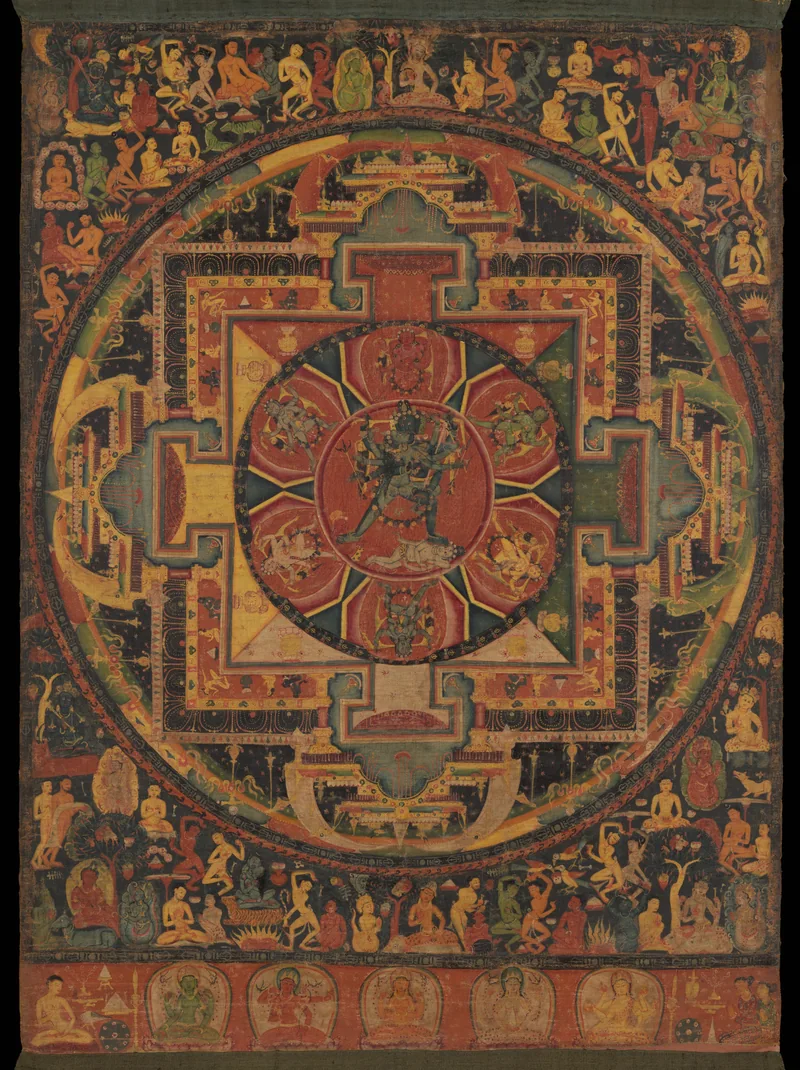
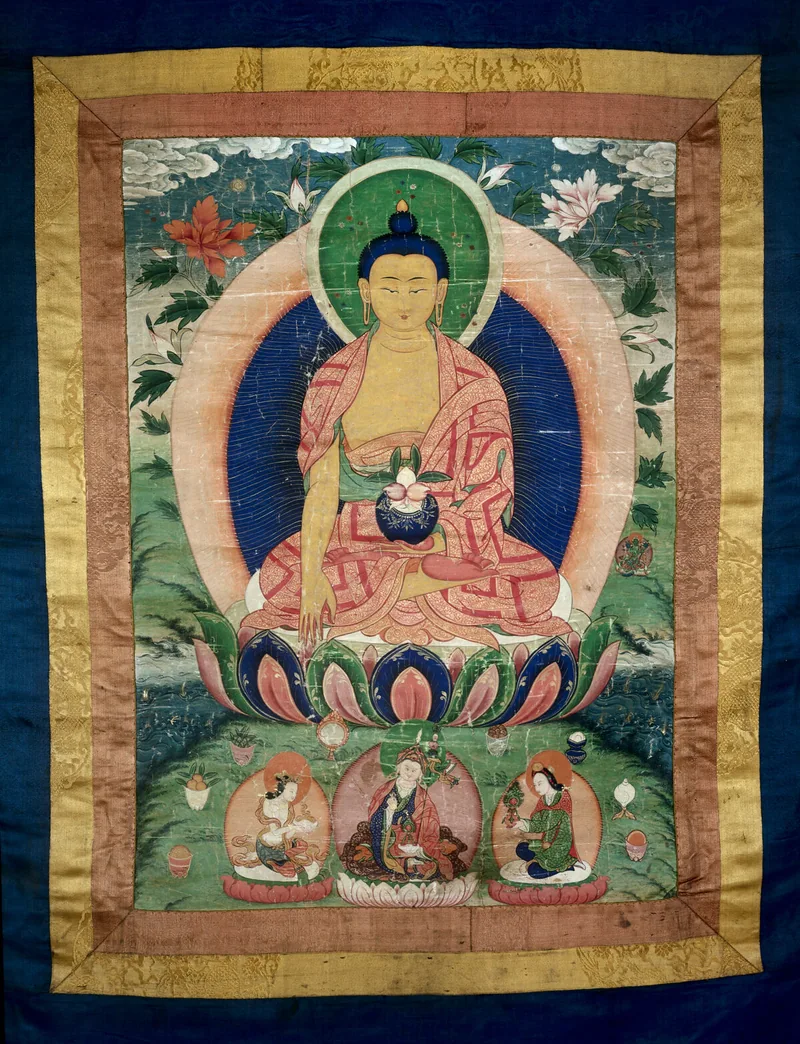
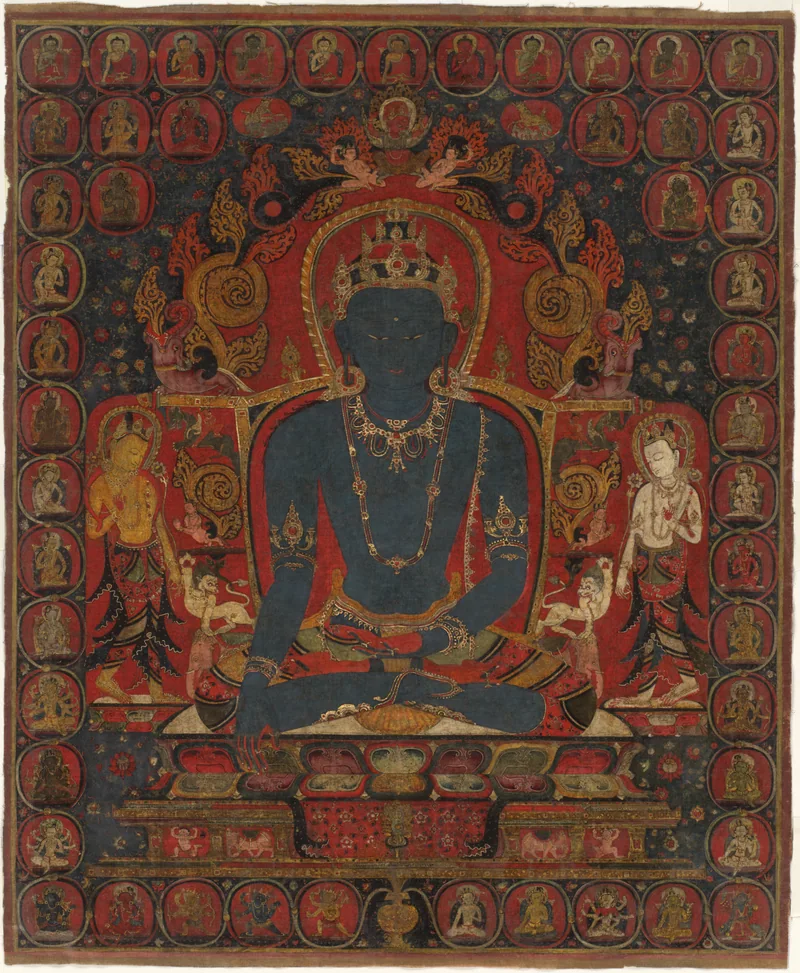
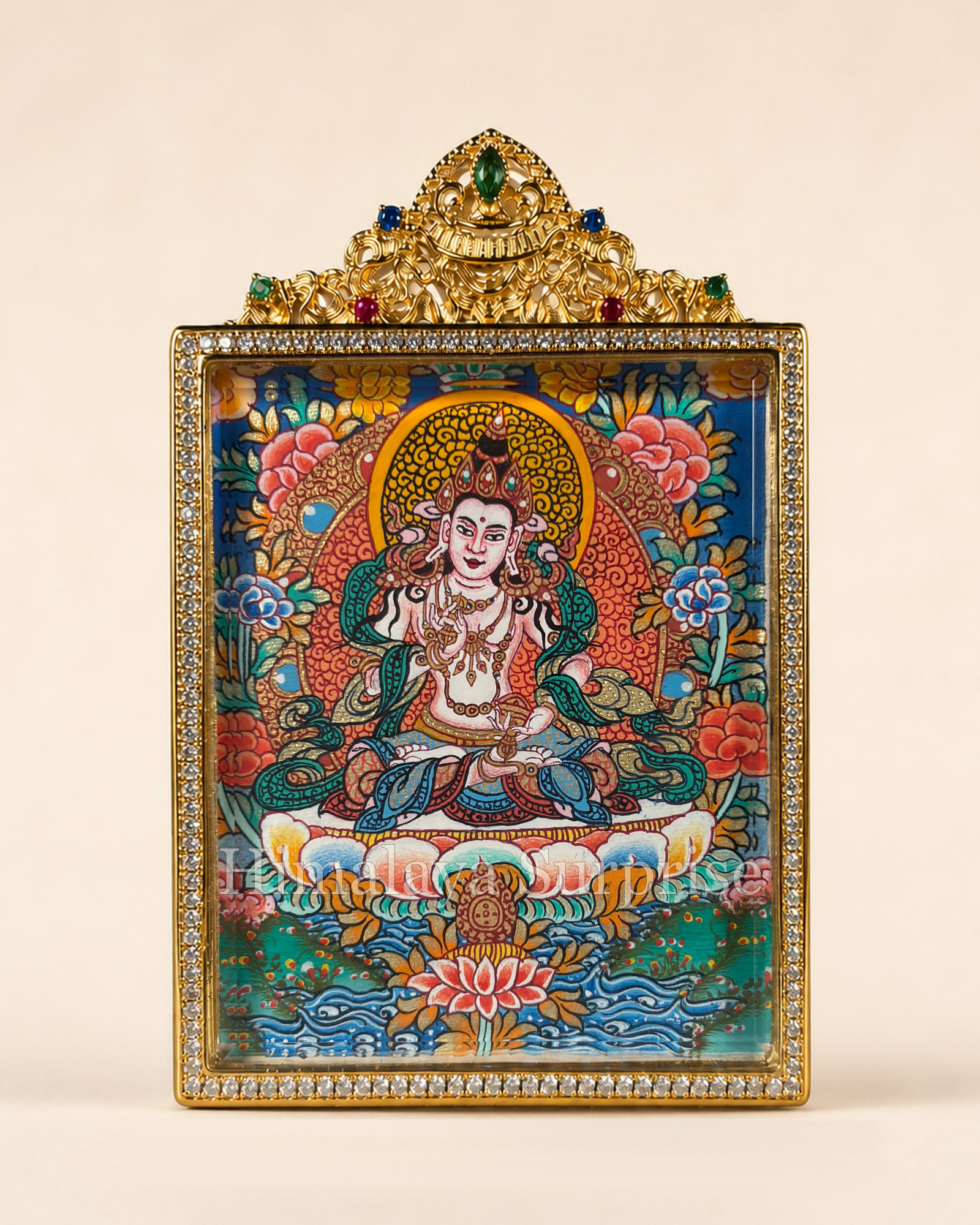
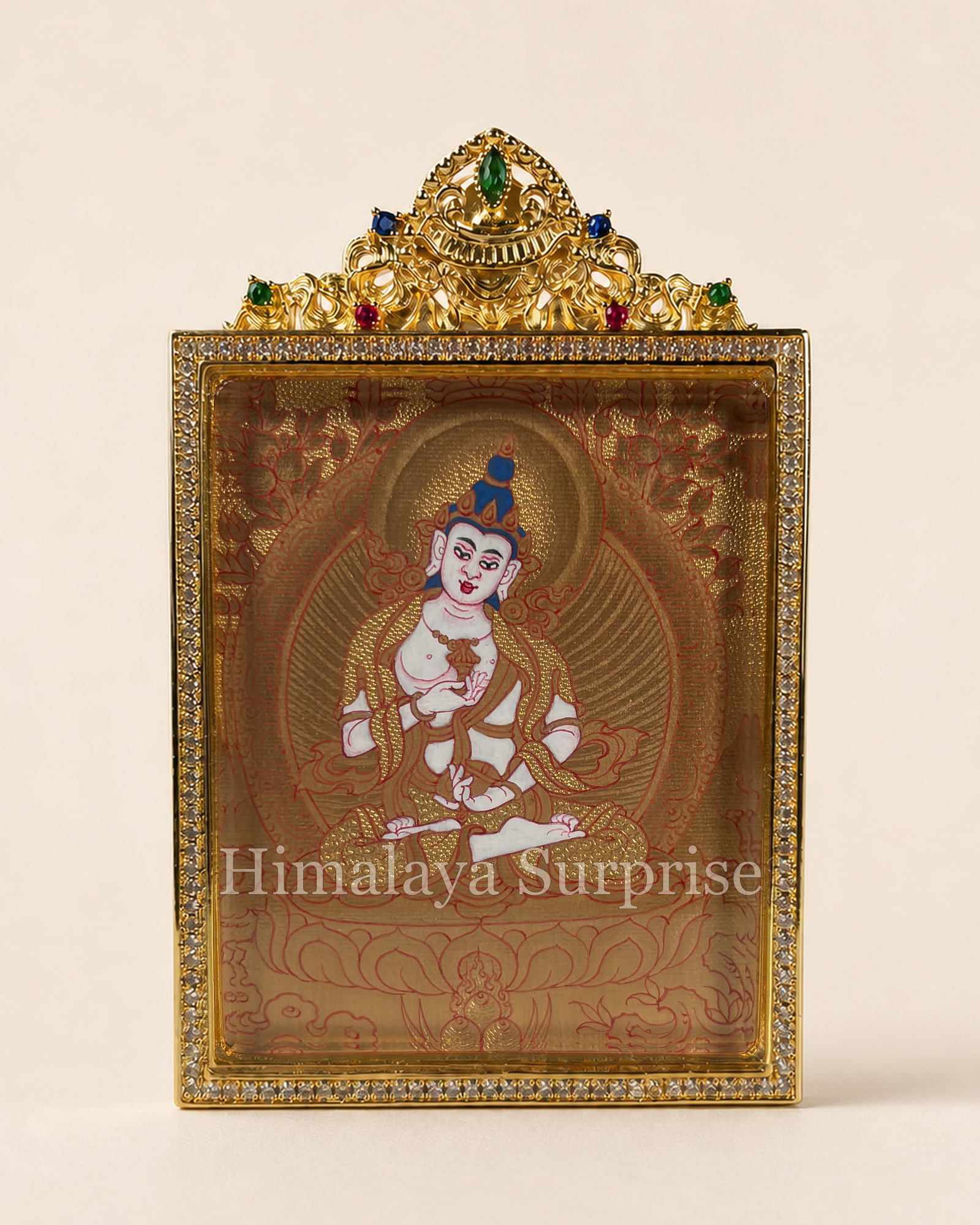
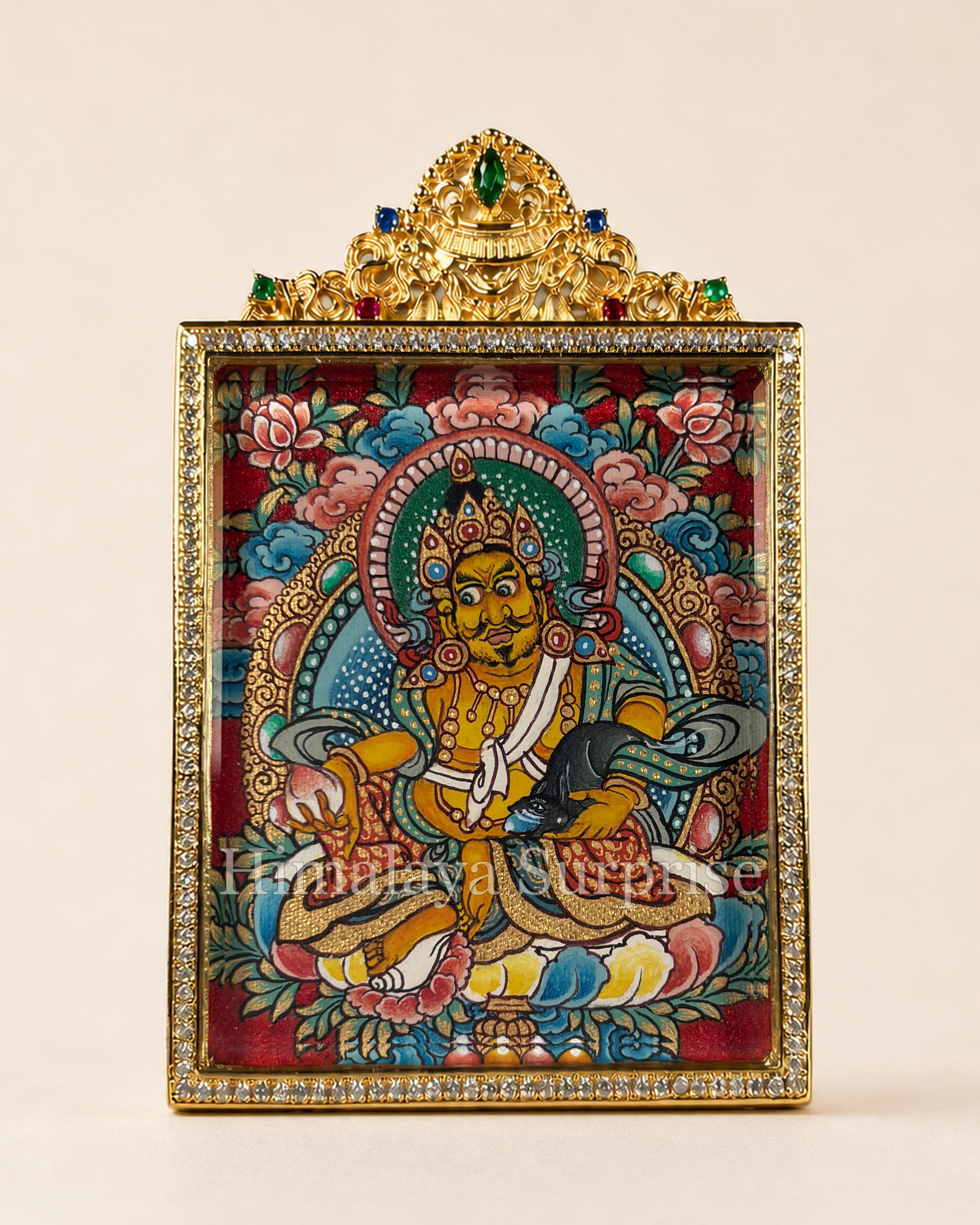
Thangkas in Bhutan include images of Buddhas, teachers, protectors and mandalas. They can be used for devotion and teaching, while stories and surrounding figures give a composition its particular meaning. A central figure may be familiar across the Himalayas; the local setting emerges through the people, institutions and histories connected with the work.
Painting involves preparing a cloth support, drawing measured figures, building colour and finishing fine lines and details. At the Trashi Yangtse Institute in 2004, the process included canvas preparation, burnishing, mineral and organic colours, and gold work. Across workshops, individual choices of colour, landscape, brushwork and detail still matter alongside the proportions and attributes of a sacred subject.
This combination of shared conventions and particular choices is why Bhutanese thangka is broader than a single palette. The same Buddha or mandala can appear in different regional traditions. A painting’s composition rewards close looking before any country name is asked to explain it all.
Cloth can form the image itself
In an appliqué thangka, shaped pieces of fabric are joined to create figures and other parts of the image. Embroidery contributes drawn-looking details through stitches; an object may combine techniques. These are ways of making the picture, distinct from a brocade border that surrounds a painted panel. Silk around a painting does not, by itself, make the painting an embroidered or appliqué thangka.
The opening photograph shows an appliqué image of Zhabdrung Ngawang Namgyal displayed in the Bhutan Textile Museum. A prominent central figure, smaller surrounding figures and a broad textile border give it the ordered composition familiar from many thangkas. The photograph also brings the museum setting into view. It is an example of a Bhutanese textile image, rather than a photograph of a festival unveiling.
A textile thangka need not be monumental. Equally, a large sacred image is not defined solely by the number of metres it occupies. For a thongdrel, scale is joined by its ceremonial role: an image prepared to be seen together by an assembled community.
The unveiling is part of the work
At a tshechu, religious observance and a public gathering share the same space. The unveiling of a thongdrel gives that gathering a visual focus. The cloth has to be brought out, supported and raised, while people assemble to see it. The image becomes part of a sequence of activity rather than a permanently exposed surface on a wall.
Arian Zwegers’s photograph from Jakar in 2013 records preparations before the thongdrel is pulled up. People hold and arrange the textile, with ropes, musicians and the building around them. The sacred image is not yet fully visible. That moment is revealing: the work’s public life includes the coordinated effort that makes its display possible.
Thongdrel is commonly translated as “liberation through seeing” or “liberation on sight.” The phrase expresses the religious significance of encountering the image. It helps explain why people gather for the unveiling, and why the occasion cannot be understood through textile technique alone.
Paro: a particular image and a particular festival
The Paro Thongdrol offers a concrete example. A large appliqué image was brought from Rinpung Dzong in a ceremonial procession for the annual Paro festival. Its central figure is Guru Rinpoche, flanked by Mandarava and Yeshe Tsogyal. His eight principal manifestations appear to the sides; Zhabdrung Ngawang Namgyal and Drakpa Gyatso are included below the consorts.
The composition connects a major Buddhist teacher with figures important to the object’s local history. Recognising Guru Rinpoche is a beginning; seeing who surrounds him reveals more of the work’s meaning. Paro also shows why one spectacular example should not become a rule for every thongdrel. Different settings, subjects and occasions give other large images their own identities.
What changes when an image is seen from afar
Close to a painted thangka, a viewer can follow an eyelid, a fine gold line or a small landscape scene. Across a festival space, attention moves first towards the central silhouette, broad colour fields and the relationship between major figures. The distance changes the order in which details become visible. It also gives the image a relationship with its architectural surroundings and the people gathered below.
That difference is not a measure of artistic worth. Fine painted lines and a monumental fabric image solve different visual problems. A photograph can preserve colour and composition, yet the bodily experience of looking upwards with others is part of what gives a festival display its force.
A regional tradition with connections
Bhutan’s collections hold works made locally as well as works brought from elsewhere in the Himalayan region. Both belong to the history of thangka preservation. Movement, teaching and patronage are part of that history. Shared sacred subjects do not erase regional differences, but they make a story of complete artistic isolation too simple.
Images can also move between media. In the National Museum of Bhutan, the Tree of Merit chapel includes a three-dimensional clay mandala created under royal patronage in 1968. Its makers translated flat painted thangkas into a multi-tiered assembly of sculpted figures. It is a reminder that a composition can continue through a change of material, scale and the way a visitor moves around it.
Keeping images in use
Repeated handling, dust, soot, insects, light and accidents can leave paintings and textiles fragile. Bhutan’s conservation work addresses that material history while recognising the objects’ religious life. Conservation also includes collaboration and training around preservation, rather than treating these images as decoration alone. Caring for a work and sustaining the knowledge around it are connected tasks.
Bhutanese thangka becomes more interesting as these settings come into view: the painter’s cloth, the assembled textile, a museum room and a festival gathering. The subject may remain recognisable, while the material and the occasion change how we meet it. A quiet encounter with a small image and the shared unveiling of a thongdrel both belong within that living visual tradition.
Questions and answers
What is the difference between a thangka and a thongdrel?
Thangka is the wider image tradition, including painted and textile forms. Thongdrel names a monumental sacred image displayed for public veneration, particularly at Bhutanese festivals. Technique, scale and ceremonial use work together; a large size alone does not explain the term.
Are all Bhutanese thangkas made from silk appliqué?
No. Bhutanese sacred art includes painted thangkas as well as textile images. Appliqué forms the picture from fabric pieces, while embroidery uses stitches. Brocade around a painted panel belongs to the mounting and does not make the picture itself an appliqué work.
What does thongdrel mean?
It is commonly translated as liberation through seeing or liberation on sight. The translation expresses the religious significance of beholding a sacred image and belongs to the devotional setting of its public display.
Does Bhutanese thangka have one fixed painting style?
No single palette or arrangement defines all Bhutanese works. Subjects and conventions connect with wider Himalayan traditions, while workshops, commissions and local histories give individual images their particular character.