Individual work recordsDelivery by destination

Complimentary tracked delivery to eligible destinations, with duties and import taxes included

Culture & Craft

Himalayan art & craft:
materials, making and context.

Learn how to look at thangka, sculpture, jewellery and textiles through material, making, image and cultural context.

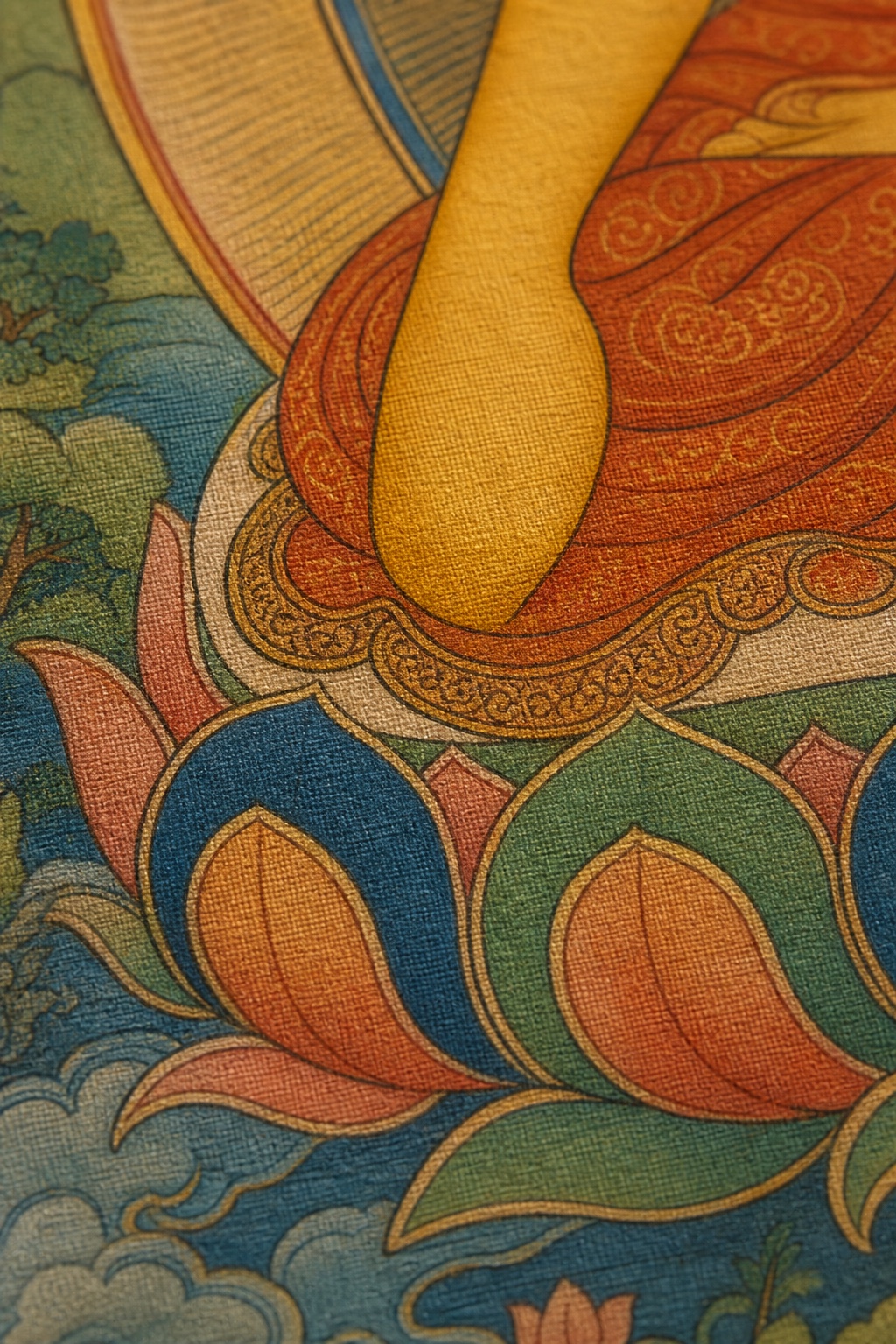
Close detail of pigment, fine line and prepared cotton cloth on a Shakyamuni Buddha thangkaCloth, pigment & line

Looking at thangka

Read the complete structure before moving into the painted image.

A thangka is usually painted on prepared cotton and mounted as a hanging scroll in silk brocade. Some works are presented in protective frames with a spacer and glazing; miniatures may also be housed in a gau.

Begin with the overall proportions and mounting, then study the central figure, gestures, attributes, attendants, and image hierarchy before moving closer to line, pigment, and textile detail.

Explore the collection Explore thangka subjects by zodiac
01 / Materials

What can an image on screen reveal?

Colour, surface and raking light can reveal line, layers of pigment and the texture of the cloth; authorship, age and authenticity still depend on the record for an individual work.

02 / Price

What determines the price of a thangka?

Scale, subject, complexity, maker or workshop, materials, mounting and provenance all affect the price of an individual work.

03 / Makers

Why do maker and workshop records matter?

Name, region, workshop, role, technique, and source information help explain who made a work, where it was made, and how its craft tradition continues.

04 / Details

What can you request for an individual work?

Request reverse and detail views, materials, exact dimensions, provenance, delivery costs and purchase terms.

Continue exploring

Return to art and objects.

Continue through thangka, sculpture, jewellery, textiles and handcrafted objects.

Explore the collection